Maruti Suzuki Chairman Backs Biogas For India's Transport Fuel Mix
Maruti Suzuki Chairman RC Bhargava advocates for biogas, warns against EV-only approach.
'%3E%3Crect%20width%3D'96'%20height%3D'96'%20fill%3D'%230B6E4F'%2F%3E%3Ccircle%20cx%3D'30'%20cy%3D'24'%20r%3D'44'%20fill%3D'%23fff'%20opacity%3D'.12'%2F%3E%3Ccircle%20cx%3D'60'%20cy%3D'74'%20r%3D'40'%20fill%3D'%23000'%20opacity%3D'.10'%2F%3E%3C%2Fg%3E%3Cg%20fill%3D'none'%20stroke%3D'%23fff'%20stroke-width%3D'3.2'%20stroke-linecap%3D'round'%20stroke-linejoin%3D'round'%3E%3Cpolyline%20points%3D'31%2C59%2041%2C49%2049%2C54%2063%2C37'%2F%3E%3Cpolyline%20points%3D'55%2C37%2063%2C37%2063%2C45'%2F%3E%3C%2Fg%3E%3C%2Fsvg%3E)
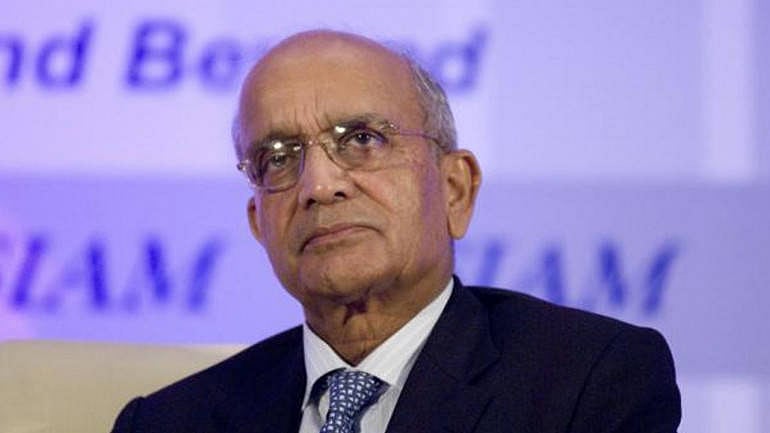
Maruti Suzuki India Ltd Chairman RC Bhargava has emphasized the importance of including biogas in India's transport fuel mix, citing its potential to contribute to the country's net-zero emissions goal.
In a recent interview, Bhargava highlighted the significance of biogas as a renewable fuel, particularly for small cars, which are expected to remain a crucial part of India's automobile market for the next two decades. He noted that biogas is a practical and environmentally friendly fuel alternative for this segment.
Bhargava pointed out that India has the world's largest livestock population, which provides a significant opportunity to produce biogas from animal waste. By expanding biogas usage, India can reduce its dependence on imported fuels and support rural economies.
The Maruti Suzuki Chairman clarified that he is not opposed to electric vehicles (EVs) and acknowledged that automobile manufacturers, including Maruti Suzuki, are actively working on electric mobility. However, he stressed the need for India to utilize its domestic energy resources instead of relying heavily on a single technology.
Bhargava warned that an EV-only approach could pose challenges for India's energy security, as battery cells are currently imported largely from China. A disruption in global supply chains could create difficulties for companies heavily dependent on electric vehicles. He also noted that government subsidies supporting EV adoption may not continue indefinitely.
Globally, several countries, including the US, Europe, and China, have started reducing incentives for EVs, while consumers continue to show interest in hybrid and plug-in hybrid vehicles. Bhargava's comments come as India aims to reduce its emissions and achieve net-zero emissions by 2070.
The Indian government has implemented policies such as Corporate Average Fuel Efficiency (CAFE) norms and EV initiatives to reduce emissions. However, Bhargava's comments suggest that a more diversified approach, including biogas, could be beneficial for the country's energy security and rural economies.
As India continues to navigate its energy transition, the inclusion of biogas in the transport fuel mix could play a significant role in reducing emissions and supporting rural economies. Bhargava's advocacy for biogas highlights the need for a comprehensive approach to India's energy security, one that takes into account the country's domestic resources and global trends.
In conclusion, Maruti Suzuki Chairman RC Bhargava's comments emphasize the importance of a diversified approach to India's energy transition, one that includes biogas as a key component of the transport fuel mix. This approach could help reduce emissions, support rural economies, and enhance India's energy security.
The significance of Bhargava's comments lies in the fact that they highlight the need for India to think beyond EVs and consider alternative fuels that can contribute to the country's net-zero emissions goal. As India continues to grow and develop, it is essential to adopt a comprehensive approach to energy security, one that takes into account the country's domestic resources, global trends, and the need to reduce emissions.
Ultimately, the inclusion of biogas in India's transport fuel mix could be a crucial step towards achieving the country's energy security and emissions reduction goals. By adopting a diversified approach to energy, India can reduce its dependence on imported fuels, support rural economies, and contribute to a more sustainable future.
Frequently asked questions
What is RC Bhargava's stance on electric vehicles?
Bhargava is not opposed to electric vehicles and acknowledges that automobile manufacturers are working on electric mobility.
Why does Bhargava advocate for biogas in India's transport fuel mix?
Bhargava believes biogas can contribute to India's net-zero emissions goal, support rural economies, and reduce dependence on imported fuels.