Rajesh Sharma Demystifies Startup Journey In New Book
Rajesh Sharma's book offers a pragmatic look at building a company. He shares his personal journey and emphasizes conviction.
'%3E%3Crect%20width%3D'96'%20height%3D'96'%20fill%3D'%23B3261E'%2F%3E%3Ccircle%20cx%3D'30'%20cy%3D'24'%20r%3D'44'%20fill%3D'%23fff'%20opacity%3D'.12'%2F%3E%3Ccircle%20cx%3D'60'%20cy%3D'74'%20r%3D'40'%20fill%3D'%23000'%20opacity%3D'.10'%2F%3E%3C%2Fg%3E%3Cg%20fill%3D'%23fff'%3E%3Crect%20x%3D'29'%20y%3D'49'%20width%3D'8'%20height%3D'19'%20rx%3D'1'%2F%3E%3Crect%20x%3D'39'%20y%3D'40'%20width%3D'9'%20height%3D'28'%20rx%3D'1'%2F%3E%3Crect%20x%3D'50'%20y%3D'45'%20width%3D'8'%20height%3D'23'%20rx%3D'1'%2F%3E%3Crect%20x%3D'60'%20y%3D'53'%20width%3D'7'%20height%3D'15'%20rx%3D'1'%2F%3E%3Crect%20x%3D'41'%20y%3D'34'%20width%3D'5'%20height%3D'6'%2F%3E%3C%2Fg%3E%3C%2Fsvg%3E)
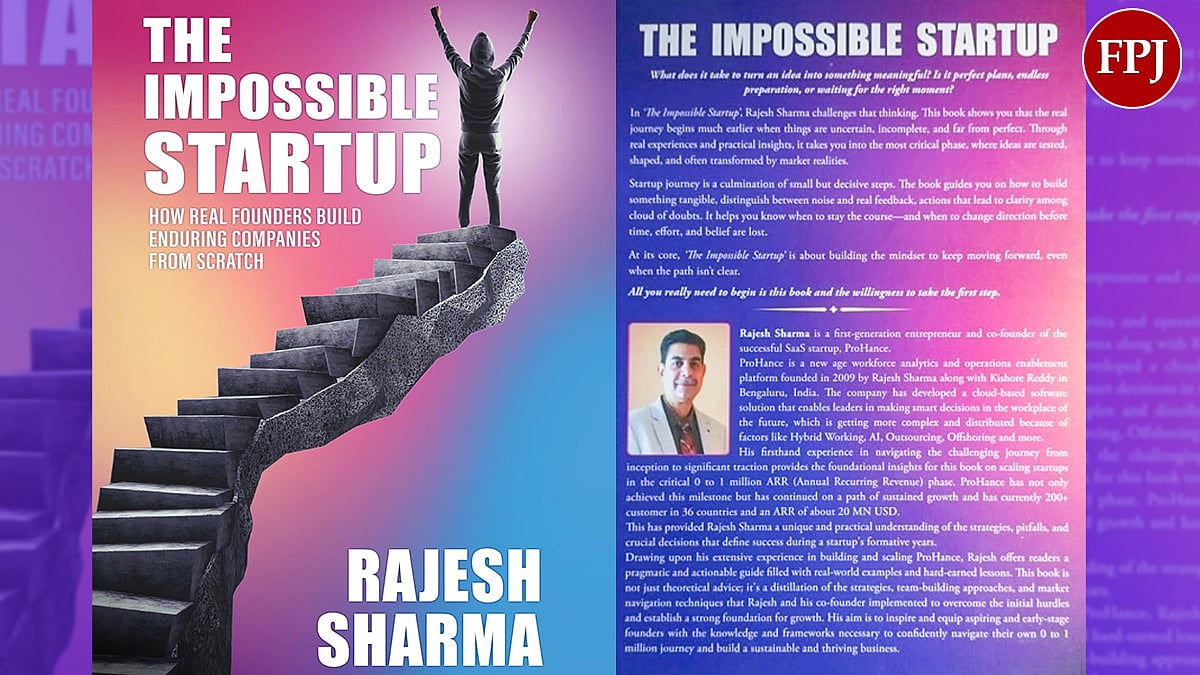
Rajesh Sharma, co-founder of ProHance, has written a book titled 'The Impossible Startup: How Real Founders Build Enduring Companies from Scratch'. The book provides a refreshingly pragmatic look at what it takes to build a company from the ground up.
Sharma draws directly from his personal journey and demystifies the entrepreneurial process. He centres his core message around one fundamental element: conviction. The book is structured into 10 concise chapters and walks readers through the end-to-end evolution of an enterprise.
The book opens with foundational themes like the power of belief and starting small. It then transitions into pragmatic execution topics such as early validation, customer feedback, market learning, and value creation. The latter half addresses organisational fundamentals, including wise financial management, team building, overcoming doubts, and scaling from one to many.
One of the book's greatest strengths is its refusal to romanticise founders as larger-than-life figures. Sharma dismantles the myth that success requires elite credentials, young prodigies, or vast venture backing. He writes that people who walk this path are, in reality, no different from anyone else.
Sharma reinforces this perspective using his own non-traditional path into tech entrepreneurship. He left his 12-year non-IT career and started over as a software developer in 2000. By the time he started ProHance in 2009, he was 45 years old, and his co-founder was 36 years old.
Sharma emphasizes that taking the leap isn't reserved for a select few. He says that the only difference between a regular person and an entrepreneur is that the latter actually takes action. Everybody has ideas and aspirations, but entrepreneurs take that first step.
The book maps out the lifecycle of a business into three distinct, relatable phases: impossible, improbable, and inevitable. The 'impossible' stage represents the 0 to $1 million revenue phase, where the startup is just an idea fighting for its existence. Sharma advises focusing on foundational steps and manageable milestones rather than encouraging founders to obsess over hyper-growth early on.
The book concludes with reflections on giving back, the broader founder's journey, and scaling vision into long-term impact. Sharma's message is clear: conviction and hard work are key to building a successful company.
The book is a must-read for anyone looking to start their own business or understand the entrepreneurial process. It provides a realistic and pragmatic look at what it takes to build a company from scratch.
In the end, Sharma's book is a testament to the power of conviction and hard work. It shows that anyone can become an entrepreneur, regardless of their background or age. The book is an inspiring and informative read that will resonate with anyone looking to start their own business.
Rajesh Sharma's 'The Impossible Startup' is a valuable resource for entrepreneurs and aspiring entrepreneurs alike. It provides a unique perspective on the startup journey and offers practical advice for building a successful company.
The book's message is simple yet powerful: conviction, hard work, and determination are key to building a successful company. It is a must-read for anyone looking to start their own business or understand the entrepreneurial process.
In conclusion, 'The Impossible Startup' is a book that will inspire and inform anyone looking to start their own business. It provides a realistic and pragmatic look at what it takes to build a company from scratch and offers valuable advice for entrepreneurs and aspiring entrepreneurs alike.
Frequently asked questions
What is the main message of Rajesh Sharma's book?
The main message of the book is that conviction and hard work are key to building a successful company.
What are the three stages of a startup according to Rajesh Sharma?
The three stages of a startup are impossible, improbable, and inevitable, representing the gradual shift from belief to traction.