IndiGo Reports ₹382 Crore Q1 Loss Amid Fuel Costs, Iran War
IndiGo's Q1 loss attributed to fuel costs and Iran conflict. Revenue growth strong.
'%3E%3Crect%20width%3D'96'%20height%3D'96'%20fill%3D'%230B6E4F'%2F%3E%3Ccircle%20cx%3D'30'%20cy%3D'24'%20r%3D'44'%20fill%3D'%23fff'%20opacity%3D'.12'%2F%3E%3Ccircle%20cx%3D'60'%20cy%3D'74'%20r%3D'40'%20fill%3D'%23000'%20opacity%3D'.10'%2F%3E%3C%2Fg%3E%3Cg%20fill%3D'none'%20stroke%3D'%23fff'%20stroke-width%3D'3.2'%20stroke-linecap%3D'round'%20stroke-linejoin%3D'round'%3E%3Cpolyline%20points%3D'31%2C59%2041%2C49%2049%2C54%2063%2C37'%2F%3E%3Cpolyline%20points%3D'55%2C37%2063%2C37%2063%2C45'%2F%3E%3C%2Fg%3E%3C%2Fsvg%3E)
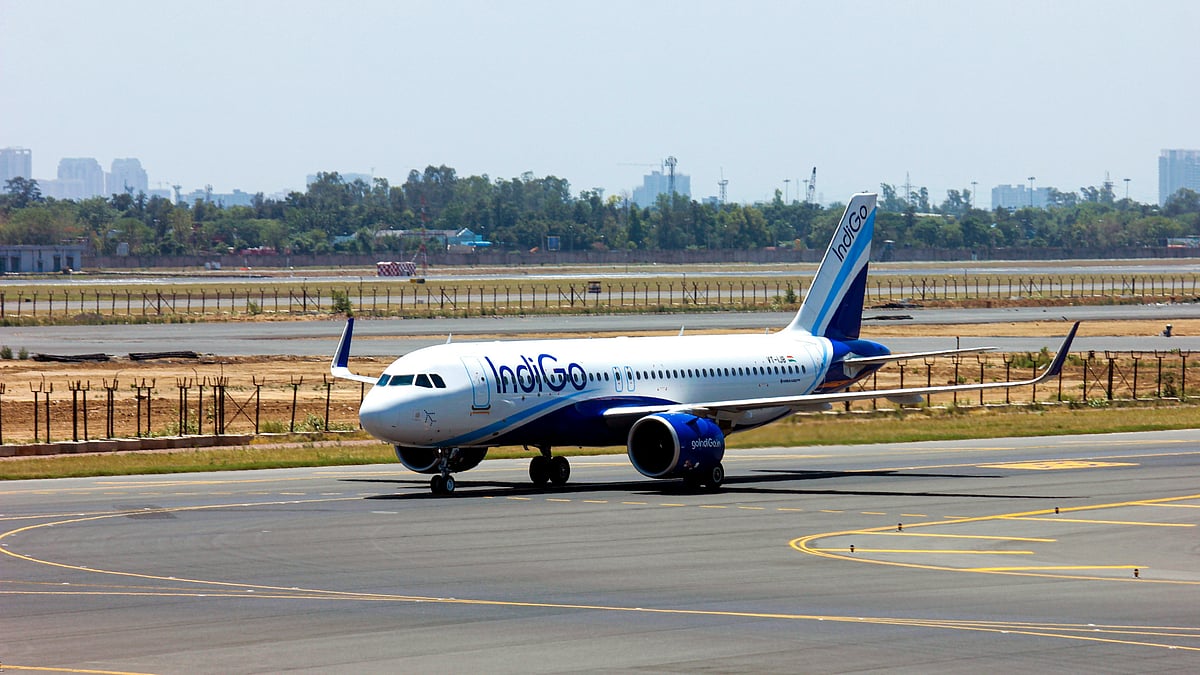
IndiGo, India's largest airline, reported a net loss of ₹382 crore for the April-June quarter of FY27, a significant decline from the ₹2,161 crore profit recorded in the same period last year. The airline cited a sharp rise in fuel prices due to the Iran conflict, adverse foreign exchange movements, and operational challenges affecting Middle East routes as the primary reasons for the decline in profitability.
Despite the earnings pressure, IndiGo reported strong revenue growth during the quarter, with revenue from operations increasing 20% year-on-year to ₹24,584 crore in Q1 FY27. The airline served more than 31 million passengers during the quarter, with revenue performance improving compared to the previous year.
IndiGo Managing Director Rahul Bhatia stated that the first quarter was impacted by a volatile operating environment, including elevated fuel costs and network-related disruptions in the Middle East. However, he added that demand remained healthy, supported by improved yields and continued customer preference for the airline.
The airline's quarterly performance data showed that capacity increased 2.9% to 43.5 billion available seat kilometres (ASKs), while passenger numbers rose 0.7% to 31.3 million. Yield improved 21.3% to ₹6.04, although the load factor declined 1.3 percentage points to 83.3%.
The airline attributed fuel cost pressures and rupee depreciation to around ₹200 crore of losses during the quarter. As a result, IndiGo shares closed 1.7% lower at ₹5,030 apiece on the BSE on July 23 following the earnings announcement.
As of June 30, IndiGo maintained a strong liquidity position with a total cash balance of ₹52,885 crore, including ₹39,039 crore in free cash and ₹13,846 crore in restricted cash. Looking ahead, the airline expects capacity growth to remain broadly flat in the second quarter of FY27 due to seasonal weakness in travel demand and uncertainty affecting India-West Asia routes.
However, IndiGo said aircraft utilisation is expected to improve as demand strengthens beyond the weaker season. The airline remains focused on managing capacity efficiently, maintaining cost discipline, and adapting to changing market conditions.
In the context of the Indian aviation industry, IndiGo's performance is significant, given its dominant market share. The airline's ability to navigate the challenges posed by the Iran conflict and fuel price volatility will be crucial in maintaining its market leadership.
The Indian aviation industry has been experiencing growth, with the government implementing policies to support the sector. However, the industry also faces challenges, including infrastructure constraints and regulatory hurdles. In this context, IndiGo's performance will be closely watched by investors and industry stakeholders.
Overall, IndiGo's Q1 loss is a significant development in the Indian aviation industry, and the airline's ability to recover from the loss will depend on its ability to manage costs, adapt to changing market conditions, and maintain its market leadership.
The loss reported by IndiGo is a reminder of the challenges faced by the Indian aviation industry, including fuel price volatility, regulatory hurdles, and infrastructure constraints. However, the airline's strong revenue growth and healthy demand suggest that the industry has the potential for growth and expansion.
In conclusion, IndiGo's Q1 loss is a significant development in the Indian aviation industry, and the airline's performance will be closely watched by investors and industry stakeholders. The airline's ability to navigate the challenges posed by the Iran conflict and fuel price volatility will be crucial in maintaining its market leadership and achieving long-term growth.
Frequently asked questions
What was IndiGo's Q1 loss attributed to?
IndiGo's Q1 loss was attributed to fuel costs and the Iran conflict.
How did IndiGo's revenue perform in Q1?
IndiGo's revenue from operations increased 20% year-on-year to ₹24,584 crore in Q1 FY27.