Sudan's Military Plans Five-Year Rule
Leaked document reveals Sudan's military plans to govern for five years, limit international initiatives and rely on regional alliances

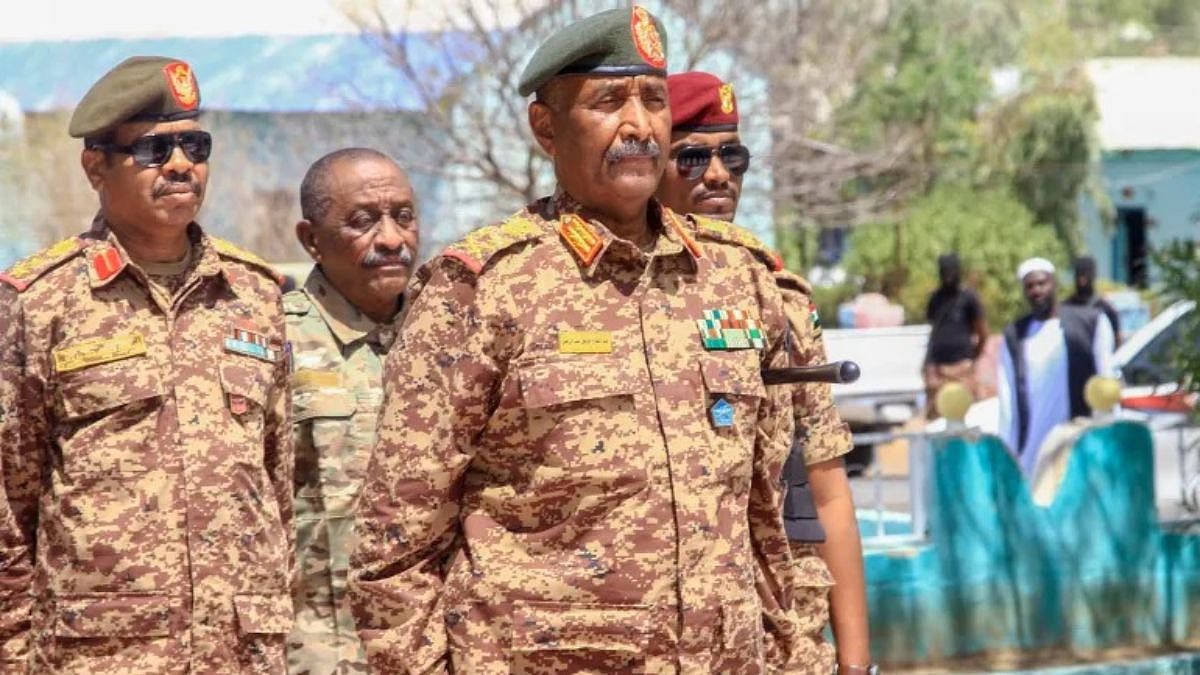
A confidential document has been obtained, outlining the Sudanese Armed Forces’ plan to consolidate military rule for five years. The document, issued by the Office of the Chairman of the Sovereignty Council, General Abdel Fattah al-Burhan, on June 16, 2026, reveals a plan to govern Sudan through a military-led authority.
The plan calls for a military administration consisting of a President of the Republic and a government of national technocrats for a five-year transitional period, to be followed by general elections. This proposal reflects a clear intention to consolidate the military establishment’s leadership role during the next phase.
The document also outlines a “Sudanese-Sudanese dialogue” involving national forces whose “hands are not stained with the blood of the Sudanese people.” However, this approach is seen as an attempt to circumvent international and regional pressure for an inclusive political process by confining negotiations to a framework controlled by the military leadership.
The document further outlines the project’s economic and diplomatic vision, including strengthening cooperation with the Kingdom of Saudi Arabia and expanding economic partnerships with Gulf states. The plan also aims to restore Sudan’s membership in the African Union, reducing international isolation and easing diplomatic restrictions.
A post-war reconstruction strategy is also presented, focusing on rebuilding critical infrastructure and essential public facilities as a cornerstone for restoring stability. The declining role of the Peace Commission, established after 2019 to negotiate with armed movements, is also noted. Recent developments indicate that responsibility for the peace file is shifting from civilian institutions to sovereign and military bodies.
Analysts argue that the requirement to exclude those whose “hands are stained with the blood of the Sudanese people” carries political implications beyond serving as a criterion for participation in dialogue. This approach may be seen as an attempt to consolidate control over the peace process and manage it outside the institutional framework created during the transitional period.
The plan has significant implications for Sudan’s political and constitutional landscape. The military establishment’s leadership role is set to be consolidated, and the country’s governance structure will be reshaped. The international community will likely be watching closely, given the potential for this plan to impact regional stability and diplomatic relations.
In the context of Sudan’s recent history, this plan is a significant development. The country has faced numerous challenges, including political instability, economic crisis, and conflict. The military establishment’s attempt to consolidate power may be seen as an effort to bring stability, but it also raises concerns about the potential for authoritarianism and human rights abuses.
The plan’s emphasis on regional alliances and cooperation with Gulf states may also have implications for Sudan’s relationships with other countries in the region. The African Union’s potential role in supporting Sudan’s transition and reconstruction efforts will be closely watched.
Ultimately, the success of this plan will depend on various factors, including the military establishment’s ability to deliver on its promises, the response of the international community, and the willingness of Sudanese citizens to accept the proposed governance structure. As the situation unfolds, it is likely that there will be significant developments and challenges ahead for Sudan.
The implications of this plan are far-reaching, and it is likely that the international community will be closely monitoring the situation. The potential for this plan to impact regional stability, diplomatic relations, and human rights cannot be overstated. As such, it is essential to continue to follow developments in Sudan and to support efforts to promote peace, stability, and democracy in the region.
In conclusion, the leaked document reveals a significant plan by Sudan’s military to consolidate power and reshape the country’s political and constitutional landscape. The implications of this plan are far-reaching, and it is likely that the situation will continue to evolve in the coming months and years.