Visakhapatnam's 6,500MW AI Data Centre Plan Sparks Environmental Concerns
Activists raise concerns over environmental impact, demand independent expert committee assessment
'%3E%3Crect%20width%3D'96'%20height%3D'96'%20fill%3D'%23B3261E'%2F%3E%3Ccircle%20cx%3D'30'%20cy%3D'24'%20r%3D'44'%20fill%3D'%23fff'%20opacity%3D'.12'%2F%3E%3Ccircle%20cx%3D'60'%20cy%3D'74'%20r%3D'40'%20fill%3D'%23000'%20opacity%3D'.10'%2F%3E%3C%2Fg%3E%3Cg%20fill%3D'%23fff'%3E%3Crect%20x%3D'29'%20y%3D'49'%20width%3D'8'%20height%3D'19'%20rx%3D'1'%2F%3E%3Crect%20x%3D'39'%20y%3D'40'%20width%3D'9'%20height%3D'28'%20rx%3D'1'%2F%3E%3Crect%20x%3D'50'%20y%3D'45'%20width%3D'8'%20height%3D'23'%20rx%3D'1'%2F%3E%3Crect%20x%3D'60'%20y%3D'53'%20width%3D'7'%20height%3D'15'%20rx%3D'1'%2F%3E%3Crect%20x%3D'41'%20y%3D'34'%20width%3D'5'%20height%3D'6'%2F%3E%3C%2Fg%3E%3C%2Fsvg%3E)
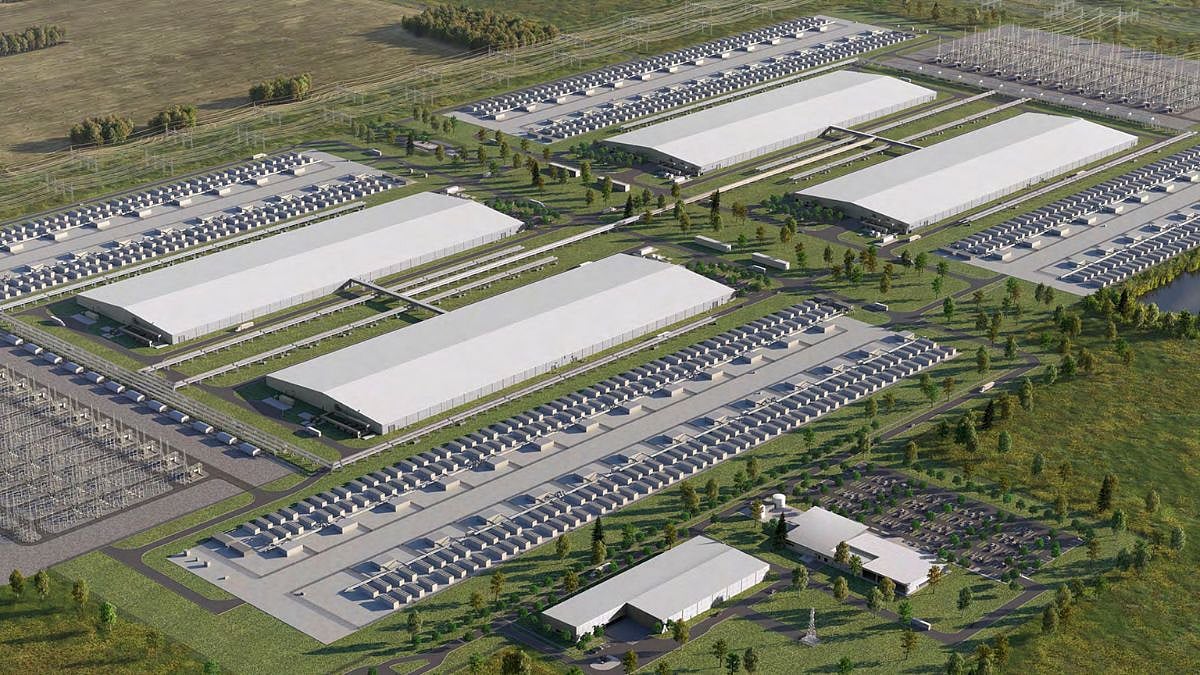
A public meeting was held in Visakhapatnam to discuss the proposed cluster of AI data centres with a combined capacity of nearly 6,500MW. The meeting, organised by environmental group Green Visakha, saw speakers demand an independent expert committee carry out a full assessment before authorities make any further commitments on the projects.
The proposed data centres have raised concerns about their toll on local communities, natural resources, and the environment. Speakers at the meeting, including retired IAS officer EAS Sarma, Swatch AP member Sripath Roy, human rights forum representative VS Krishna, and Madras High Court advocate D Nagasailaja, argued that any review must examine land allotments, water and power needs, environmental fallout, and data security safeguards.
The panel was careful to frame its position as one of scrutiny rather than opposition, stating that they were not against investment or digital infrastructure as such, but insisted that decisions of this scale demanded transparency and accountability. Sarma called for an independent audit of water resources that accounts for Visakhapatnam's drinking water requirements, irrigation needs, population growth, and industrial demand.
He also urged that any plan to divert water from the Polavaram project or local reservoirs be put on hold until the city's drinking water security is guaranteed. Additionally, he called for authorities to disclose projected electricity demand, the incentives being offered to developers, and how many jobs would actually go to local residents, while pressing for fair compensation for those losing land at Tarluvada.
Concerns were also raised over water use, with Sripath Roy pointing to the enormous computing capacity and round-the-clock power draw that AI data centres require. He called for clarity on where the facilities would source their water, what recycling measures would be used, and how local resources would be affected.
Krishna questioned whether public disclosure and consultation processes so far had been adequate, pointing to inconsistencies in project details across the Tarluvada, Rambilli, and Adavivaram sites. Nagasailaja raised concerns around environmental clearances and diesel storage at the facilities, calling for independent verification of the environmental data submitted.
Collectively, the speakers called for a cumulative impact assessment, covering land use, hill-cutting, drainage, traffic, water, and power consumption, before the projects proceed. The proposed data centres have sparked concerns among local residents and environmental activists, who are demanding greater transparency and accountability from the authorities.
The Visakhapatnam AI data centre project is one of several large-scale infrastructure projects proposed in the region, with Adani proposing a ₹1 lakh crore AI data centre in Odisha, seeking 250 acres of land. The project has raised concerns about the environmental impact of such large-scale developments and the need for careful planning and assessment.
In conclusion, the proposed AI data centre project in Visakhapatnam has sparked concerns among local residents and environmental activists, who are demanding greater transparency and accountability from the authorities. The project's potential environmental impact, including its water and power consumption, must be carefully assessed before any further commitments are made.
The demand for a cumulative impact assessment and independent expert committee review is a crucial step in ensuring that the project is developed in a sustainable and responsible manner. The authorities must prioritize transparency and accountability in their decision-making process, taking into account the concerns and needs of local communities and the environment.
As the project moves forward, it is essential that the authorities engage in open and honest dialogue with local residents and environmental activists, addressing their concerns and providing clear information about the project's potential impacts. Only through careful planning, assessment, and community engagement can the Visakhapatnam AI data centre project be developed in a way that benefits both the local economy and the environment.
The project's outcome will have significant implications for the region, and it is crucial that the authorities get it right. The future of Visakhapatnam's environment and economy depends on it.
Frequently asked questions
What is the proposed capacity of the AI data centre in Visakhapatnam?
The proposed capacity is nearly 6,500MW.
What are the concerns raised by environmental activists about the project?
Activists are concerned about the project's potential environmental impact, including its water and power consumption, and are demanding greater transparency and accountability from the authorities.