CBI Registers Bribery Cases Against Defence Officers
Two cases filed against defence accounts officers and auditor in Nashik. Allegations of bribery for timely payment disbursement.
'%3E%3Crect%20width%3D'96'%20height%3D'96'%20fill%3D'%23B3261E'%2F%3E%3Ccircle%20cx%3D'30'%20cy%3D'24'%20r%3D'44'%20fill%3D'%23fff'%20opacity%3D'.12'%2F%3E%3Ccircle%20cx%3D'60'%20cy%3D'74'%20r%3D'40'%20fill%3D'%23000'%20opacity%3D'.10'%2F%3E%3C%2Fg%3E%3Cg%20fill%3D'%23fff'%3E%3Crect%20x%3D'29'%20y%3D'49'%20width%3D'8'%20height%3D'19'%20rx%3D'1'%2F%3E%3Crect%20x%3D'39'%20y%3D'40'%20width%3D'9'%20height%3D'28'%20rx%3D'1'%2F%3E%3Crect%20x%3D'50'%20y%3D'45'%20width%3D'8'%20height%3D'23'%20rx%3D'1'%2F%3E%3Crect%20x%3D'60'%20y%3D'53'%20width%3D'7'%20height%3D'15'%20rx%3D'1'%2F%3E%3Crect%20x%3D'41'%20y%3D'34'%20width%3D'5'%20height%3D'6'%2F%3E%3C%2Fg%3E%3C%2Fsvg%3E)
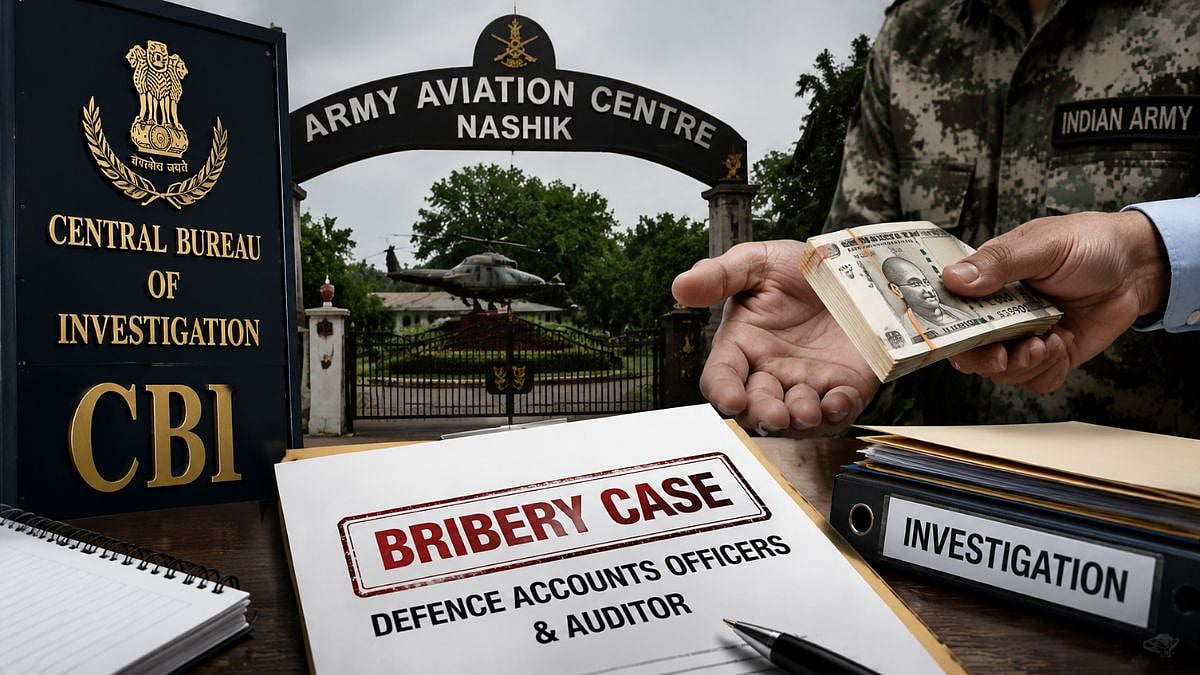
The Central Bureau of Investigation (CBI) has registered two separate cases against defence accounts officers and an auditor posted at the Army Aviation Centre in Nashik. The cases allege that the officials accepted bribes from army personnel to ensure timely disbursement of their genuine payments.
The CBI received information that officials at the Pay and Accounts Office were obtaining undue advantage from army personnel for the timely disbursement of payments. A joint surprise check was conducted in November 2024 at the office premises to verify the information.
The scrutiny of mobile phone data of assistant accounts officers J. K. Meena and Kushal Sahu, and auditor A. Verma, allegedly revealed criminality on their part. A case was registered against Meena in April 2025, and during the investigation, incriminating and suspicious chats were found between the accused and other persons.
The CBI recently registered two more cases against Meena, Sahu, and Verma on charges of criminal conspiracy, bribery, and other related offences. The accused allegedly indulged in corrupt practices, including accepting bribes through their own bank accounts and those of their relatives and friends.
The Army Aviation Centre in Nashik is a key establishment for the Indian Army, and the allegations of bribery and corruption are a serious concern. The CBI's investigation is ongoing, and the registration of these cases is a significant step towards rooting out corruption in the defence establishment.
The defence accounts officers and auditor are alleged to have abused their positions to obtain undue advantage from army personnel. The timely disbursement of payments is a critical function, and any attempt to compromise this process for personal gain is a serious offence.
The CBI's action is part of a broader effort to tackle corruption in the defence establishment. The agency has been actively investigating cases of bribery and corruption in the defence sector, and these registrations are a significant step forward in this effort.
The Indian Army has a reputation for being one of the most disciplined and professional forces in the world. However, allegations of corruption and bribery can damage this reputation and undermine the trust between the army and the public.
The CBI's investigation will help to establish the facts of the case and bring those responsible to justice. The registration of these cases is a reminder that corruption will not be tolerated in the defence establishment, and those who engage in such practices will be held accountable.
In conclusion, the registration of these cases by the CBI is a significant development in the effort to tackle corruption in the defence establishment. The allegations of bribery and corruption are serious, and the investigation will help to establish the facts and bring those responsible to justice. This case highlights the importance of transparency and accountability in the defence sector and the need for ongoing efforts to root out corruption and ensure that the defence establishment operates with integrity.
The case also raises questions about the broader issue of corruption in the defence sector and the need for more effective measures to prevent and detect such practices. The CBI's investigation will provide valuable insights into the nature and extent of corruption in the defence establishment and help to identify areas for improvement.
Overall, the registration of these cases is a positive step towards promoting transparency and accountability in the defence sector. It is essential to continue to monitor the situation and ensure that those responsible for corruption are held accountable. The Indian public expects the defence establishment to operate with integrity, and it is the responsibility of the authorities to ensure that this expectation is met.
The CBI's action in this case demonstrates the agency's commitment to tackling corruption in the defence sector. The investigation will help to establish the facts and bring those responsible to justice, and it will also provide valuable insights into the nature and extent of corruption in the defence establishment.
In the context of the Indian defence sector, this case is a reminder that corruption can have serious consequences. The defence establishment plays a critical role in protecting the nation, and any attempt to compromise this function for personal gain is a serious offence. The CBI's investigation will help to ensure that the defence establishment operates with integrity and that those who engage in corrupt practices are held accountable.
The case also highlights the importance of ongoing efforts to prevent and detect corruption in the defence sector. The CBI's investigation will provide valuable insights into the nature and extent of corruption in the defence establishment, and it will help to identify areas for improvement. The Indian public expects the defence establishment to operate with integrity, and it is the responsibility of the authorities to ensure that this expectation is met.
In conclusion, the registration of these cases by the CBI is a significant development in the effort to tackle corruption in the defence establishment. The allegations of bribery and corruption are serious, and the investigation will help to establish the facts and bring those responsible to justice. This case highlights the importance of transparency and accountability in the defence sector and the need for ongoing efforts to root out corruption and ensure that the defence establishment operates with integrity.
What it means for Mumbai and India is that the defence establishment must operate with the highest level of integrity. The CBI's investigation will help to ensure that those who engage in corrupt practices are held accountable, and it will provide valuable insights into the nature and extent of corruption in the defence establishment. The Indian public expects the defence establishment to operate with integrity, and it is the responsibility of the authorities to ensure that this expectation is met.