India Sees Opportunity In Britain's New Chapter
India views Andy Burnham's emergence as UK PM with optimism, seeking to deepen strategic partnership.
'%3E%3Crect%20width%3D'96'%20height%3D'96'%20fill%3D'%234A235A'%2F%3E%3Ccircle%20cx%3D'30'%20cy%3D'24'%20r%3D'44'%20fill%3D'%23fff'%20opacity%3D'.12'%2F%3E%3Ccircle%20cx%3D'60'%20cy%3D'74'%20r%3D'40'%20fill%3D'%23000'%20opacity%3D'.10'%2F%3E%3C%2Fg%3E%3Cg%20fill%3D'none'%20stroke%3D'%23fff'%20stroke-width%3D'3'%3E%3Ccircle%20cx%3D'48'%20cy%3D'48'%20r%3D'16'%2F%3E%3Cellipse%20cx%3D'48'%20cy%3D'48'%20rx%3D'6.5'%20ry%3D'16'%2F%3E%3Cline%20x1%3D'32'%20y1%3D'42'%20x2%3D'64'%20y2%3D'42'%2F%3E%3Cline%20x1%3D'32'%20y1%3D'54'%20x2%3D'64'%20y2%3D'54'%2F%3E%3C%2Fg%3E%3C%2Fsvg%3E)
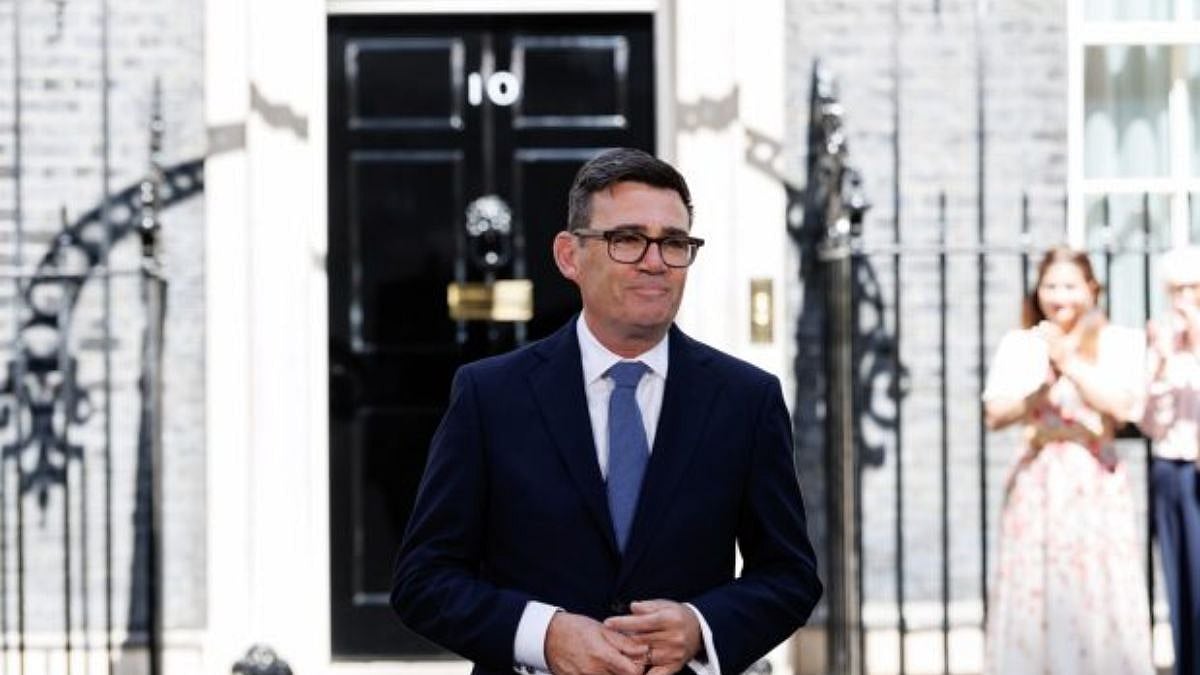
Andy Burnham's appointment as Britain's new Prime Minister is being viewed with cautious optimism in New Delhi. Unlike previous political transitions in the UK, Burnham's arrival is unlikely to alter the trajectory of India-UK relations. Instead, it offers an opportunity to consolidate gains and deepen one of Britain's fastest-growing strategic partnerships.
The focus is shifting from negotiating agreements to executing them. The recently concluded Comprehensive Economic and Trade Agreement (CETA) is expected to raise bilateral trade by about £25.5 billion annually over the long term. This agreement, alongside greater investment, defence cooperation, and technology partnerships, will dominate the bilateral agenda.
The India-UK partnership extends well beyond trade, with bilateral trade already crossing £42 billion. More than 970 Indian companies operate in Britain, employing over 100,000 people, while Britain remains among the largest G-20 investors in India. Cooperation now spans defence manufacturing, artificial intelligence, cyber security, clean energy, fintech, semiconductors, and higher education.
New Delhi's expectations from Burnham are pragmatic, seeking timely implementation of CETA, smoother regulatory procedures, easier mobility for professionals, stronger innovation partnerships, and predictable investment rules. Trade agreements create opportunities only when translated into commercial outcomes. Indian exporters, British manufacturers, and investors need policy stability and efficient implementation.
Burnham assumes office amid formidable domestic challenges, including a prolonged cost-of-living crisis, sluggish economic growth, and strained public services. These domestic pressures are expected to dominate his initial months in office. However, this inward focus could strengthen ties with India, as governments seeking economic revival naturally look for reliable partners capable of generating investment, jobs, and exports.
India, the world's fastest-growing major economy, fits that requirement. British companies view India as a key destination for manufacturing, financial services, healthcare, renewable energy, and digital innovation. If Burnham focuses on delivery rather than reopening settled negotiations, bilateral economic ties could enter their strongest phase since Brexit.
The implementation of CETA and other agreements will be crucial in determining the future of India-UK relations. With the right policies and implementation, the partnership between the two countries could reach new heights, benefiting both economies and creating new opportunities for trade, investment, and cooperation.
In conclusion, Andy Burnham's emergence as UK PM is seen as an opportunity for India to deepen its strategic partnership with Britain. With the right focus on implementation and delivery, the two countries can build on their existing cooperation and create a stronger, more prosperous partnership for the future.
The significance of this development for India and the UK cannot be overstated. As two major economies, they have the potential to create a powerful partnership that can drive growth, investment, and innovation. With the implementation of CETA and other agreements, the stage is set for a new era of cooperation between India and the UK.
Frequently asked questions
What is the expected impact of CETA on India-UK trade?
CETA is expected to raise bilateral trade by about £25.5 billion annually over the long term.
What are India's expectations from the new UK government?
India seeks timely implementation of CETA, smoother regulatory procedures, and stronger innovation partnerships.