Congress MP Imran Masood Criticises Sonam Wangchuk Over Hunger Strike End
Congress MP criticises climate activist, alleges personal deal with government
'%3E%3Crect%20width%3D'96'%20height%3D'96'%20fill%3D'%231A5276'%2F%3E%3Ccircle%20cx%3D'30'%20cy%3D'24'%20r%3D'44'%20fill%3D'%23fff'%20opacity%3D'.12'%2F%3E%3Ccircle%20cx%3D'60'%20cy%3D'74'%20r%3D'40'%20fill%3D'%23000'%20opacity%3D'.10'%2F%3E%3C%2Fg%3E%3Cg%20fill%3D'%23fff'%3E%3Cpath%20d%3D'M31%2041%20L48%2031%20L65%2041%20Z'%2F%3E%3Crect%20x%3D'33'%20y%3D'43'%20width%3D'4'%20height%3D'17'%2F%3E%3Crect%20x%3D'41'%20y%3D'43'%20width%3D'4'%20height%3D'17'%2F%3E%3Crect%20x%3D'51'%20y%3D'43'%20width%3D'4'%20height%3D'17'%2F%3E%3Crect%20x%3D'59'%20y%3D'43'%20width%3D'4'%20height%3D'17'%2F%3E%3Crect%20x%3D'30'%20y%3D'62'%20width%3D'36'%20height%3D'4'%20rx%3D'1'%2F%3E%3C%2Fg%3E%3C%2Fsvg%3E)
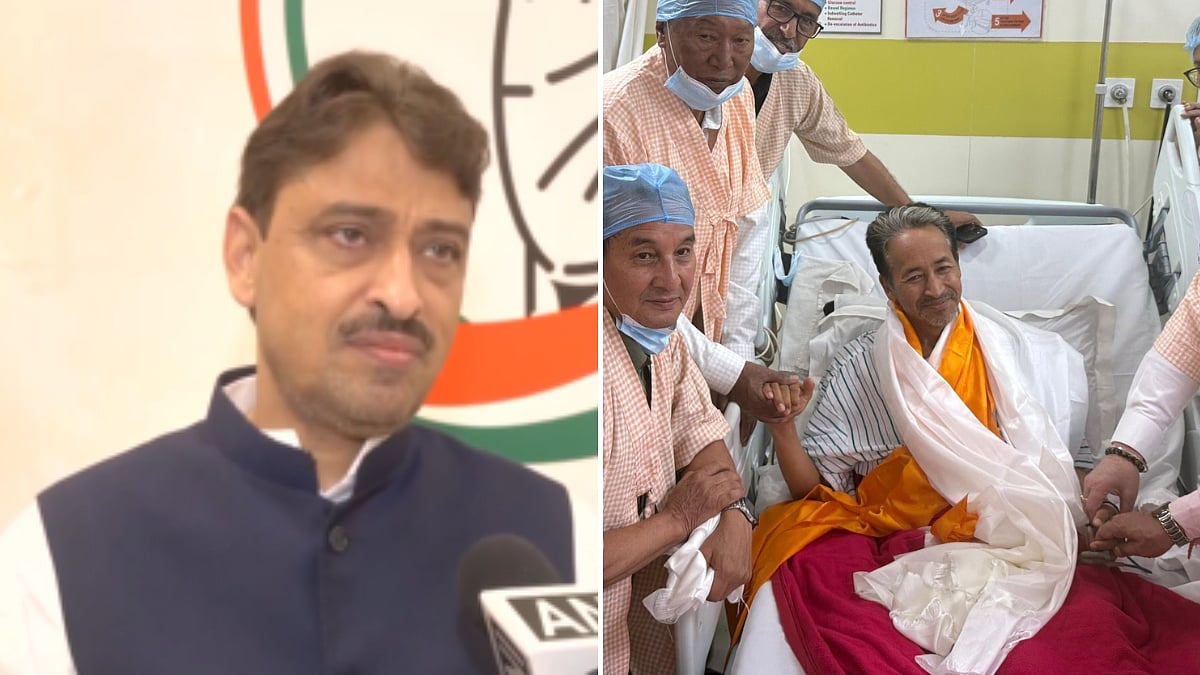
Congress MP Imran Masood has criticised climate activist Sonam Wangchuk for ending his 26-day hunger strike, alleging that the decision was a result of a personal deal with the government.
Masood compared Wangchuk to veteran social activist Anna Hazare, questioning the circumstances under which the fast was called off.
He stated that Wangchuk's decision to end the hunger strike seemed to be a result of a personal agreement with the government, rather than a genuine resolution to the issues raised during the protest.
Wangchuk's wife, Dr Gitanjali Angmo, explained that the government had provided written confirmation accepting key demands, including no FIRs against student protesters and compensation for NEET paper leak victims.
The government has also agreed to discuss educational reforms during the ongoing Monsoon Session of Parliament.
A delegation of Opposition MPs had assured Wangchuk that the issues raised during the protest would be taken up in Parliament.
Despite this, Masood expressed his dissatisfaction with the way the hunger strike was ended, suggesting that Wangchuk had compromised on his principles.
The hunger strike was called off after Wangchuk received written assurances from the government, which included protection for student protesters from legal action.
Wangchuk's wife termed the agitation a success, stating that the NEET paper leak was only a symptom of deeper systemic issues in the education sector.
She expressed hope that the movement would serve as a wake-up call for policymakers.
The development comes after a delegation of Opposition MPs, including Congress Rajya Sabha MP Vivek Tankha, met Wangchuk and urged him to end his indefinite fast.
The MPs had assured Wangchuk that the issues raised during the protest would be taken up in Parliament.
The government's decision to accept the key demands has been seen as a significant victory for the protesters.
However, Masood's criticism of Wangchuk has raised questions about the nature of the agreement and the motivations behind the hunger strike.
The incident highlights the complexities of social activism and the challenges faced by protesters in achieving their goals.
In the end, the outcome of the hunger strike and the government's response will have significant implications for the education sector and the future of student protests in the country.
Frequently asked questions
Why did Sonam Wangchuk end his hunger strike?
Wangchuk ended his hunger strike after receiving written assurances from the government, which included protection for student protesters from legal action and discussion on educational reforms in Parliament.
What were the key demands accepted by the government?
The government accepted key demands, including no FIRs against student protesters, compensation for NEET paper leak victims, and discussion on educational reforms in Parliament.