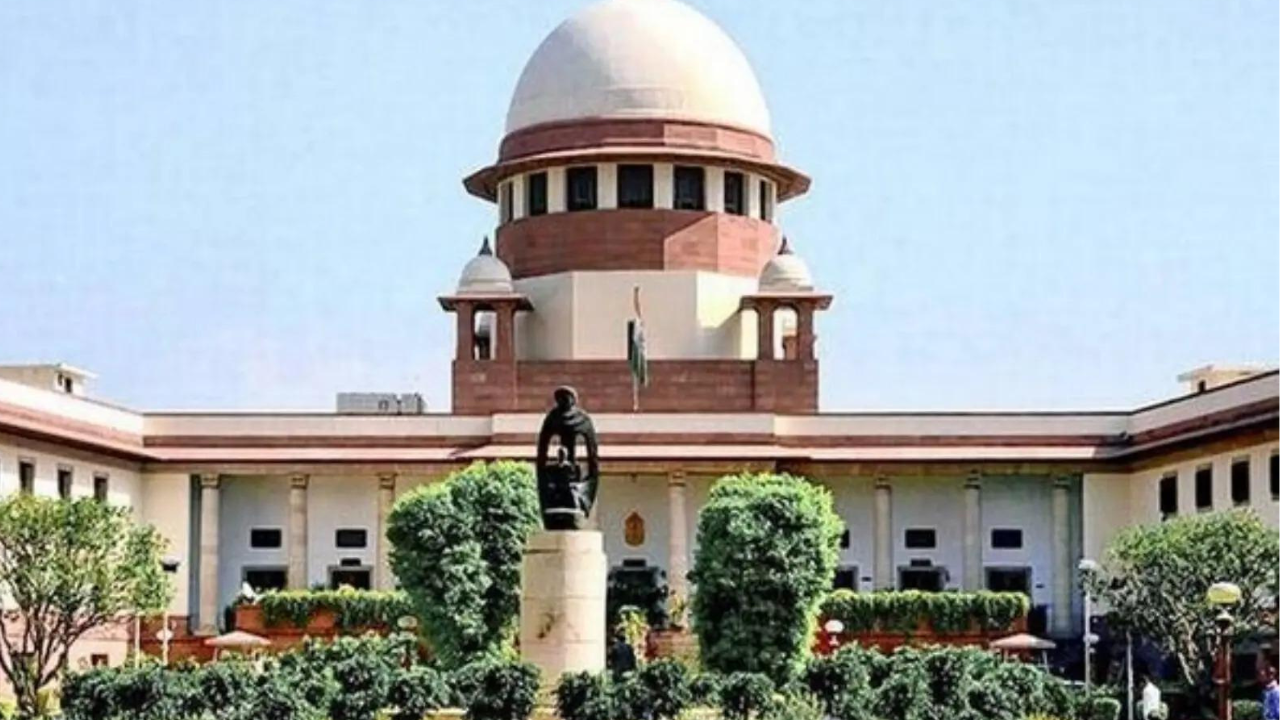
SC Links Poverty to Delinquency in Minors
Poverty and inequality lead to delinquency in minors, says SC.
'%3E%3Crect%20width%3D'96'%20height%3D'96'%20fill%3D'%231A5276'%2F%3E%3Ccircle%20cx%3D'30'%20cy%3D'24'%20r%3D'44'%20fill%3D'%23fff'%20opacity%3D'.12'%2F%3E%3Ccircle%20cx%3D'60'%20cy%3D'74'%20r%3D'40'%20fill%3D'%23000'%20opacity%3D'.10'%2F%3E%3C%2Fg%3E%3Cg%20fill%3D'%23fff'%3E%3Cpath%20d%3D'M31%2041%20L48%2031%20L65%2041%20Z'%2F%3E%3Crect%20x%3D'33'%20y%3D'43'%20width%3D'4'%20height%3D'17'%2F%3E%3Crect%20x%3D'41'%20y%3D'43'%20width%3D'4'%20height%3D'17'%2F%3E%3Crect%20x%3D'51'%20y%3D'43'%20width%3D'4'%20height%3D'17'%2F%3E%3Crect%20x%3D'59'%20y%3D'43'%20width%3D'4'%20height%3D'17'%2F%3E%3Crect%20x%3D'30'%20y%3D'62'%20width%3D'36'%20height%3D'4'%20rx%3D'1'%2F%3E%3C%2Fg%3E%3C%2Fsvg%3E)

The Supreme Court has stated that poverty and inequality are key factors that contribute to delinquency in minors. This observation highlights the need for addressing socio-economic disparities to prevent juvenile delinquency.
The court's statement emphasizes the significance of providing equal opportunities and access to resources for all individuals, particularly children. By doing so, it aims to prevent the seeds of delinquency from being sown in young minds.
Poverty and inequality can have far-reaching consequences on a child's development, often leading to a lack of access to education, healthcare, and other essential services. This, in turn, can increase the likelihood of minors engaging in delinquent behavior.
The Supreme Court's observation is a wake-up call for policymakers and stakeholders to re-examine the existing social and economic structures. It underscores the importance of implementing policies that promote equality, provide support to underprivileged children, and address the root causes of delinquency.
In recent years, India has witnessed a rise in juvenile delinquency, with many cases being reported across the country. The Supreme Court's statement serves as a reminder that a multi-faceted approach is required to tackle this issue.
The government, NGOs, and community organizations must work together to provide support to vulnerable children and families. This can include initiatives such as education and skills training, healthcare services, and counseling programs.
By addressing the socio-economic factors that contribute to delinquency, India can take a significant step towards reducing juvenile crime and creating a safer, more equitable society for all.
The Supreme Court's observation has significant implications for India's juvenile justice system. It highlights the need for a more nuanced approach that takes into account the complex interplay of factors that contribute to delinquency.
Ultimately, the Supreme Court's statement serves as a reminder that poverty and inequality are not just social issues, but also key factors that contribute to delinquency in minors. By addressing these underlying causes, India can work towards creating a brighter, more secure future for its children.
In conclusion, the Supreme Court's observation underscores the importance of addressing poverty and inequality to prevent delinquency in minors. It is a call to action for policymakers, stakeholders, and community organizations to work together towards creating a more equitable society that provides opportunities for all children to thrive.
Frequently asked questions
What are the main factors that contribute to delinquency in minors according to the SC?
The Supreme Court has stated that poverty and inequality are key factors that contribute to delinquency in minors.
What can be done to prevent delinquency in minors?
Addressing socio-economic disparities, providing equal opportunities, and access to resources can help prevent delinquency in minors.