India Rock Reveals 3.4 Billion-Year-Old Life Signs
Ancient Indian rocks hold Earth's oldest life signs. Researchers find 3.4 billion-year-old biological traces.
'%3E%3Crect%20width%3D'96'%20height%3D'96'%20fill%3D'%23B3261E'%2F%3E%3Ccircle%20cx%3D'30'%20cy%3D'24'%20r%3D'44'%20fill%3D'%23fff'%20opacity%3D'.12'%2F%3E%3Ccircle%20cx%3D'60'%20cy%3D'74'%20r%3D'40'%20fill%3D'%23000'%20opacity%3D'.10'%2F%3E%3C%2Fg%3E%3Cg%20fill%3D'%23fff'%3E%3Crect%20x%3D'29'%20y%3D'49'%20width%3D'8'%20height%3D'19'%20rx%3D'1'%2F%3E%3Crect%20x%3D'39'%20y%3D'40'%20width%3D'9'%20height%3D'28'%20rx%3D'1'%2F%3E%3Crect%20x%3D'50'%20y%3D'45'%20width%3D'8'%20height%3D'23'%20rx%3D'1'%2F%3E%3Crect%20x%3D'60'%20y%3D'53'%20width%3D'7'%20height%3D'15'%20rx%3D'1'%2F%3E%3Crect%20x%3D'41'%20y%3D'34'%20width%3D'5'%20height%3D'6'%2F%3E%3C%2Fg%3E%3C%2Fsvg%3E)
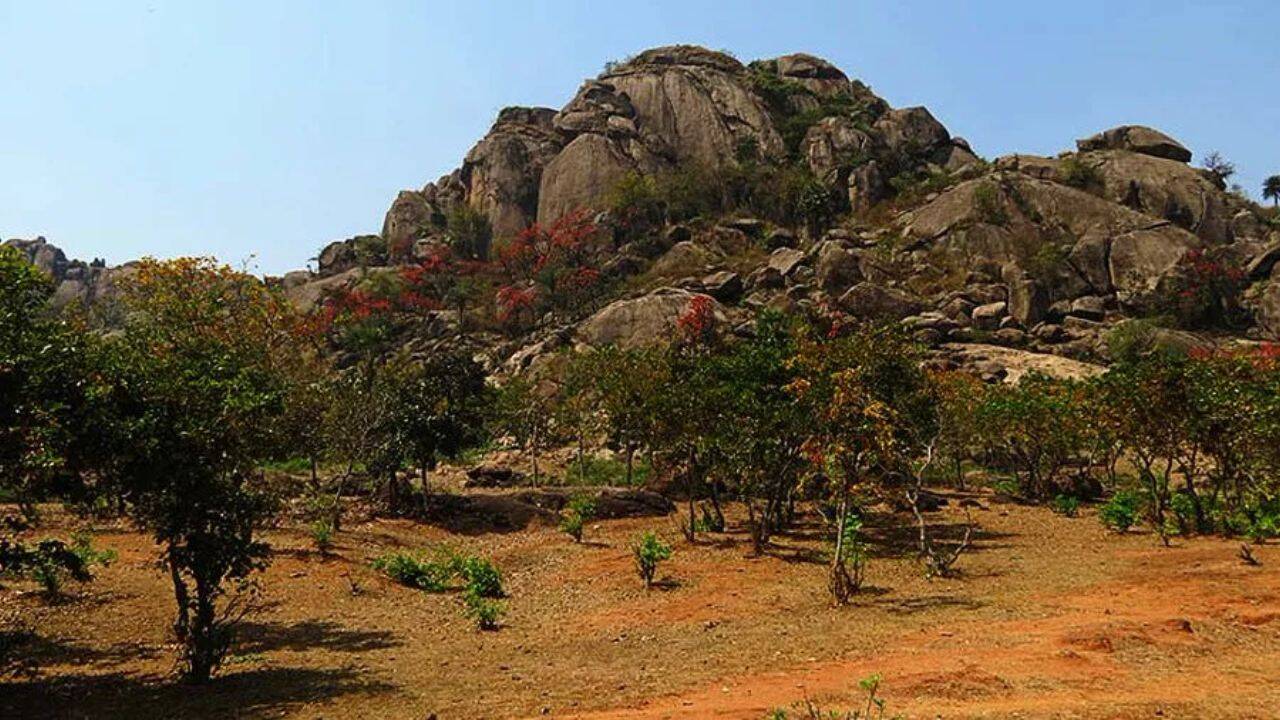
A groundbreaking discovery in India has unearthed evidence of biological activity dating back approximately 3.4 billion years. This finding suggests that life on Earth may have originated much earlier than previously thought.
The research team has confirmed the presence of photosynthetic activity and complex metabolic processes within the ancient rock samples. These samples originated from environments similar to underwater hydrothermal vents, which are known to support unique ecosystems.
The discovery was made possible by the analysis of rock formations in India, which revealed the presence of biological traces. The researchers used advanced techniques to study the samples and confirm the presence of ancient life signs.
The finding is significant, as it represents the oldest known biological materials found in rock formations. The discovery provides valuable insights into the origins of life on Earth and the conditions that supported the emergence of early life forms.
The research team's findings have shed new light on the history of life on Earth. The discovery of 3.4 billion-year-old biological traces in Indian rocks has sparked excitement among scientists, who believe that this finding could have major implications for our understanding of the origins of life.
The ancient rocks found in India are a treasure trove of information about the early Earth. The discovery of biological traces in these rocks has opened up new avenues for research, as scientists seek to understand the conditions that supported the emergence of life on our planet.
The finding is also significant because it highlights the importance of India's geological heritage. The country's rich geological history has made it an attractive destination for scientists seeking to understand the Earth's early history.
In conclusion, the discovery of 3.4 billion-year-old life signs in Indian rocks is a major breakthrough in our understanding of the origins of life on Earth. The finding has significant implications for the scientific community and highlights the importance of continued research into the Earth's early history.
The discovery of ancient life signs in India has sparked a new wave of interest in the country's geological heritage. As scientists continue to study the ancient rocks, they hope to uncover more secrets about the early Earth and the emergence of life on our planet.
The research team's findings have also raised questions about the possibility of life existing elsewhere in the universe. The discovery of ancient life signs on Earth has implications for the search for life beyond our planet.
The search for life beyond Earth is an ongoing area of research, with scientists using a variety of techniques to search for signs of life. The discovery of 3.4 billion-year-old life signs in Indian rocks has provided new insights into the conditions that support the emergence of life, which could be used to inform the search for life elsewhere in the universe.
The discovery of ancient life signs in India is a reminder of the importance of continued research into the Earth's early history. As scientists continue to study the ancient rocks, they hope to uncover more secrets about the emergence of life on our planet and the possibility of life existing elsewhere in the universe.
Frequently asked questions
How old are the biological traces found in Indian rocks?
The biological traces found in Indian rocks are approximately 3.4 billion years old.
What type of activity has been detected in the ancient rock samples?
Photosynthetic activity and complex metabolic processes have been detected in the ancient rock samples.