BK Birla College Screens 225 Students for Thalassemia
Kalyan college holds thalassemia camp, over 225 students tested. Experts stress premarital screening.
'%3E%3Crect%20width%3D'96'%20height%3D'96'%20fill%3D'%23B3261E'%2F%3E%3Ccircle%20cx%3D'30'%20cy%3D'24'%20r%3D'44'%20fill%3D'%23fff'%20opacity%3D'.12'%2F%3E%3Ccircle%20cx%3D'60'%20cy%3D'74'%20r%3D'40'%20fill%3D'%23000'%20opacity%3D'.10'%2F%3E%3C%2Fg%3E%3Cg%20fill%3D'%23fff'%3E%3Crect%20x%3D'29'%20y%3D'49'%20width%3D'8'%20height%3D'19'%20rx%3D'1'%2F%3E%3Crect%20x%3D'39'%20y%3D'40'%20width%3D'9'%20height%3D'28'%20rx%3D'1'%2F%3E%3Crect%20x%3D'50'%20y%3D'45'%20width%3D'8'%20height%3D'23'%20rx%3D'1'%2F%3E%3Crect%20x%3D'60'%20y%3D'53'%20width%3D'7'%20height%3D'15'%20rx%3D'1'%2F%3E%3Crect%20x%3D'41'%20y%3D'34'%20width%3D'5'%20height%3D'6'%2F%3E%3C%2Fg%3E%3C%2Fsvg%3E)
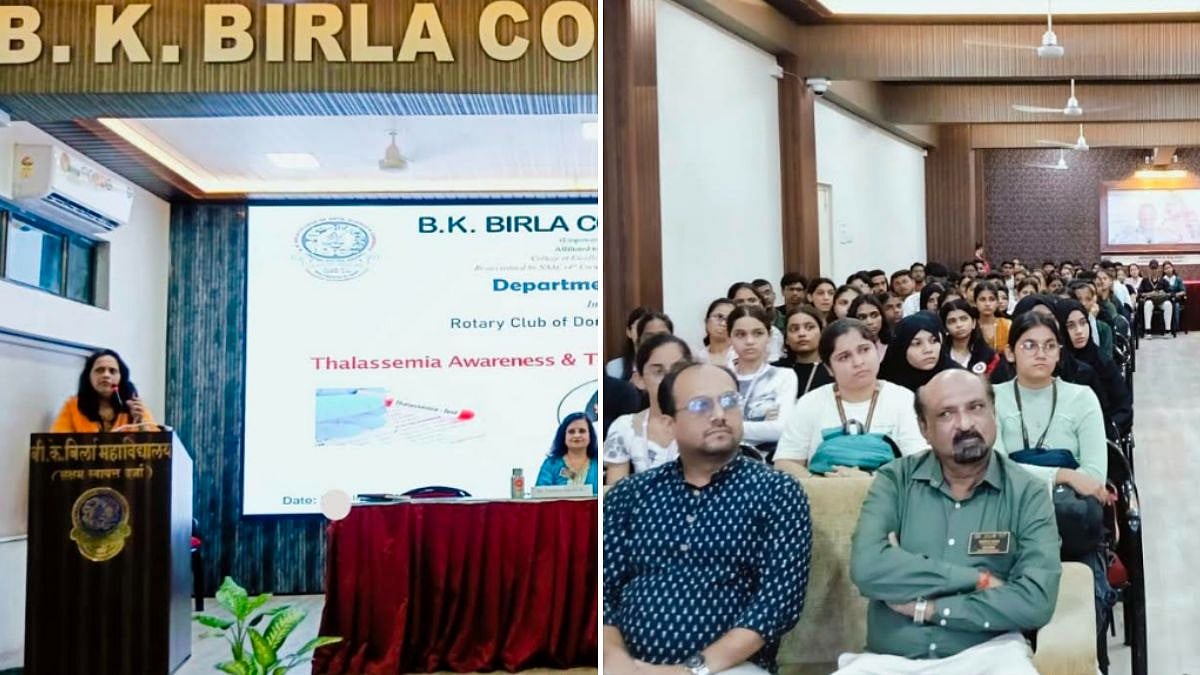
A thalassemia awareness and screening camp was held at B.K. Birla College in Kalyan on Tuesday, where over 225 students underwent tests. The camp was organised by the college's Department of Microbiology in collaboration with the Rotary Club of Dombivli Diamonds.
The programme aimed to educate students about thalassemia, an inherited blood disorder, and the importance of early diagnosis to prevent its transmission to future generations. Medical experts at the camp highlighted the role of premarital screening in identifying carriers and reducing the risk of children being born with the disorder.
The camp was inaugurated by Dr Vandana Dhaktode, Project Chairperson, and attended by senior college officials and medical experts. Dr Maninder Kaur, Vice-Principal of the college, and Dr Madhav Baitule, senior pathologist, were among those present. Dr Rajesh Kadam addressed students on the importance of timely screening and awareness.
As part of the programme, an educational video was screened explaining the causes, symptoms, inheritance pattern, and preventive measures related to thalassemia. The programme coordinator, Dr Dheeraj Shekhawat, urged students to take genetic disorders seriously and become ambassadors of awareness within their families and communities.
The college officials emphasized that educational institutions have an important role to play in creating awareness about hereditary diseases through regular screening programmes. The camp was conducted under the guidance of Dr Harish Dubey, Dr Sandesh Jayabhaye, and Ms Maitri.
The Rotary Club of Dombivli Diamonds provided logistical and organisational support to ensure the smooth conduct of the programme. The camp reflected an encouraging response to the college's efforts to promote early detection and informed healthcare decisions among the youth.
Thalassemia is a genetic disorder that affects the production of haemoglobin, a protein in red blood cells that carries oxygen to the body's tissues. It is a significant health concern in India, and early diagnosis and treatment can help prevent its transmission to future generations.
The college's initiative is part of a larger effort to promote preventive healthcare and genetic disease awareness among young adults. By educating students about thalassemia and the importance of early diagnosis, the college aims to empower them to make informed healthcare decisions and become agents of change in their communities.
The success of the camp is a testament to the college's commitment to promoting health awareness and education among its students. With the support of organisations like the Rotary Club of Dombivli Diamonds, the college can continue to provide valuable resources and information to its students, helping them to make a positive impact on their communities.
In conclusion, the thalassemia awareness and screening camp held at B.K. Birla College is an important step towards promoting preventive healthcare and genetic disease awareness among young adults. By working together, educational institutions, healthcare organisations, and community groups can help prevent the transmission of genetic disorders and promote healthy living.
The camp's impact will be felt for years to come, as the students who participated in the screening and education programme will be equipped with the knowledge and skills to make informed healthcare decisions and promote health awareness in their communities.
Frequently asked questions
What is thalassemia and how is it transmitted?
Thalassemia is a genetic disorder that affects the production of haemoglobin, and it is transmitted from parents to children through genes.
Why is premarital screening important for thalassemia prevention?
Premarital screening is important because it helps identify carriers of the disorder, reducing the risk of children being born with thalassemia.