Ganesh Chaturthi: Traditional Bhog Offerings Across India
Ganesh Chaturthi celebrations vary across India, with unique bhog offerings in each region.
'%3E%3Crect%20width%3D'96'%20height%3D'96'%20fill%3D'%23B3261E'%2F%3E%3Ccircle%20cx%3D'30'%20cy%3D'24'%20r%3D'44'%20fill%3D'%23fff'%20opacity%3D'.12'%2F%3E%3Ccircle%20cx%3D'60'%20cy%3D'74'%20r%3D'40'%20fill%3D'%23000'%20opacity%3D'.10'%2F%3E%3C%2Fg%3E%3Cg%20fill%3D'%23fff'%3E%3Crect%20x%3D'29'%20y%3D'49'%20width%3D'8'%20height%3D'19'%20rx%3D'1'%2F%3E%3Crect%20x%3D'39'%20y%3D'40'%20width%3D'9'%20height%3D'28'%20rx%3D'1'%2F%3E%3Crect%20x%3D'50'%20y%3D'45'%20width%3D'8'%20height%3D'23'%20rx%3D'1'%2F%3E%3Crect%20x%3D'60'%20y%3D'53'%20width%3D'7'%20height%3D'15'%20rx%3D'1'%2F%3E%3Crect%20x%3D'41'%20y%3D'34'%20width%3D'5'%20height%3D'6'%2F%3E%3C%2Fg%3E%3C%2Fsvg%3E)
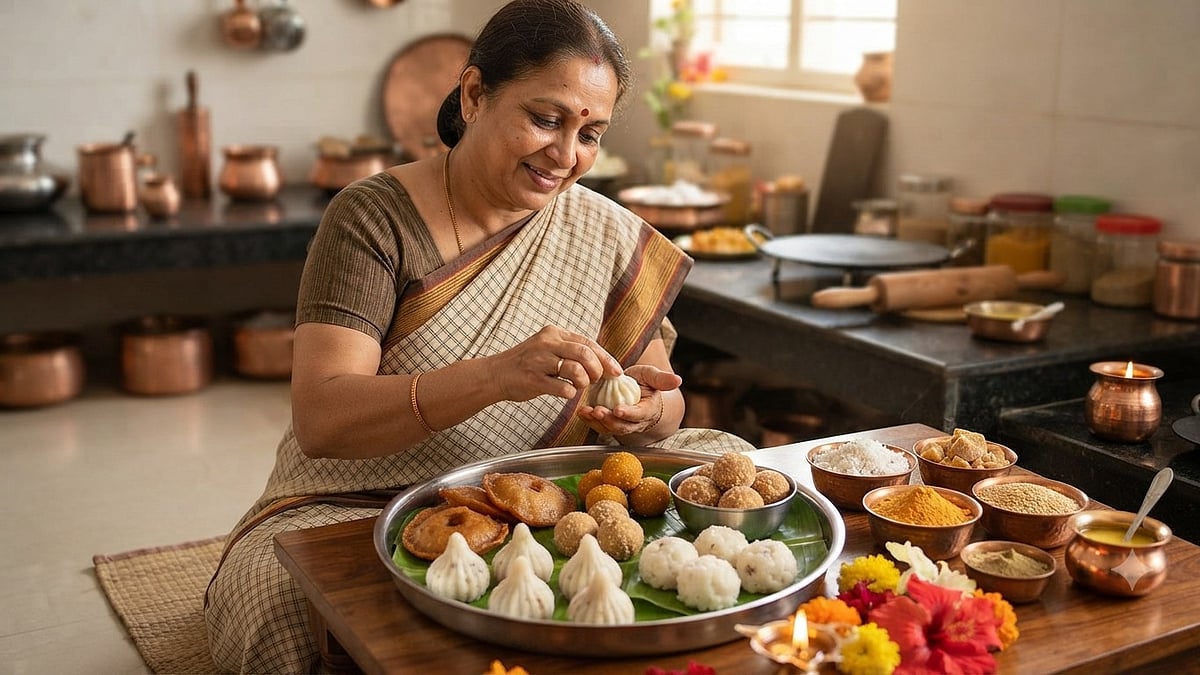
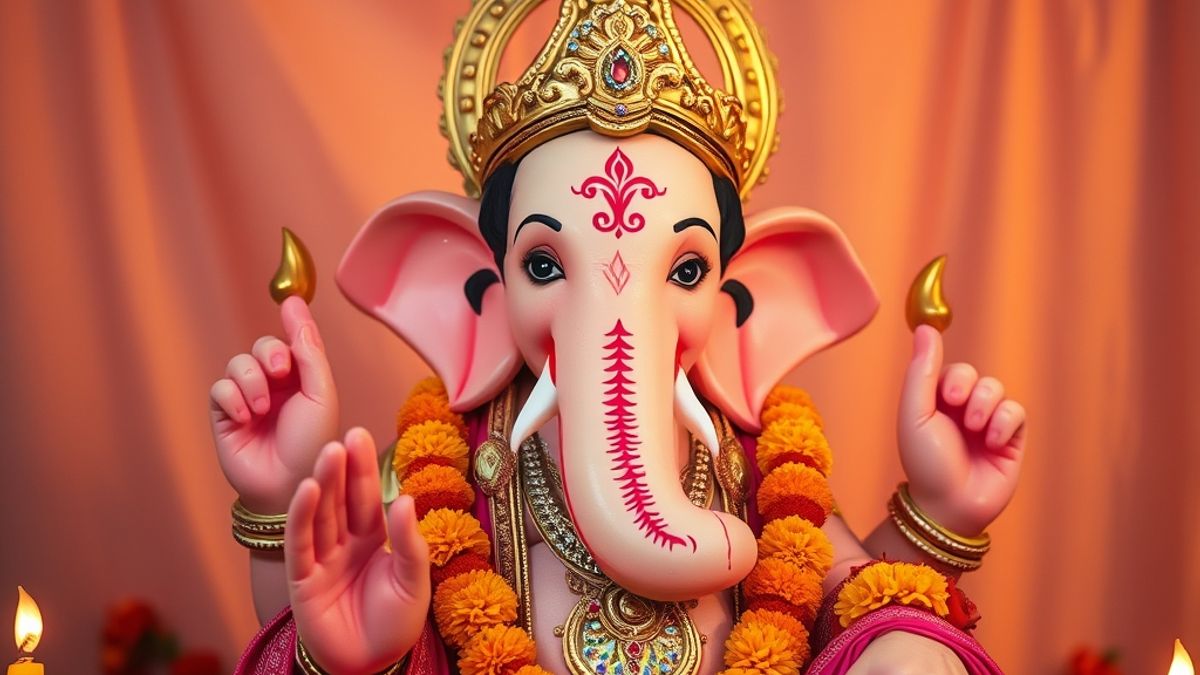
Ganesh Chaturthi, a festival celebrating the birth of Lord Ganesha, is observed with great fervor across India. While modaks are a quintessential offering to the elephant-headed god, different regions have their own special bhog offerings.
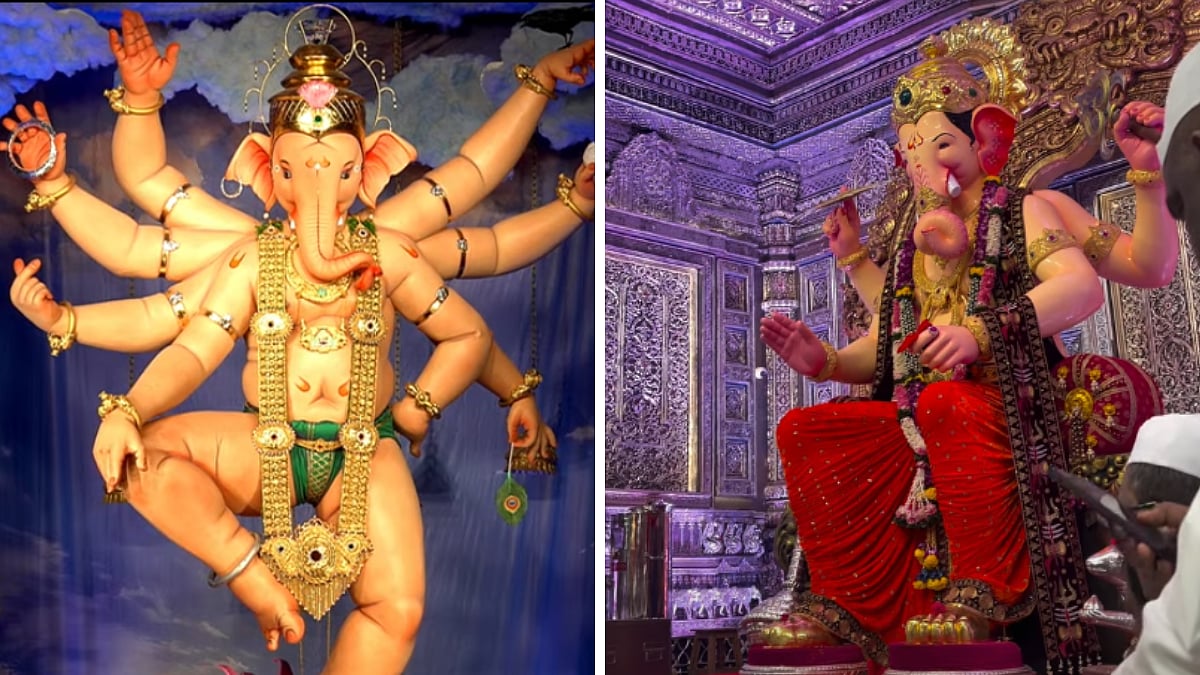
In Andhra Pradesh and Telangana, people bring home mud idols of Vinayaka and offer poornam kudumulu, steamed undrallu, and payasam. These traditional offerings are distributed as prasadams among devotees at neighborhood pandals and the iconic Khairatabad Ganesha pandal in Hyderabad.
In Karnataka, Vinakaya Chaturthi is closely associated with Gowri Ganesha, celebrated the day before Chaturthi. The main naivedyam is a traditional five-ingredient dry bhog called Panchakajjaya, consisting of roasted chana dal powder, coconut, jaggery, sesame seeds, and clarified butter. Other bhogs include modaka, kadabu, payasa, and laddu.
In Goa, the festival is regionally referred to as Chovoth and is a deep connect with nature and an intimate family festival. The day before, Goddess Parvati is worshipped as Tai, and the Ganapati idol is decked with a matoli, a canopy adorned with seasonal fruits, herbs, and foliage from nearby hills. Devotees prepare modaks, patoleo, and other traditional dishes like sanna, khatkhate, and nivagrya.
In Tamil Nadu, the festival is popular as Pillayar Chaturthi or Vinayagar Chaturthi, and Tamilians bring home Ganpathy idols, adorning the palagai with flowers, fragrance sticks, and fruits. Naivedyam comes in the form of delightful poornam and uppu kozhukattai, coconut-jaggery-cardamom steamed modak and savory respectively.
These unique bhog offerings reflect the diversity and richness of Indian culture, with each region adding its own flavor to the celebrations. The festival is a time for family, friends, and community to come together and worship Lord Ganesha, the remover of obstacles and the god of new beginnings.
The traditional bhog offerings are an integral part of the festival, and each region has its own special dishes and preparations. The festival is a time for feasting, singing, and dancing, and the traditional bhog offerings are a big part of the celebrations.
In conclusion, Ganesh Chaturthi is a festival that celebrates the birth of Lord Ganesha, and the traditional bhog offerings are an integral part of the celebrations. Each region has its own unique offerings, reflecting the diversity and richness of Indian culture.
The festival is a time for worship, feasting, and celebration, and the traditional bhog offerings are a big part of the festivities. Whether it's modaks, poornam kudumulu, or patoleo, each dish is prepared with love and devotion, and offered to Lord Ganesha with great fervor.
The traditional bhog offerings are a testament to the richness and diversity of Indian culture, and the festival is a time for family, friends, and community to come together and celebrate the birth of Lord Ganesha.
The significance of Ganesh Chaturthi and the traditional bhog offerings cannot be overstated, as they bring people together and promote a sense of community and belonging. The festival is a time for joy, celebration, and worship, and the traditional bhog offerings are an integral part of the festivities.