Satara Tehsils Face Water Crisis Amidst Monsoon
Maan and Khatav tehsils in Satara district struggle with water shortage, 39 tankers supply drinking water to 51,544 people and 43,466 cattle.
'%3E%3Crect%20width%3D'96'%20height%3D'96'%20fill%3D'%23B3261E'%2F%3E%3Ccircle%20cx%3D'30'%20cy%3D'24'%20r%3D'44'%20fill%3D'%23fff'%20opacity%3D'.12'%2F%3E%3Ccircle%20cx%3D'60'%20cy%3D'74'%20r%3D'40'%20fill%3D'%23000'%20opacity%3D'.10'%2F%3E%3C%2Fg%3E%3Cg%20fill%3D'%23fff'%3E%3Crect%20x%3D'29'%20y%3D'49'%20width%3D'8'%20height%3D'19'%20rx%3D'1'%2F%3E%3Crect%20x%3D'39'%20y%3D'40'%20width%3D'9'%20height%3D'28'%20rx%3D'1'%2F%3E%3Crect%20x%3D'50'%20y%3D'45'%20width%3D'8'%20height%3D'23'%20rx%3D'1'%2F%3E%3Crect%20x%3D'60'%20y%3D'53'%20width%3D'7'%20height%3D'15'%20rx%3D'1'%2F%3E%3Crect%20x%3D'41'%20y%3D'34'%20width%3D'5'%20height%3D'6'%2F%3E%3C%2Fg%3E%3C%2Fsvg%3E)
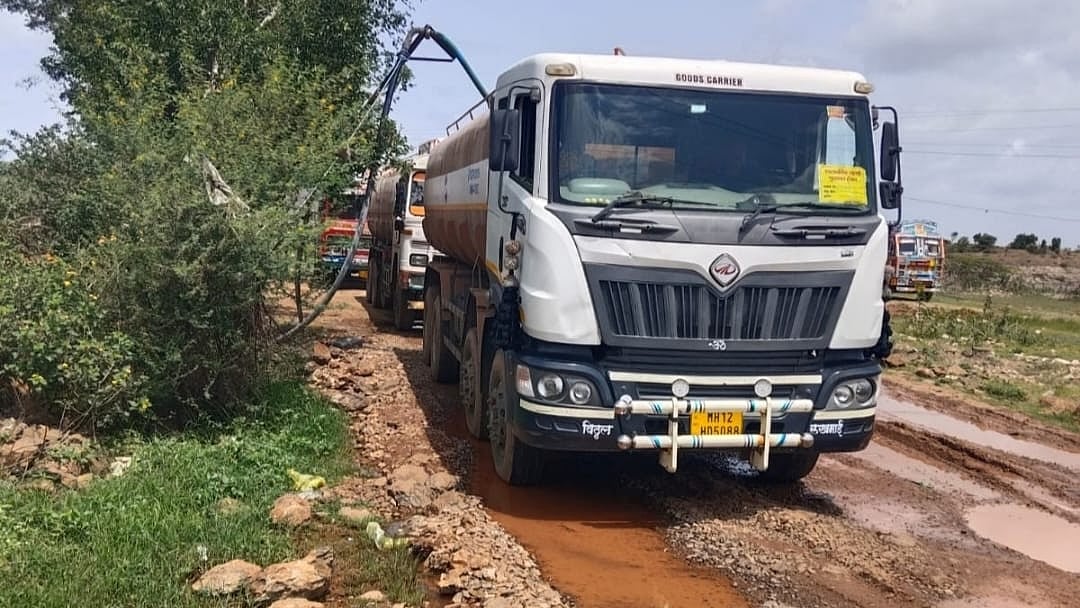
Maan and Khatav tehsils in Satara district are facing a severe water shortage despite the monsoon being at its peak. As of mid-August, 39 water tankers are supplying drinking water to 51,544 people and 43,466 cattle across 31 villages and 234 settlements in Maan alone.
The situation has raised fresh questions over the lack of a permanent solution to the water crisis in the two drought-prone tehsils. Residents have demanded that water be released into the Maanganga River to fill dams, bunds, and lakes and provide relief to people, livestock, and crops.
The number of tankers had crossed 60 in April and May, but some were stopped after rainfall in parts of the tehsil during May and June. However, water shortages have again intensified in July and August. Several villages have reportedly been seeking tankers for nearly a month and a half.
The current tanker supply covers villages including Bijwadi, Dangirewadi, Pachwad, and others. A review meeting on water scarcity being held in Maan during the peak monsoon is also being seen as an indication of the seriousness of the situation.
The shortage is not limited to drinking water. Farmers are watching standing crops dry up due to the lack of rain and irrigation water. Pearl millet, maize, pigeon pea, green gram, sugarcane, and onion crops have been affected. Fruit orchards are also facing stress.
Farmers had invested in land preparation, seeds, fertilisers, and pesticides, often after taking loans. They now fear losses as crops dry up. The fodder shortage has made the situation worse. Farmers and dairy producers are struggling to feed their cattle. Fodder is being sold for around ₹4,000 to ₹5,000, adding to the financial burden.
Farmers are demanding that the government start fodder camps and cattle shelters immediately. They fear that if the shortage continues, some may be forced to sell their cattle. The water crisis has become more striking because several parts of Maharashtra and neighbouring states received heavy rain in late July and August.
Many areas faced floods and flash floods, while roads and villages were cut off. In Satara, rivers and streams overflowed. The contrast between the floods in other parts of the state and the water crisis in Maan and Khatav tehsils has highlighted the need for a permanent solution to the water shortage.
The situation in Maan and Khatav tehsils is a reminder of the challenges faced by rural communities in accessing basic necessities like water. The government and local authorities must work together to find a long-term solution to the water crisis and provide relief to the affected people and livestock.
In the meantime, the residents of Maan and Khatav tehsils continue to struggle with the water shortage, relying on tankers for their daily needs. The situation is a stark reminder of the importance of addressing the water crisis and finding a sustainable solution to ensure the well-being of the people and the environment.
The water crisis in Maan and Khatav tehsils has significant implications for the local economy and the livelihoods of the people. The government must take immediate action to address the shortage and provide support to the affected farmers and communities.
In conclusion, the water crisis in Maan and Khatav tehsils is a complex issue that requires a comprehensive solution. The government, local authorities, and residents must work together to find a permanent solution to the water shortage and ensure the well-being of the people and the environment.
Frequently asked questions
Why are tankers still supplying drinking water in Satara?
Despite the monsoon, Maan and Khatav tehsils are facing a severe water shortage, and tankers are needed to supply drinking water to the residents.
What are the effects of the water shortage on farmers?
The water shortage has affected standing crops, and farmers are struggling to feed their cattle due to the fodder shortage, which is being sold at high prices.