Michigan Restores 17.5 Acres of Habitat
Michigan's Lake St. Clair shoreline transformed into natural wetlands. Habitat restored for local fish.
'%3E%3Crect%20width%3D'96'%20height%3D'96'%20fill%3D'%23B3261E'%2F%3E%3Ccircle%20cx%3D'30'%20cy%3D'24'%20r%3D'44'%20fill%3D'%23fff'%20opacity%3D'.12'%2F%3E%3Ccircle%20cx%3D'60'%20cy%3D'74'%20r%3D'40'%20fill%3D'%23000'%20opacity%3D'.10'%2F%3E%3C%2Fg%3E%3Cg%20fill%3D'%23fff'%3E%3Crect%20x%3D'29'%20y%3D'49'%20width%3D'8'%20height%3D'19'%20rx%3D'1'%2F%3E%3Crect%20x%3D'39'%20y%3D'40'%20width%3D'9'%20height%3D'28'%20rx%3D'1'%2F%3E%3Crect%20x%3D'50'%20y%3D'45'%20width%3D'8'%20height%3D'23'%20rx%3D'1'%2F%3E%3Crect%20x%3D'60'%20y%3D'53'%20width%3D'7'%20height%3D'15'%20rx%3D'1'%2F%3E%3Crect%20x%3D'41'%20y%3D'34'%20width%3D'5'%20height%3D'6'%2F%3E%3C%2Fg%3E%3C%2Fsvg%3E)
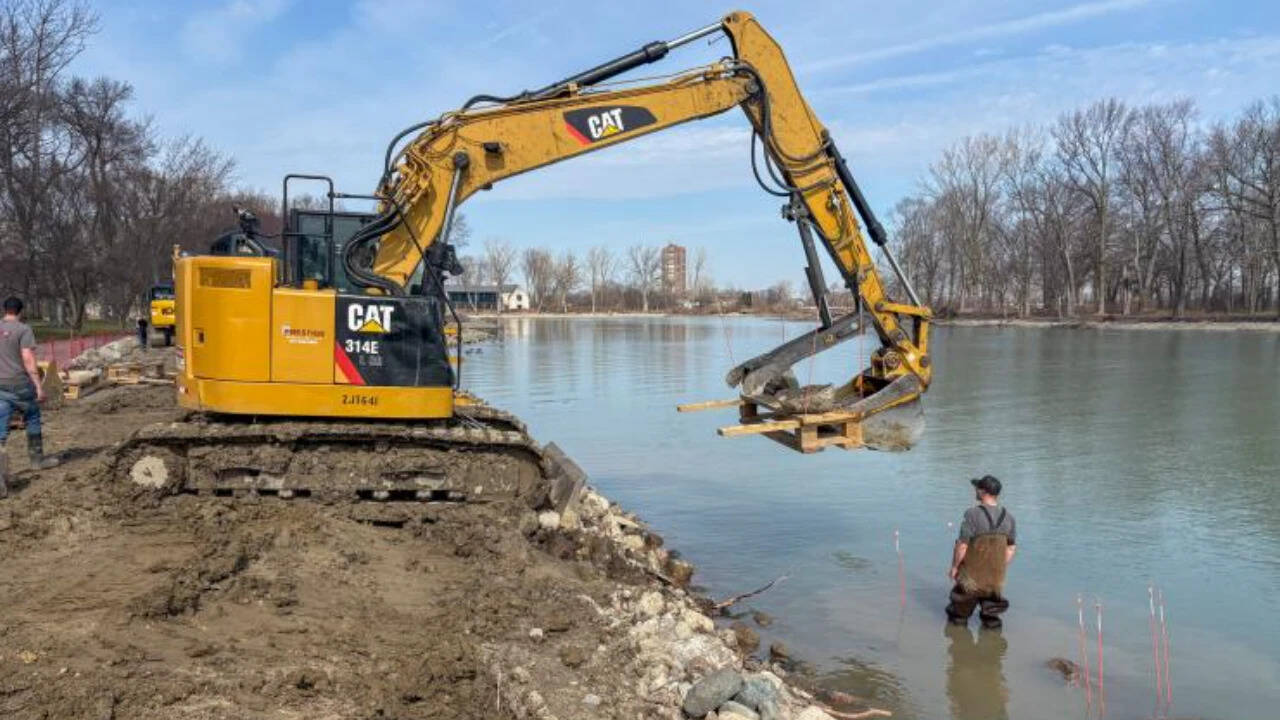
A groundbreaking project is underway along Michigan's Lake St. Clair, aiming to restore the shoreline and create thriving natural wetlands. The initiative involves dismantling decades of concrete barriers that have harmed the local ecosystem. By doing so, the project seeks to create essential habitats for local fish populations and boost biodiversity in the area.
The transformation is centered around the historic Edsel and Eleanor Ford Estate, a notable landmark in the region. The estate's coastal marshes are being revitalized as part of the project, which will not only benefit the local environment but also provide a unique opportunity for community education on ecosystem preservation.
The project's focus on restoring natural habitats is crucial for the local fish populations, which have been impacted by the concrete barriers and other human activities. By creating a more natural shoreline, the project aims to provide a healthier environment for these fish to thrive.
The restoration of 17.5 acres of habitat is a significant achievement, and the project's impact is expected to be felt for years to come. The initiative is not only beneficial for the local environment but also serves as a model for other conservation efforts in the region.
The Edsel and Eleanor Ford Estate, where the project is taking place, is a historic site that has been an important part of the local community for decades. The estate's transformation into a thriving natural wetland will not only enhance the local ecosystem but also provide a unique educational opportunity for visitors.
The project's emphasis on community education is a key aspect of its overall goal. By educating the public about the importance of ecosystem preservation, the project aims to inspire a new generation of conservationists and promote a greater appreciation for the natural world.
In the broader context, the project is part of a larger effort to protect and preserve the natural habitats along Michigan's Lake St. Clair. The lake is an important resource for the local community, providing recreational opportunities, supporting local businesses, and serving as a habitat for a diverse range of wildlife.
The success of the project will have a significant impact on the local environment and community. It will not only provide a healthier habitat for local fish populations but also serve as a model for other conservation efforts in the region. The project's emphasis on community education and ecosystem preservation will also inspire a new generation of conservationists and promote a greater appreciation for the natural world.
In conclusion, the Michigan Ford House project is a groundbreaking initiative that is reshaping the shoreline of Lake St. Clair into thriving natural wetlands. The project's focus on restoring natural habitats, boosting biodiversity, and promoting community education on ecosystem preservation makes it a significant achievement for the local environment and community.
Frequently asked questions
What is the Michigan Ford House project?
The Michigan Ford House project is a conservation effort aimed at restoring the shoreline of Lake St. Clair and creating thriving natural wetlands.
How much habitat has been restored?
The project has restored 17.5 acres of habitat along the lake's shoreline.