Mumbai Human Rights Commission Clears Ulhasnagar Hospital
No medical negligence found in death of premature baby. Commission closes suo motu case.
'%3E%3Crect%20width%3D'96'%20height%3D'96'%20fill%3D'%23B3261E'%2F%3E%3Ccircle%20cx%3D'30'%20cy%3D'24'%20r%3D'44'%20fill%3D'%23fff'%20opacity%3D'.12'%2F%3E%3Ccircle%20cx%3D'60'%20cy%3D'74'%20r%3D'40'%20fill%3D'%23000'%20opacity%3D'.10'%2F%3E%3C%2Fg%3E%3Cg%20fill%3D'%23fff'%3E%3Crect%20x%3D'29'%20y%3D'49'%20width%3D'8'%20height%3D'19'%20rx%3D'1'%2F%3E%3Crect%20x%3D'39'%20y%3D'40'%20width%3D'9'%20height%3D'28'%20rx%3D'1'%2F%3E%3Crect%20x%3D'50'%20y%3D'45'%20width%3D'8'%20height%3D'23'%20rx%3D'1'%2F%3E%3Crect%20x%3D'60'%20y%3D'53'%20width%3D'7'%20height%3D'15'%20rx%3D'1'%2F%3E%3Crect%20x%3D'41'%20y%3D'34'%20width%3D'5'%20height%3D'6'%2F%3E%3C%2Fg%3E%3C%2Fsvg%3E)
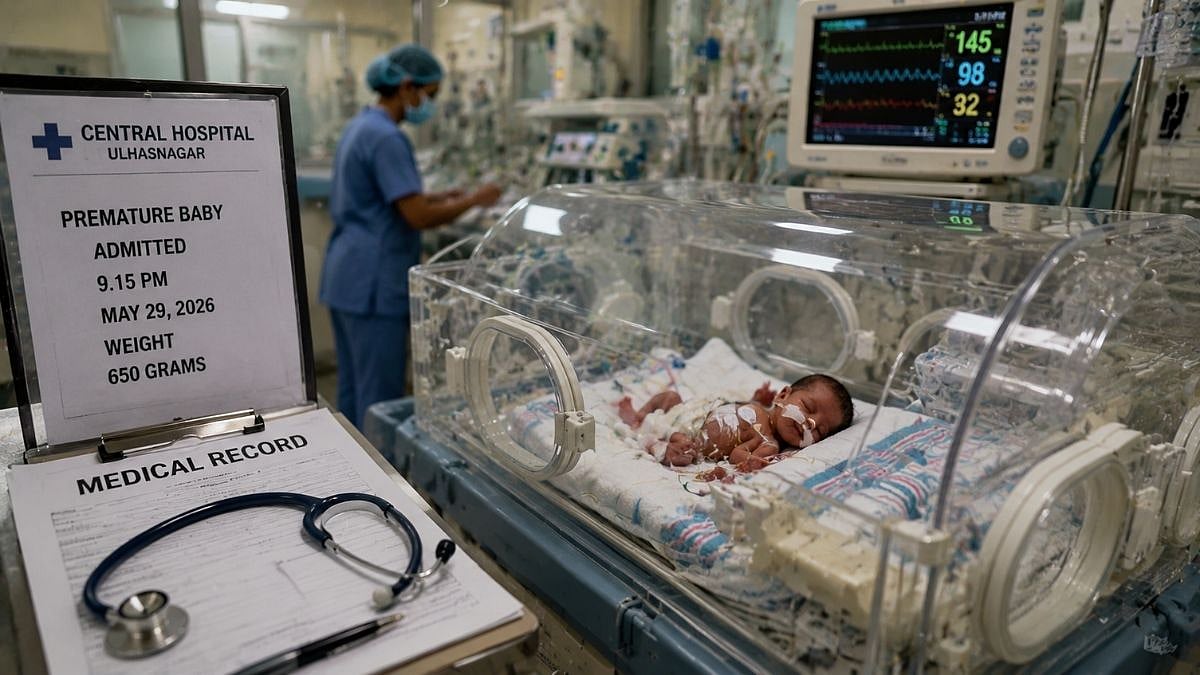
Mumbai's Human Rights Commission has closed a case regarding the death of a 29-week premature baby at Ulhasnagar Central Hospital, finding no evidence of medical negligence.
The Commission had taken up the case after a newspaper report alleged that the baby's death was due to medical negligence and the lack of a Neonatal Intensive Care Unit (NICU) at a private hospital in Ulhasnagar.
The baby, weighing 650 grams, was referred to Central Hospital from a private hospital, Asha Hospital, and was admitted on May 29, 2026. The Commission found that the infant was immediately placed in an incubator and provided medical treatment.
The Commission noted that the child was extremely premature and suffered from low birth weight. Doctors continuously monitored the infant and administered various medicines and injections.
The parents were informed about the child's critical condition and were given the option to shift the baby to a higher medical centre. However, the parents did not attend to the child throughout the night and did not respond to several calls from the hospital.
The baby ultimately died on May 31, 2026. The Commission concluded that the hospital had provided the best possible treatment to the child.
The Commission observed that allegations of medical negligence must be assessed against the standard expected of a prudent medical professional acting in similar circumstances. In this case, two committees and two senior officers found no evidence of medical negligence.
The Civil Surgeon endorsed the committee's findings, stating that whatever could have been done was done to provide treatment to the child.
The Commission's decision brings closure to the case, and the hospital has been cleared of any wrongdoing.
The incident highlights the importance of proper medical care for premature babies and the need for hospitals to have adequate facilities and staff to handle such cases.
The Commission's findings also emphasize the need for parents to be informed and involved in the treatment of their children, especially in critical cases.
In conclusion, the Mumbai Human Rights Commission's decision to close the case against Ulhasnagar Central Hospital is a significant development, and it is hoped that the hospital will continue to provide quality medical care to its patients.
The Commission's findings will also serve as a guideline for other hospitals in the city to ensure that they are providing the best possible treatment to their patients, especially in cases involving premature babies.
The incident is a reminder of the importance of having a robust healthcare system in place, and the need for hospitals to be equipped to handle critical cases.
The Commission's decision is a positive step towards ensuring that hospitals in the city are providing quality medical care to their patients, and it is hoped that it will serve as a model for other hospitals to follow.
Frequently asked questions
What was the outcome of the Human Rights Commission's investigation?
The Commission found no evidence of medical negligence and closed the case.
What was the condition of the premature baby?
The baby was 29 weeks old and weighed 650 grams, suffering from extremely low birth weight.