Shia Cleric Rejects Netanyahu's Claim Of Indian Support
Maulana Yasoob Abbas criticises Israeli PM, says Indians stand for justice and peace. Cleric alleges Netanyahu's actions are oppressive.

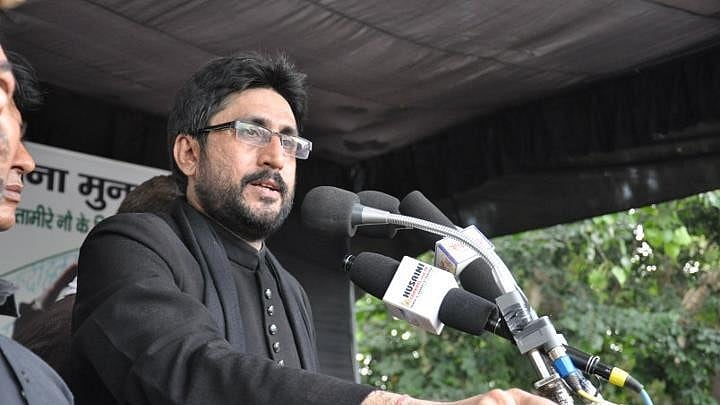
Maulana Yasoob Abbas, a senior Shia cleric and speaker of the All India Shia Personal Law Board, has rejected Israeli Prime Minister Benjamin Netanyahu's claim that he enjoys the support of India's 1.4 billion people.
In a statement issued on Thursday, Abbas said that such an assertion was misconceived and did not reflect the sentiments of the Indian public. He stated that the people of India have always stood for justice, humanity, and peace, and could never support anyone accused of atrocities against innocent civilians.
Abbas alleged that a leader accused of the deaths of thousands of innocent children, women, and civilians could not expect the support of the Indian people. He added that India's cultural ethos has always upheld justice, compassion, and opposition to oppression in all forms.
The cleric further remarked that supporting Netanyahu was akin to supporting evil, drawing a comparison with the symbolic burning of Ravana during Dussehra as a rejection of tyranny. He said Indians have historically stood with the oppressed and would continue to raise their voices in favour of humanity, peace, and justice.
Abbas also expressed support for Iran's leadership and those defending the oppressed. He praised Iran's Supreme Leader, Ayatollah Ali Khamenei, for the sacrifices made in the struggle against oppression and asserted that resistance against injustice was preferable to surrender.
The cleric's statement comes as a response to Netanyahu's reported claim of Indian support. Abbas's remarks highlight the importance of justice and humanity in Indian culture and the country's opposition to oppression in all forms.
The All India Shia Personal Law Board is a prominent organisation that represents the Shia community in India. As a speaker of the board, Abbas's statement carries significant weight and reflects the sentiments of the Indian Shia community.
In recent years, India has maintained a delicate balance in its relations with Israel and Iran. While India has strengthened its ties with Israel, it has also sought to maintain good relations with Iran. Abbas's statement reflects the complexities of India's foreign policy and the need to balance competing interests.
The cleric's remarks also highlight the importance of justice and humanity in international relations. As the world grapples with complex geopolitical issues, Abbas's statement serves as a reminder of the need to uphold these values and oppose oppression in all forms.
In conclusion, Maulana Yasoob Abbas's rejection of Netanyahu's claim of Indian support reflects the country's commitment to justice, humanity, and peace. The cleric's statement highlights the importance of these values in Indian culture and the need to oppose oppression in all forms.