Madhya Pradesh Schools Face Gaps In Education Reforms
UDISE report reveals single-teacher schools, low teacher training, and high dropout rates

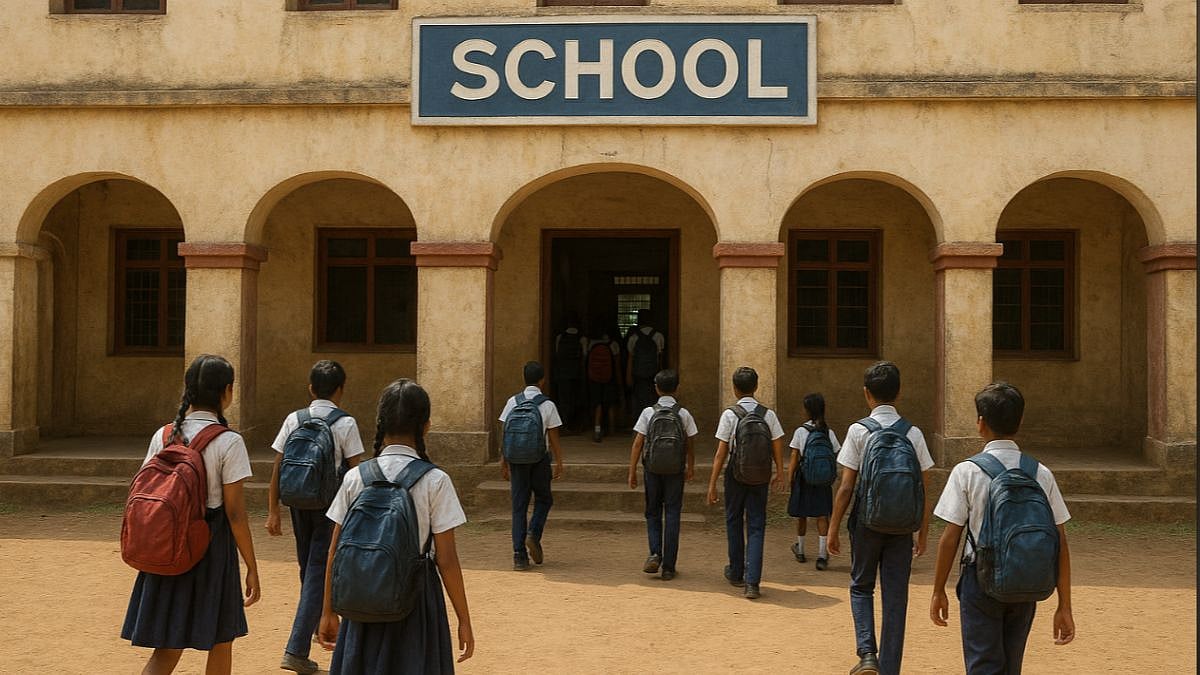
A recent report by the Unified District Information System for Education (UDISE) has exposed significant gaps in the education reforms implemented by the Madhya Pradesh government. Despite claims of improved education infrastructure and technology-enabled learning, the report reveals that thousands of students continue to study in single-teacher schools, with only 22% of primary teachers being professionally trained.
The report highlights that 2,269 government schools in the state are run by a single teacher, affecting the education of 62,151 students. This raises concerns about the quality of education being provided to these students. Furthermore, the report notes that the pupil-teacher ratio is 21:1, but the distribution of teachers remains uneven.
The dropout rates in the state are also a cause for concern, with 6.02% of students dropping out between Classes 6 and 8, and nearly 13% leaving school between Classes 9 and 10. The Gross Enrolment Ratio also declines steadily at higher levels, indicating that many students do not continue beyond elementary education.
In addition to these issues, the report reveals that many government schools lack basic infrastructure, including electricity, functional drinking water, handwashing facilities, and functional girls' toilets. Only 15% of schools have toilets accessible to Children With Special Needs (CWSN), and 7,718 schools do not have playgrounds.
The report also raises questions about the government's emphasis on technology-driven learning, with only 6,748 schools having functional computers for teaching and learning. Nearly 90,000 schools do not have internet connectivity, making digital classrooms a distant dream.
The Madhya Pradesh government has been highlighting its education reforms, including the introduction of AI-powered classrooms, upgraded campuses, Excellence Schools, and Sandipani Schools. However, the UDISE report presents a starkly different picture, highlighting the need for more effective implementation of these reforms.
The decline in the number of schools, from 1,22,120 in 2024-25 to 1,19,694 in 2025-26, is also a cause for concern. This reduction of 2,426 schools in one year raises questions about the pace and effectiveness of the state's education reforms.
The UDISE report is a wake-up call for the Madhya Pradesh government to address the gaps in its education reforms. The state needs to focus on improving the quality of education, increasing the number of trained teachers, and providing basic infrastructure to all schools. Only then can the government's claims of improved education infrastructure and technology-enabled learning be realized.
The report's findings have significant implications for the state's education system and highlight the need for more effective implementation of education reforms. The government must take immediate action to address these gaps and ensure that all students have access to quality education.
In conclusion, the UDISE report reveals significant gaps in the education reforms implemented by the Madhya Pradesh government. The state needs to focus on improving the quality of education, increasing the number of trained teachers, and providing basic infrastructure to all schools. This is essential for ensuring that all students have access to quality education and can compete in an increasingly complex and technology-driven world.
The report's findings are a reminder that education is a critical component of a state's development, and that effective implementation of education reforms is essential for ensuring that all students have access to quality education. The Madhya Pradesh government must take immediate action to address the gaps in its education reforms and ensure that all students have access to quality education.
What it means for the country is that the education system needs to be overhauled to ensure that all students have access to quality education. The report's findings are a wake-up call for all state governments to focus on improving the quality of education and providing basic infrastructure to all schools. Only then can India achieve its goal of providing quality education to all its citizens.