Pakistan Faces Shortage of 100 Life-Saving Medicines
Pakistan struggles with shortage of essential medicines, including cancer drugs and morphine. Delayed price revisions disrupt production, creating space for counterfeit products.
'%3E%3Crect%20width%3D'96'%20height%3D'96'%20fill%3D'%234A235A'%2F%3E%3Ccircle%20cx%3D'30'%20cy%3D'24'%20r%3D'44'%20fill%3D'%23fff'%20opacity%3D'.12'%2F%3E%3Ccircle%20cx%3D'60'%20cy%3D'74'%20r%3D'40'%20fill%3D'%23000'%20opacity%3D'.10'%2F%3E%3C%2Fg%3E%3Cg%20fill%3D'none'%20stroke%3D'%23fff'%20stroke-width%3D'3'%3E%3Ccircle%20cx%3D'48'%20cy%3D'48'%20r%3D'16'%2F%3E%3Cellipse%20cx%3D'48'%20cy%3D'48'%20rx%3D'6.5'%20ry%3D'16'%2F%3E%3Cline%20x1%3D'32'%20y1%3D'42'%20x2%3D'64'%20y2%3D'42'%2F%3E%3Cline%20x1%3D'32'%20y1%3D'54'%20x2%3D'64'%20y2%3D'54'%2F%3E%3C%2Fg%3E%3C%2Fsvg%3E)
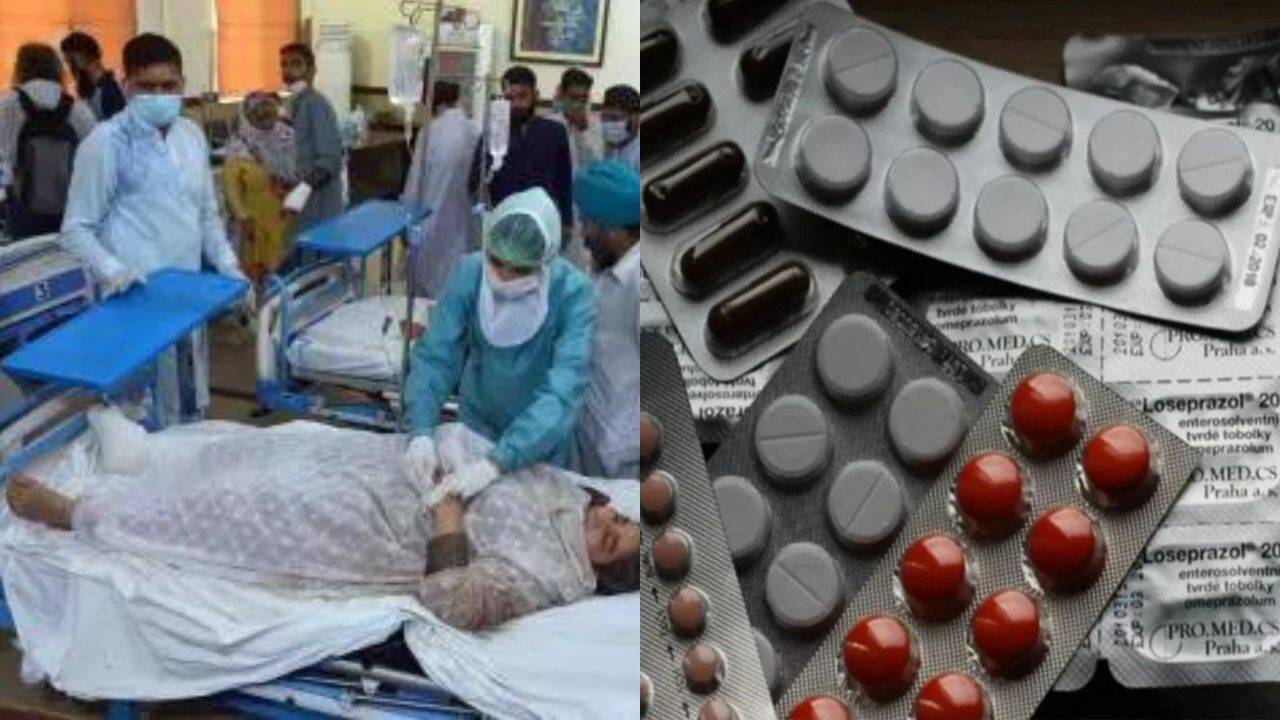
Pakistan is currently facing a severe shortage of over 100 essential medicines, including life-saving drugs such as cancer medications and morphine. This shortage is largely attributed to delayed price revisions by the Drug Regulatory Authority of Pakistan, which has significantly disrupted the production of these critical medicines.
The pharmaceutical industry in Pakistan is facing immense challenges due to rising costs of raw materials and currency depreciation, which have substantially increased manufacturing expenses. As a result, many pharmaceutical companies are finding it difficult to sustain production, leading to a shortage of essential medicines in the market.
This situation has created an opportunity for counterfeit and substandard products to flood the market, posing a significant risk to public health. The shortage of life-saving medicines has raised concerns among healthcare professionals and patients, who are struggling to access essential treatments.
Industry representatives have urged the government to approve pending hardship pricing cases immediately, in order to help pharmaceutical companies cope with the rising costs of production. They argue that timely price revisions are crucial to ensuring the availability of essential medicines in the market.
The shortage of essential medicines in Pakistan is not a new phenomenon, but it has worsened in recent months due to the economic challenges faced by the country. The government has been criticized for its slow response to the crisis, which has exacerbated the shortage of life-saving medicines.
The pharmaceutical industry in Pakistan is a significant sector, providing employment to thousands of people and contributing to the country's economy. However, the current shortage of essential medicines has raised concerns about the long-term sustainability of the industry.
In recent years, Pakistan has struggled to balance its trade deficit, which has put pressure on the country's currency and increased the cost of imports. This has had a ripple effect on the pharmaceutical industry, making it challenging for companies to import raw materials and sustain production.
The government has announced plans to increase the production of essential medicines domestically, in order to reduce reliance on imports. However, this will require significant investment in the pharmaceutical sector, as well as reforms to the regulatory framework.
In the meantime, patients in Pakistan are struggling to access life-saving medicines, which has raised concerns about the country's healthcare system. The shortage of essential medicines is a complex issue, requiring a comprehensive response from the government, industry, and healthcare professionals.
The situation highlights the need for a robust and responsive regulatory framework, which can help to ensure the availability of essential medicines in the market. It also underscores the importance of investing in the pharmaceutical sector, in order to promote domestic production and reduce reliance on imports.