Sea Anemones Identify Helpful Bacteria
Sea anemones can distinguish between helpful and harmful bacteria. Scientists discover key gene.
'%3E%3Crect%20width%3D'96'%20height%3D'96'%20fill%3D'%23B3261E'%2F%3E%3Ccircle%20cx%3D'30'%20cy%3D'24'%20r%3D'44'%20fill%3D'%23fff'%20opacity%3D'.12'%2F%3E%3Ccircle%20cx%3D'60'%20cy%3D'74'%20r%3D'40'%20fill%3D'%23000'%20opacity%3D'.10'%2F%3E%3C%2Fg%3E%3Cg%20fill%3D'%23fff'%3E%3Crect%20x%3D'29'%20y%3D'49'%20width%3D'8'%20height%3D'19'%20rx%3D'1'%2F%3E%3Crect%20x%3D'39'%20y%3D'40'%20width%3D'9'%20height%3D'28'%20rx%3D'1'%2F%3E%3Crect%20x%3D'50'%20y%3D'45'%20width%3D'8'%20height%3D'23'%20rx%3D'1'%2F%3E%3Crect%20x%3D'60'%20y%3D'53'%20width%3D'7'%20height%3D'15'%20rx%3D'1'%2F%3E%3Crect%20x%3D'41'%20y%3D'34'%20width%3D'5'%20height%3D'6'%2F%3E%3C%2Fg%3E%3C%2Fsvg%3E)
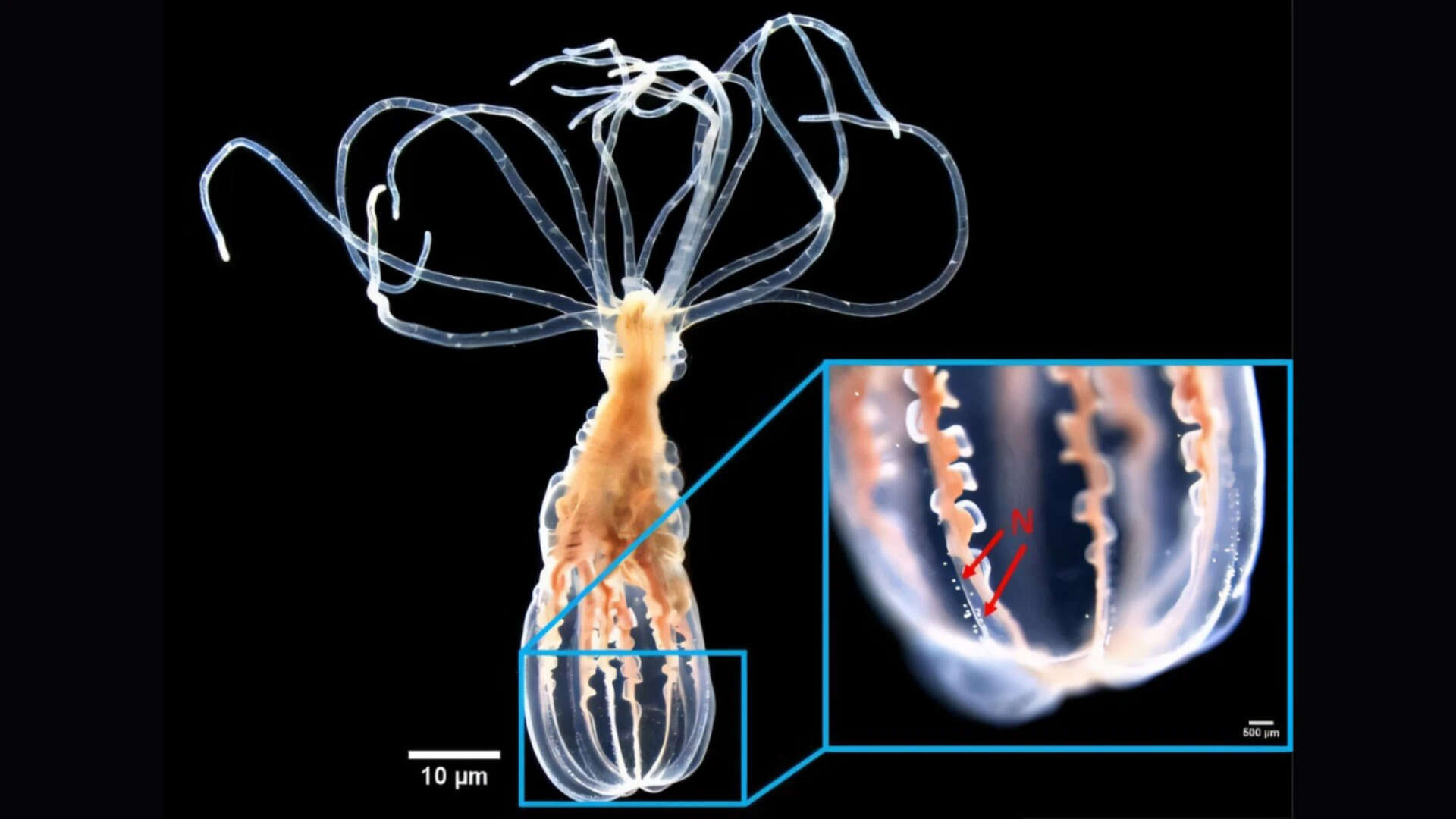
Scientists have made a groundbreaking discovery about sea anemones, revealing that these marine animals can differentiate between helpful and harmful bacteria. This ability is crucial for their survival, as it allows them to preserve beneficial microbes while destroying foreign invaders.
The research team found that specialized cell structures in sea anemones play a key role in this process, engulfing and destroying harmful bacteria while sparing helpful ones. This selective identification process is made possible by a specific gene, which was identified using gene editing techniques.
This discovery challenges long-held assumptions about the evolution of early animal immune systems. For a long time, it was believed that animals relied on antibodies to fight off infections. However, the fact that sea anemones can distinguish between helpful and harmful bacteria without antibodies suggests that there may be other, more primitive pathways at play.
The study of sea anemones and their immune systems can provide valuable insights into the evolution of immune memory and maternal transfer. Immune memory refers to the ability of an organism to remember past infections and mount a more effective response to future infections. Maternal transfer, on the other hand, refers to the passing of immune factors from mother to offspring.
The discovery of the key gene regulating the selective bacterial identification process in sea anemones is a significant breakthrough. It opens up new avenues for research into the evolution of immune systems and the development of new treatments for diseases. By studying the primitive pathways used by sea anemones, scientists may be able to gain a better understanding of how to harness the power of the immune system to fight off infections.
The study of sea anemones is also important for our understanding of the complex relationships between animals and their microbial environments. Sea anemones, like many other animals, have a complex microbiome that plays a crucial role in their health and survival. By understanding how sea anemones interact with their microbiome, scientists can gain insights into the ways in which animals and microbes coexist and influence each other.
In conclusion, the discovery that sea anemones can distinguish between helpful and harmful bacteria is a significant breakthrough in our understanding of the evolution of immune systems. The study of these primitive pathways can provide valuable insights into the development of new treatments for diseases and the complex relationships between animals and their microbial environments.