CR Takes Action After E. Coli Found At 4 Stations
E. coli detected in water at CSMT, Kalyan, Bhiwandi Road and Lonavala stations. Corrective measures initiated.
'%3E%3Crect%20width%3D'96'%20height%3D'96'%20fill%3D'%23B3261E'%2F%3E%3Ccircle%20cx%3D'30'%20cy%3D'24'%20r%3D'44'%20fill%3D'%23fff'%20opacity%3D'.12'%2F%3E%3Ccircle%20cx%3D'60'%20cy%3D'74'%20r%3D'40'%20fill%3D'%23000'%20opacity%3D'.10'%2F%3E%3C%2Fg%3E%3Cg%20fill%3D'%23fff'%3E%3Crect%20x%3D'29'%20y%3D'49'%20width%3D'8'%20height%3D'19'%20rx%3D'1'%2F%3E%3Crect%20x%3D'39'%20y%3D'40'%20width%3D'9'%20height%3D'28'%20rx%3D'1'%2F%3E%3Crect%20x%3D'50'%20y%3D'45'%20width%3D'8'%20height%3D'23'%20rx%3D'1'%2F%3E%3Crect%20x%3D'60'%20y%3D'53'%20width%3D'7'%20height%3D'15'%20rx%3D'1'%2F%3E%3Crect%20x%3D'41'%20y%3D'34'%20width%3D'5'%20height%3D'6'%2F%3E%3C%2Fg%3E%3C%2Fsvg%3E)
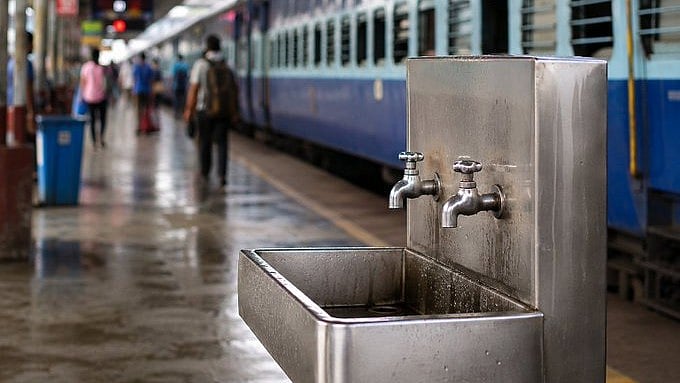
Central Railway has started taking corrective measures after water samples from four stations tested positive for E. coli. The bacteria was found in water samples collected from CSMT, Kalyan, Bhiwandi Road, and Lonavala stations, all of which are major hubs with significant passenger movement.
The Electrical and Medical departments of Central Railway are working together to address the issue. They are examining the findings and taking necessary steps to ensure the quality and safety of drinking water available to commuters.
This development comes after a recent Comptroller and Auditor General (CAG) audit highlighted deficiencies in drinking-water quality monitoring across railway stations. The audit found that 28 Central Railway stations did not have the required water-testing kits, while 436 stations across 15 railway zones lacked such kits.
Railway Board guidelines mandate testing of water supply systems at stations at least twice a year using multi-parameter field testing kits. Following the CAG findings, Railway Minister Ashwini Vaishnaw conducted a review with senior railway officials, resulting in the decision to install 'Tank to Tap' filtration and monitoring systems at around 20,000 locations.
The Central Railway's latest action is aimed at addressing the water-quality concerns at the affected stations and preventing recurrence. The move is expected to improve the overall quality of drinking water available to commuters at these stations.
The detection of E. coli in water samples is a significant concern, as it can cause waterborne diseases. The corrective measures initiated by Central Railway are a step in the right direction towards ensuring the health and safety of commuters.
The CAG audit had flagged the lack of water-testing kits at many railway stations, highlighting the need for improved monitoring and maintenance of water supply systems. The Railway Minister's review and the subsequent decision to install 'Tank to Tap' filtration and monitoring systems are expected to address these concerns.
The affected stations, CSMT, Kalyan, Bhiwandi Road, and Lonavala, are all major stations with significant passenger movement. The corrective measures initiated by Central Railway will help to improve the overall quality of drinking water available to commuters at these stations.
In conclusion, the detection of E. coli in water samples at four Central Railway stations has led to corrective measures being initiated. The move is expected to improve the quality of drinking water available to commuters and prevent recurrence of such incidents.
The incident highlights the need for regular monitoring and maintenance of water supply systems at railway stations. The Central Railway's actions are a step in the right direction towards ensuring the health and safety of commuters.
The corrective measures initiated by Central Railway are expected to have a positive impact on the overall quality of drinking water available to commuters at the affected stations. The move is a significant step towards addressing the water-quality concerns and preventing recurrence of such incidents.
The Central Railway's decision to initiate corrective measures after the detection of E. coli in water samples is a welcome move. The move is expected to improve the overall quality of drinking water available to commuters and prevent recurrence of such incidents.
In the end, the corrective measures initiated by Central Railway will help to improve the overall quality of drinking water available to commuters at the affected stations. The move is a significant step towards addressing the water-quality concerns and preventing recurrence of such incidents.
The incident has highlighted the need for improved monitoring and maintenance of water supply systems at railway stations. The Central Railway's actions are a step in the right direction towards ensuring the health and safety of commuters.
The corrective measures initiated by Central Railway are expected to have a positive impact on the overall quality of drinking water available to commuters at the affected stations. The move is a significant step towards addressing the water-quality concerns and preventing recurrence of such incidents.
The detection of E. coli in water samples at four Central Railway stations has led to corrective measures being initiated. The move is expected to improve the quality of drinking water available to commuters and prevent recurrence of such incidents.
The Central Railway's decision to initiate corrective measures after the detection of E. coli in water samples is a welcome move. The move is expected to improve the overall quality of drinking water available to commuters and prevent recurrence of such incidents.
For Mumbai residents, the incident highlights the importance of ensuring the quality and safety of drinking water available at public places, including railway stations. The corrective measures initiated by Central Railway are a step in the right direction towards addressing the water-quality concerns and preventing recurrence of such incidents.
In conclusion, the detection of E. coli in water samples at four Central Railway stations has led to corrective measures being initiated. The move is expected to improve the quality of drinking water available to commuters and prevent recurrence of such incidents. The incident highlights the need for regular monitoring and maintenance of water supply systems at railway stations, and the Central Railway's actions are a step in the right direction towards ensuring the health and safety of commuters.
Frequently asked questions
Which stations had E. coli in their water samples?
CSMT, Kalyan, Bhiwandi Road, and Lonavala stations.
What action is being taken by Central Railway?
Corrective measures have been initiated, including the installation of 'Tank to Tap' filtration and monitoring systems.