Omar Abdullah Supports Wangchuk's Hunger Strike
J&K CM backs protest, Wangchuk's health deteriorates. Doctors warn of complications.
'%3E%3Crect%20width%3D'96'%20height%3D'96'%20fill%3D'%231A5276'%2F%3E%3Ccircle%20cx%3D'30'%20cy%3D'24'%20r%3D'44'%20fill%3D'%23fff'%20opacity%3D'.12'%2F%3E%3Ccircle%20cx%3D'60'%20cy%3D'74'%20r%3D'40'%20fill%3D'%23000'%20opacity%3D'.10'%2F%3E%3C%2Fg%3E%3Cg%20fill%3D'%23fff'%3E%3Cpath%20d%3D'M31%2041%20L48%2031%20L65%2041%20Z'%2F%3E%3Crect%20x%3D'33'%20y%3D'43'%20width%3D'4'%20height%3D'17'%2F%3E%3Crect%20x%3D'41'%20y%3D'43'%20width%3D'4'%20height%3D'17'%2F%3E%3Crect%20x%3D'51'%20y%3D'43'%20width%3D'4'%20height%3D'17'%2F%3E%3Crect%20x%3D'59'%20y%3D'43'%20width%3D'4'%20height%3D'17'%2F%3E%3Crect%20x%3D'30'%20y%3D'62'%20width%3D'36'%20height%3D'4'%20rx%3D'1'%2F%3E%3C%2Fg%3E%3C%2Fsvg%3E)
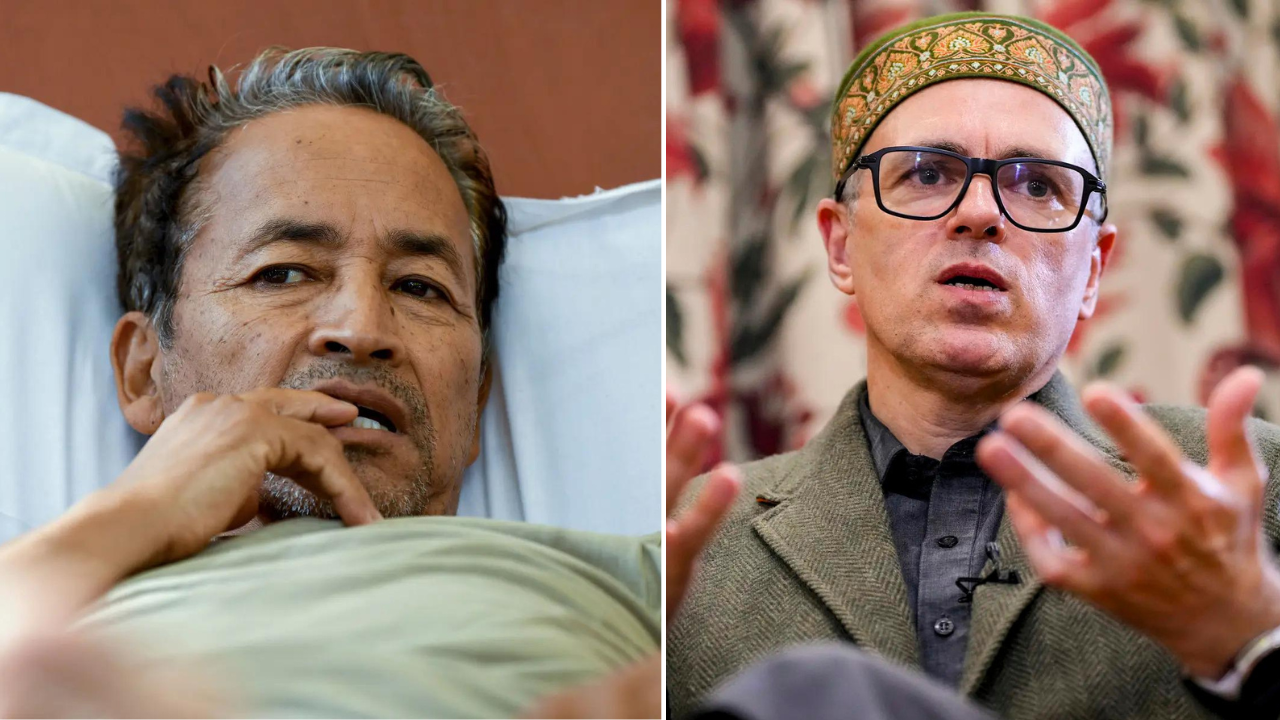
Jammu and Kashmir Chief Minister Omar Abdullah has expressed his support for Sonam Wangchuk, who has been on a hunger strike for nineteen days. Wangchuk is protesting against alleged irregularities in the National Eligibility cum Entrance Test (NEET) and is demanding accountability from the authorities.
Wangchuk's health has significantly deteriorated due to his prolonged fast, and doctors have warned of serious health complications if the hunger strike continues. The Delhi High Court has taken note of Wangchuk's condition and has ordered daily medical examinations to monitor his health.
Omar Abdullah's support for Wangchuk's cause is significant, as it highlights the growing concern over the alleged irregularities in the NEET examination. The Jammu and Kashmir Chief Minister has been vocal about the need for accountability and transparency in the examination process.
The NEET examination is a critical entrance test for students seeking admission to medical colleges in India. The alleged irregularities in the examination have sparked widespread protests and demands for a thorough investigation. Wangchuk's hunger strike has brought attention to the issue, and his deteriorating health has added urgency to the situation.
The Delhi High Court's order for daily medical examinations is a welcome move, as it ensures that Wangchuk's health is monitored closely. However, the court's intervention also underscores the need for a swift resolution to the issue, as Wangchuk's health continues to deteriorate.
In a separate development, Omar Abdullah also referred to the Manmohan Singh government's engagement with Anna Hazare's anti-corruption movement, suggesting that the Centre has been unmoved by Wangchuk's protest. This comment highlights the perceived indifference of the government to the concerns of citizens, even when they resort to extreme measures like hunger strikes.
The support from Omar Abdullah and the attention from the Delhi High Court have brought some hope to Wangchuk's cause. However, the outcome of the protest remains uncertain, and the future of the NEET examination hangs in the balance.
As the situation unfolds, it is clear that the issue of alleged irregularities in the NEET examination has sparked a wider debate about accountability and transparency in India's education system. The government's response to Wangchuk's protest will be closely watched, and the outcome will have significant implications for the country's education sector.
In conclusion, the hunger strike by Sonam Wangchuk has brought attention to the alleged irregularities in the NEET examination, and the support from Omar Abdullah has highlighted the need for accountability and transparency. The situation remains critical, and the government's response will be crucial in resolving the issue and ensuring the health and well-being of Wangchuk and the students affected by the alleged irregularities.