Houthis Impose Naval Blockade On Saudi Arabia
Houthis announce naval blockade, risking 7% of global oil supply.
'%3E%3Crect%20width%3D'96'%20height%3D'96'%20fill%3D'%234A235A'%2F%3E%3Ccircle%20cx%3D'30'%20cy%3D'24'%20r%3D'44'%20fill%3D'%23fff'%20opacity%3D'.12'%2F%3E%3Ccircle%20cx%3D'60'%20cy%3D'74'%20r%3D'40'%20fill%3D'%23000'%20opacity%3D'.10'%2F%3E%3C%2Fg%3E%3Cg%20fill%3D'none'%20stroke%3D'%23fff'%20stroke-width%3D'3'%3E%3Ccircle%20cx%3D'48'%20cy%3D'48'%20r%3D'16'%2F%3E%3Cellipse%20cx%3D'48'%20cy%3D'48'%20rx%3D'6.5'%20ry%3D'16'%2F%3E%3Cline%20x1%3D'32'%20y1%3D'42'%20x2%3D'64'%20y2%3D'42'%2F%3E%3Cline%20x1%3D'32'%20y1%3D'54'%20x2%3D'64'%20y2%3D'54'%2F%3E%3C%2Fg%3E%3C%2Fsvg%3E)

Yemen's Iran-aligned Houthi group has announced a naval blockade against Saudi Arabia, creating a potential new flashpoint in the ongoing conflict involving the United States and Iran. The move has raised concerns over global energy supplies and international shipping routes beyond the Gulf region.
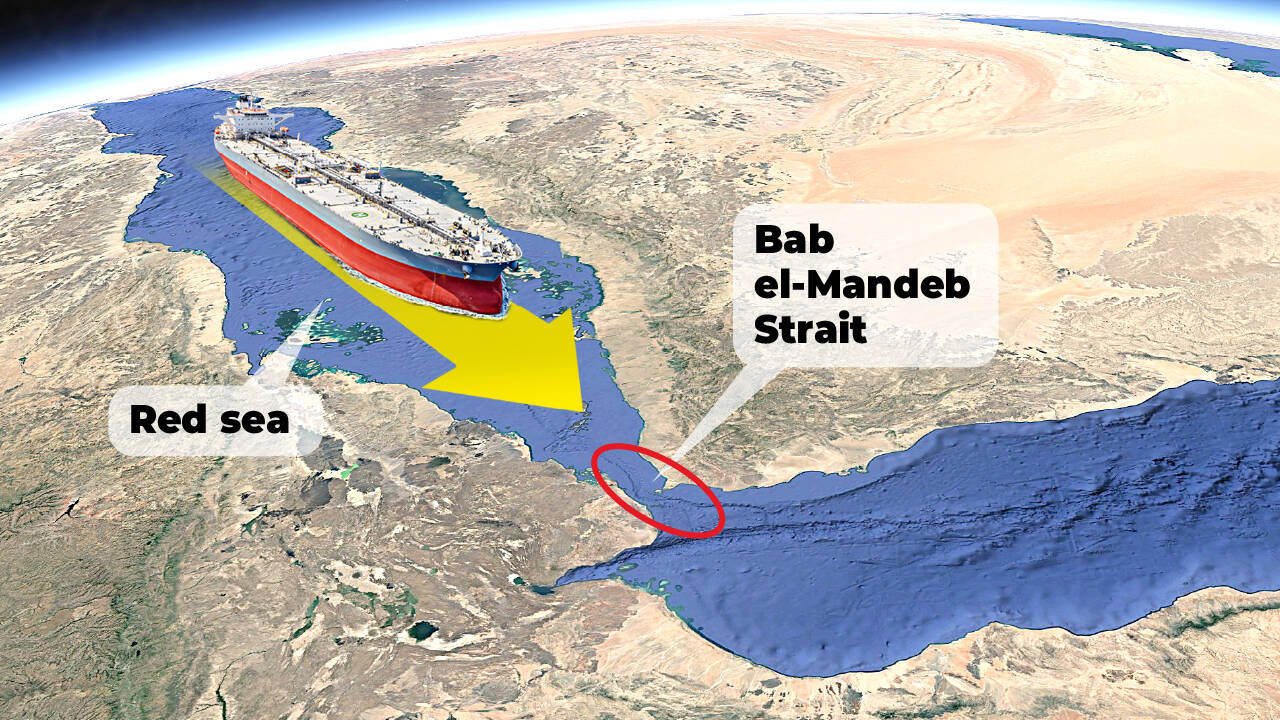
The Houthi declaration came after Iran urged the group to target the Bab el-Mandeb Strait if the United States continued attacks on Iranian energy infrastructure. The strategic waterway connects the Red Sea with the Gulf of Aden and is a major route for global oil and commercial shipping.
A complete closure of the Bab el-Mandeb Strait could disrupt nearly 7% of global oil supplies by restricting Saudi Arabia's ability to export crude through the region. This disruption would add to existing reductions in oil flows caused by the wider Gulf conflict, which has already affected around 10% of global supply.
The announcement came despite indications that Tehran and Washington are exploring diplomatic options to stop the escalating cycle of military attacks. Iran's Foreign Ministry confirmed that mediators had presented proposals to Tehran, suggesting that communication channels remain open between the two sides.
The Houthi declaration briefly pushed oil prices higher as traders assessed the possible impact on energy shipments. Although prices later eased on hopes of diplomatic progress, insurance costs for vessels operating in the Red Sea increased due to heightened security risks.
In a statement, the Houthi armed forces announced a “maritime embargo” against Saudi Arabia, describing it as a response to what they called an ongoing blockade and pressure campaign against Yemen. The group's move has raised concerns over the stability of the region and the potential impact on global energy supplies.
Diplomatic efforts continued, with an Iranian official confirming that Tehran had received a proposal from mediators for a 10-day ceasefire. The proposed truce aims to revive the interim agreement and create a pathway towards ending the conflict that began after US-Israeli strikes on Iran.
The latest developments follow continued military exchanges, including US strikes on Iranian targets and retaliatory attacks by Iran's Revolutionary Guards on American military assets across the region. The conflict has severely weakened a fragile interim agreement signed last month, and the international community is watching the situation closely.
The Houthi blockade and the potential disruption to global oil supplies have significant implications for the global economy. The situation is being closely monitored by oil markets and international leaders, who are urging a peaceful resolution to the conflict.
In conclusion, the Houthi naval blockade on Saudi Arabia has raised concerns over global energy supplies and international shipping routes. The situation is complex and volatile, with diplomatic efforts ongoing to resolve the conflict. The international community is watching the situation closely, and a peaceful resolution is essential to prevent further disruptions to global oil supplies.
Frequently asked questions
What is the Bab el-Mandeb Strait?
The Bab el-Mandeb Strait is a strategic waterway that connects the Red Sea with the Gulf of Aden and is a major route for global oil and commercial shipping.
How much of global oil supply is at risk?
Nearly 7% of global oil supplies are at risk due to the potential disruption of the Bab el-Mandeb Strait.