Nashik Seeks Probe Into Onion Procurement Irregularities
Alleged irregularities in onion procurement, storage and weighing. Probe sought into misuse of funds.
'%3E%3Crect%20width%3D'96'%20height%3D'96'%20fill%3D'%231B5E20'%2F%3E%3Ccircle%20cx%3D'30'%20cy%3D'24'%20r%3D'44'%20fill%3D'%23fff'%20opacity%3D'.12'%2F%3E%3Ccircle%20cx%3D'60'%20cy%3D'74'%20r%3D'40'%20fill%3D'%23000'%20opacity%3D'.10'%2F%3E%3C%2Fg%3E%3Cg%3E%3Ccircle%20cx%3D'48'%20cy%3D'48'%20r%3D'15'%20fill%3D'%23fff'%2F%3E%3Cpath%20d%3D'M43%2034%20Q50%2048%2043%2062'%20fill%3D'none'%20stroke%3D'%238a94a6'%20stroke-width%3D'2.4'%2F%3E%3Cpath%20d%3D'M47%2033%20Q54%2048%2047%2063'%20fill%3D'none'%20stroke%3D'%238a94a6'%20stroke-width%3D'1.8'%20stroke-dasharray%3D'1.5%203'%2F%3E%3C%2Fg%3E%3C%2Fsvg%3E)
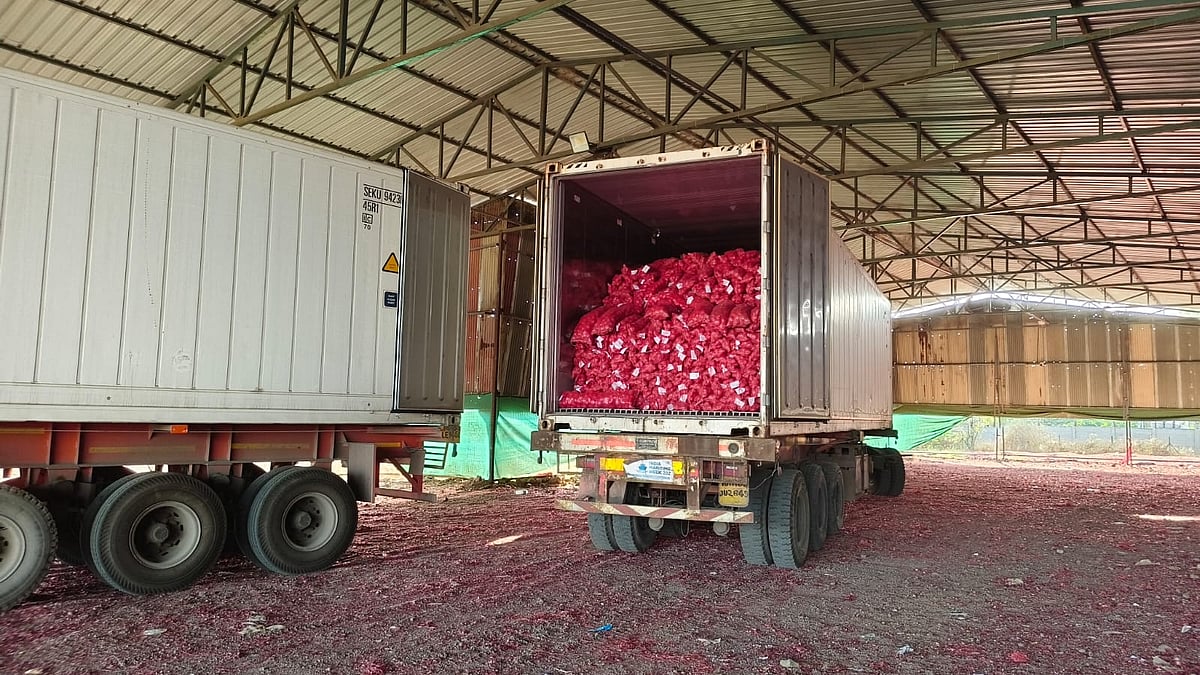
A complaint has been submitted to the District Collector of Nashik by the Chhava organisation, seeking a detailed investigation into alleged irregularities in the onion procurement and storage process being carried out through NAFED and NCCF.
The Centre's onion procurement scheme aims to ensure remunerative prices for farmers, stabilise market rates, and make onions available to consumers at reasonable prices. However, the complaint alleges that serious irregularities are taking place in the implementation of the scheme at certain procurement centres.
According to the complaint, rotten, moisture-damaged, and storage-unfit onions are allegedly being procured and stocked. It also alleges that onions purchased at very low prices from Madhya Pradesh are being accepted under the government procurement process. The complainant has expressed concern that a significant portion of the stored onions may become unfit for sale when released into the market.
The complaint raises concerns over irregularities in the weighing process, alleging that the same vehicle carrying onions is weighed twice, with two separate weight slips being generated. Although the consignment is unloaded only once, records allegedly show two separate deliveries, enabling multiple bills to be submitted to the concerned agencies.
The complainant has demanded verification of digital weighbridge records, CCTV footage, weighment slips, vehicle entry-exit registers, and billing documents at the procurement centres. The complaint further alleges that instead of procuring onions directly from farmers, transactions are being routed through brokers or middlemen.
Even where Farmer Producer Organisations (FPOs/FPCs) are involved, it is claimed that former operators or intermediaries continue to control the transactions. It is also alleged that purchases are shown in the names of farmers, who receive only 1–2% commission, while the remaining amount is allegedly taken back.
The complainant has therefore sought physical verification by contacting the farmers whose names appear in procurement records. A demand has been made for an independent forensic audit of the entire onion procurement process.
The audit should examine procurement records, invoices, weighment slips, vehicle details, payments made to farmers' bank accounts, CCTV footage, and the financial records of the concerned institutions. The complaint also seeks an independent quality assessment of the stored onions by an expert committee.
The alleged irregularities in the onion procurement process have raised concerns about the misuse of government funds and the potential impact on farmers and consumers. The investigation sought by the Chhava organisation aims to uncover the truth behind these allegations and ensure that the onion procurement scheme is implemented in a fair and transparent manner.
The outcome of the investigation will be crucial in determining the next course of action and ensuring that those responsible for any irregularities are held accountable. The case highlights the need for greater transparency and accountability in government schemes, particularly those that affect the livelihoods of farmers and the prices of essential commodities.
In conclusion, the alleged irregularities in the onion procurement process in Nashik have significant implications for farmers, consumers, and the government. A thorough investigation is necessary to uncover the truth and ensure that the scheme is implemented in a fair and transparent manner.
Frequently asked questions
What is the Centre's onion procurement scheme?
The scheme aims to ensure remunerative prices for farmers, stabilise market rates, and make onions available to consumers at reasonable prices.
What are the alleged irregularities in the onion procurement process?
The alleged irregularities include the purchase of substandard onions, irregularities in weighing procedures, double weight slips, suspected fake billing, transactions through middlemen, and possible misuse of government funds.