SC Orders States To Create Policy For Releasing Elderly, Ill Inmates
Supreme Court directs states to formulate policy for premature release of elderly and terminally ill inmates. Policy to be created within three months.
'%3E%3Crect%20width%3D'96'%20height%3D'96'%20fill%3D'%231A5276'%2F%3E%3Ccircle%20cx%3D'30'%20cy%3D'24'%20r%3D'44'%20fill%3D'%23fff'%20opacity%3D'.12'%2F%3E%3Ccircle%20cx%3D'60'%20cy%3D'74'%20r%3D'40'%20fill%3D'%23000'%20opacity%3D'.10'%2F%3E%3C%2Fg%3E%3Cg%20fill%3D'%23fff'%3E%3Cpath%20d%3D'M31%2041%20L48%2031%20L65%2041%20Z'%2F%3E%3Crect%20x%3D'33'%20y%3D'43'%20width%3D'4'%20height%3D'17'%2F%3E%3Crect%20x%3D'41'%20y%3D'43'%20width%3D'4'%20height%3D'17'%2F%3E%3Crect%20x%3D'51'%20y%3D'43'%20width%3D'4'%20height%3D'17'%2F%3E%3Crect%20x%3D'59'%20y%3D'43'%20width%3D'4'%20height%3D'17'%2F%3E%3Crect%20x%3D'30'%20y%3D'62'%20width%3D'36'%20height%3D'4'%20rx%3D'1'%2F%3E%3C%2Fg%3E%3C%2Fsvg%3E)
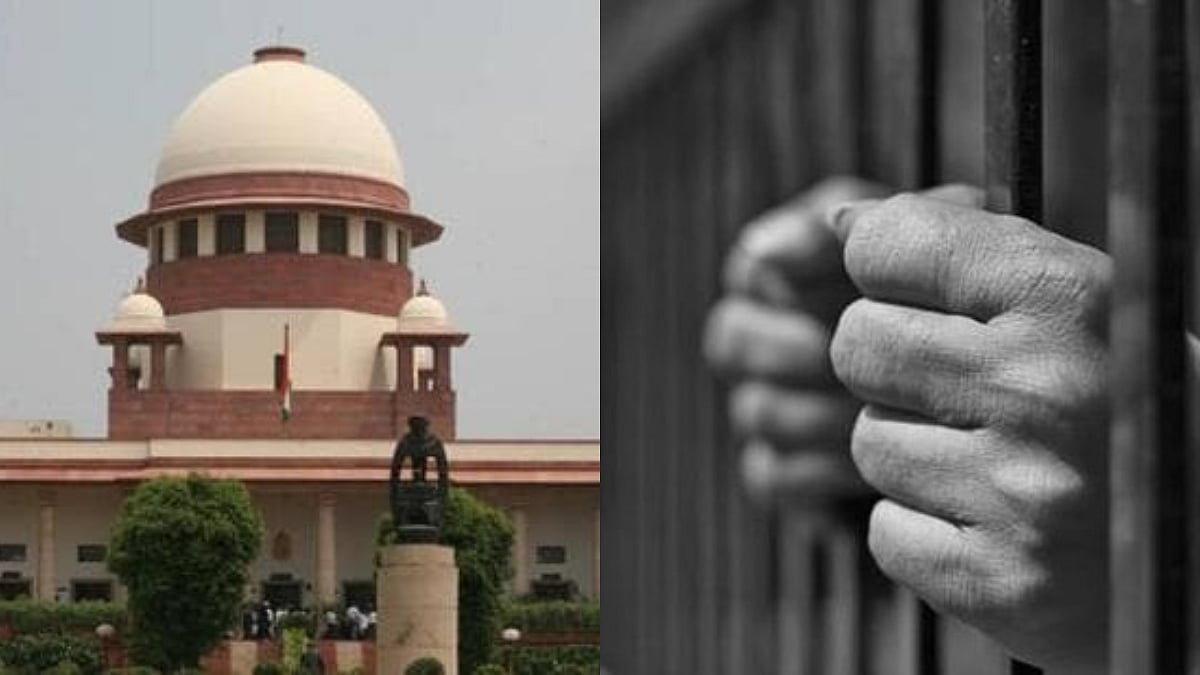
The Supreme Court has taken a significant step towards making India's prison system more humane by directing all states and Union Territories to formulate a comprehensive policy for the premature release of prisoners who are of advanced age or terminally ill.
This decision was made while hearing a public interest litigation filed by the National Legal Services Authority, which sought uniform guidelines across the country for the compassionate release of terminally ill, sick, infirm, and elderly prisoners. The policy must be framed in consultation with the respective State Legal Services Authorities to ensure better coordination and identification of eligible prisoners.
The Court has directed all states and Union Territories to formulate a policy within three months for the premature release of prisoners above 70 years of age, those suffering from terminal or serious illnesses, and physically disabled inmates on humanitarian grounds. The policy must clearly define the eligibility criteria and lay down a transparent procedure for considering applications for compassionate or premature release.
The Supreme Court has also suggested that states adopt a uniform definition of 'terminal illness', as defined in the Handbook on Prisoners with Special Needs published by the United Nations Office on Drugs and Crime. The policy must require the constitution of independent medical boards at divisional and State levels to objectively assess and certify cases involving terminal illness or serious medical vulnerability.
The Court has stressed the need for timely action, directing that applications should be processed through a time-bound, transparent, and accessible mechanism. This is to ensure that prisoners do not spend their final months or years behind bars due to administrative delays. All decisions must be reasoned and remain open to judicial review.
The proposed policy will be integrated with the functioning of the Undertrial Review Committees, which will periodically review cases involving terminally ill, elderly, or physically incapacitated prisoners and recommend appropriate legal relief, including bail, parole, or remission. States and Union Territories may adopt the framework suggested by the National Legal Services Authority or modify it to suit their local administrative and legal requirements.
This decision is a significant step towards making India's prison system more humane and compassionate. The Supreme Court's directive will help ensure that elderly and terminally ill prisoners are released prematurely, allowing them to spend their final days with dignity and comfort.
The move is expected to bring relief to many prisoners who are currently languishing in jails due to their advanced age or terminal illness. It will also help reduce the burden on the prison system and ensure that resources are utilized more efficiently.
In the coming months, states and Union Territories will be working to formulate and implement their respective policies. The Supreme Court's directive will be closely monitored to ensure that it is being implemented effectively and that the rights of prisoners are being protected.
Overall, the Supreme Court's decision is a welcome move towards making India's prison system more humane and compassionate. It is a significant step towards ensuring that the rights of prisoners are protected and that they are treated with dignity and respect.