Stars Near Black Holes Produce Dimmer Flares
Stars near black holes lose material in light bursts, new research explains why. Rapid spin limits excessive rotation.
'%3E%3Crect%20width%3D'96'%20height%3D'96'%20fill%3D'%23B3261E'%2F%3E%3Ccircle%20cx%3D'30'%20cy%3D'24'%20r%3D'44'%20fill%3D'%23fff'%20opacity%3D'.12'%2F%3E%3Ccircle%20cx%3D'60'%20cy%3D'74'%20r%3D'40'%20fill%3D'%23000'%20opacity%3D'.10'%2F%3E%3C%2Fg%3E%3Cg%20fill%3D'%23fff'%3E%3Crect%20x%3D'29'%20y%3D'49'%20width%3D'8'%20height%3D'19'%20rx%3D'1'%2F%3E%3Crect%20x%3D'39'%20y%3D'40'%20width%3D'9'%20height%3D'28'%20rx%3D'1'%2F%3E%3Crect%20x%3D'50'%20y%3D'45'%20width%3D'8'%20height%3D'23'%20rx%3D'1'%2F%3E%3Crect%20x%3D'60'%20y%3D'53'%20width%3D'7'%20height%3D'15'%20rx%3D'1'%2F%3E%3Crect%20x%3D'41'%20y%3D'34'%20width%3D'5'%20height%3D'6'%2F%3E%3C%2Fg%3E%3C%2Fsvg%3E)
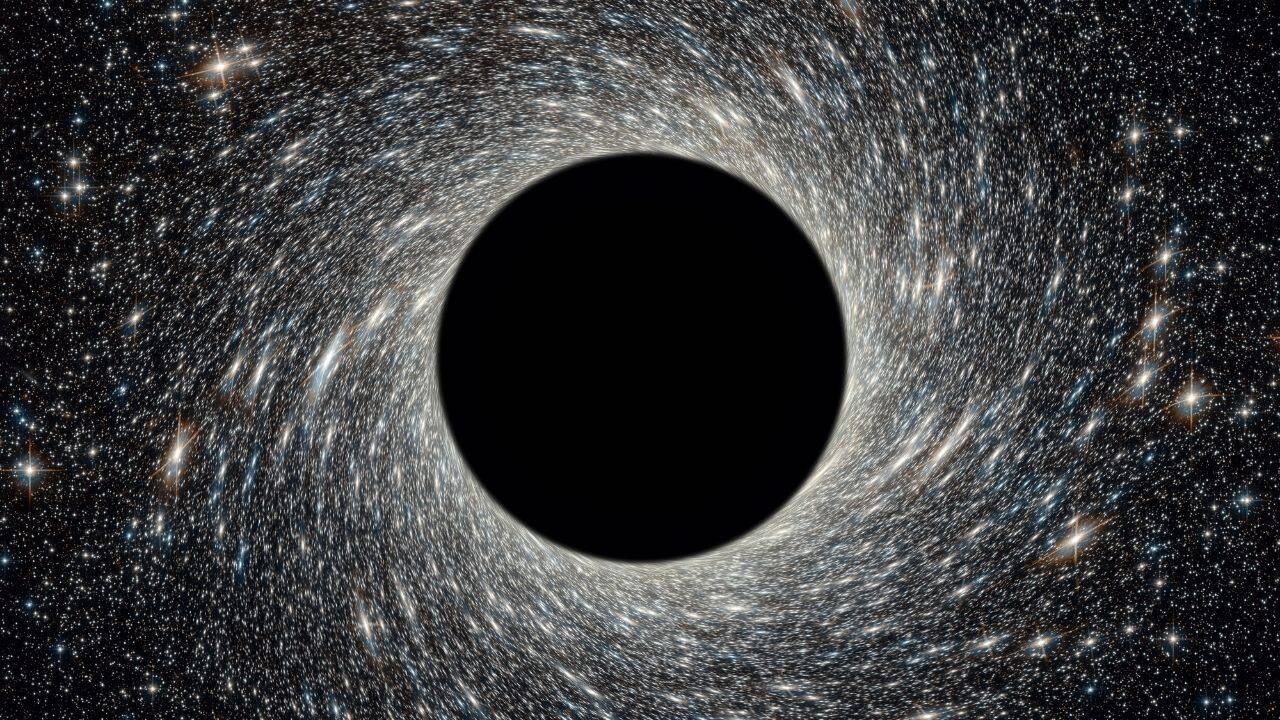
Astronomers have made a groundbreaking discovery about the behavior of stars that come close to supermassive black holes. As these stars approach the black holes, they experience a series of intense light bursts that gradually fade over time.
The research team found that the initial rapid spin of the stars plays a crucial role in this phenomenon. When stars with high initial spin approach a black hole, they lose material due to the strong gravitational forces. However, their rapid spin also limits the amount of excessive rotation that occurs during subsequent encounters with the black hole.
This limitation of excessive rotation is key to understanding why the light bursts produced by these stars become dimmer over time. As the stars continue to interact with the black hole, their spin slows down, and the amount of material lost during each encounter decreases. As a result, the light bursts become less intense and eventually fade away.
The discovery sheds new light on the complex interactions between stars and supermassive black holes. Supermassive black holes are found at the centers of many galaxies, including our own Milky Way, and they play a crucial role in shaping the surrounding environment.
The study of star-black hole interactions is important for understanding the evolution of galaxies and the formation of stars. By analyzing the light bursts produced by stars near black holes, astronomers can gain insights into the properties of the black holes and the surrounding environment.
The new research has significant implications for our understanding of the universe. It highlights the complex and dynamic nature of star-black hole interactions and provides new insights into the behavior of stars in extreme environments.
In conclusion, the discovery that stars near black holes produce dimmer flares due to their rapid initial spin is an important breakthrough in our understanding of the universe. It demonstrates the complex and fascinating nature of star-black hole interactions and highlights the need for further research into this phenomenon.
The study of star-black hole interactions is an active area of research, with many scientists working to understand the complex dynamics involved. As new observations and simulations become available, our understanding of this phenomenon will continue to evolve, providing new insights into the behavior of stars and black holes in the universe.
The research has the potential to impact our understanding of the formation and evolution of galaxies, as well as the behavior of stars in extreme environments. By continuing to study star-black hole interactions, astronomers can gain a deeper understanding of the universe and its many mysteries.
The discovery is a reminder of the awe-inspiring complexity and beauty of the universe, and it highlights the importance of continued research and exploration into the mysteries of the cosmos.
In the future, astronomers will continue to study star-black hole interactions, using new observations and simulations to gain a deeper understanding of this phenomenon. The research will provide new insights into the behavior of stars and black holes, and it will help to shed light on the many mysteries of the universe.
The study of the universe is an ongoing endeavor, with new discoveries and breakthroughs being made regularly. The discovery that stars near black holes produce dimmer flares is just one example of the many fascinating phenomena that are being studied by astronomers today.
As our understanding of the universe continues to evolve, we can expect to see new and exciting discoveries in the field of astronomy. The study of star-black hole interactions is just one area of research that is helping to advance our knowledge of the cosmos, and it is an important reminder of the many wonders and mysteries that remain to be explored.
The universe is a complex and dynamic place, full of mysteries and wonders waiting to be discovered. The discovery that stars near black holes produce dimmer flares is just one example of the many fascinating phenomena that are being studied by astronomers today, and it highlights the importance of continued research and exploration into the mysteries of the cosmos.
In the end, the study of the universe is a reminder of the awe-inspiring complexity and beauty of the cosmos, and it highlights the importance of continued research and exploration into the many mysteries that remain to be solved.
Frequently asked questions
What happens to stars when they approach a supermassive black hole?
Stars lose material in a series of light bursts that fade over time due to the strong gravitational forces.
Why do the light bursts produced by stars near black holes become dimmer over time?
The light bursts become dimmer because the stars' rapid initial spin limits excessive rotation during subsequent encounters with the black hole, resulting in less material being lost.