Maharashtra Targets Obesity, Lifestyle Diseases
Maharashtra to focus on preventive healthcare, obesity a priority. State to develop data-driven healthcare model.
'%3E%3Crect%20width%3D'96'%20height%3D'96'%20fill%3D'%23B3261E'%2F%3E%3Ccircle%20cx%3D'30'%20cy%3D'24'%20r%3D'44'%20fill%3D'%23fff'%20opacity%3D'.12'%2F%3E%3Ccircle%20cx%3D'60'%20cy%3D'74'%20r%3D'40'%20fill%3D'%23000'%20opacity%3D'.10'%2F%3E%3C%2Fg%3E%3Cg%20fill%3D'%23fff'%3E%3Crect%20x%3D'29'%20y%3D'49'%20width%3D'8'%20height%3D'19'%20rx%3D'1'%2F%3E%3Crect%20x%3D'39'%20y%3D'40'%20width%3D'9'%20height%3D'28'%20rx%3D'1'%2F%3E%3Crect%20x%3D'50'%20y%3D'45'%20width%3D'8'%20height%3D'23'%20rx%3D'1'%2F%3E%3Crect%20x%3D'60'%20y%3D'53'%20width%3D'7'%20height%3D'15'%20rx%3D'1'%2F%3E%3Crect%20x%3D'41'%20y%3D'34'%20width%3D'5'%20height%3D'6'%2F%3E%3C%2Fg%3E%3C%2Fsvg%3E)
Maharashtra Public Health and Family Welfare Minister Prakashrao Abitkar has emphasized the need for the state to strengthen its preventive healthcare measures to tackle the growing burden of lifestyle-related diseases, particularly obesity.
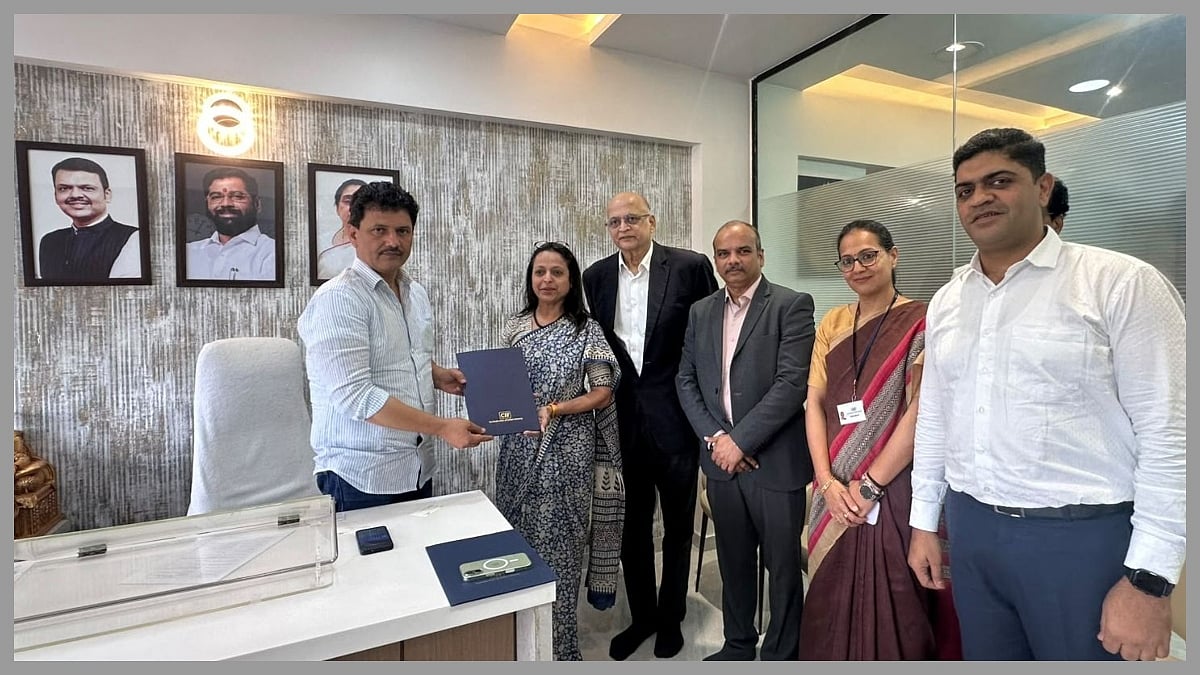
This call to action was made during a meeting organized by the Confederation of Indian Industry (CII), which brought together key stakeholders including Abitkar, Padma Shri Dr Ramakant Deshpande, and CII Regional Director Dr Alpa Antani.
The discussions centered around developing a scalable and data-driven healthcare model for Maharashtra, with a specific focus on addressing obesity. The proposed approach would prioritize prevention, early diagnosis, and continuous public awareness, as well as encourage participation across society.
Abitkar stressed that preventive healthcare deserves greater priority, given the increasing strain that obesity and lifestyle disorders are placing on public health. He advocated for coordinated action involving the government, industry, medical institutions, and communities to promote healthier lifestyles and improve early detection.
Such collaboration, according to Abitkar, could help reduce the long-term health and economic costs associated with chronic illnesses. The CII expressed its belief that Maharashtra could emerge as a model state by adopting a focused obesity-prevention strategy, which could be replicated across Western India.
Deshpande, who is also the chairman of the Asian Cancer Institute, emphasized the urgent need to treat obesity as a priority due to its close association with several chronic diseases. He suggested that preventive healthcare must become a sustained public movement, built around early detection, awareness, and community involvement.
Maharashtra, with its existing medical expertise and healthcare ecosystem, is well-positioned to create a model that could eventually be replicated nationwide. The meeting also highlighted the importance of collaboration between the government, CII, medical colleges, healthcare professionals, students, and community organizations.
Building a pipeline of future healthcare leaders and community champions was identified as essential for sustaining preventive programs and extending their reach across Maharashtra. By working together, the state can develop effective strategies to address the growing burden of lifestyle-related diseases and promote a healthier future for its citizens.
The focus on preventive healthcare in Maharashtra is a significant step towards addressing the increasing incidence of lifestyle-related diseases. By prioritizing prevention and early diagnosis, the state can reduce the economic and health burdens associated with these diseases, and create a healthier and more sustainable future for its citizens.
In the context of India's growing burden of non-communicable diseases, Maharashtra's efforts to strengthen preventive healthcare are particularly noteworthy. The state's approach, which emphasizes collaboration and community participation, could serve as a model for other states to follow.
Overall, the emphasis on preventive healthcare in Maharashtra reflects a growing recognition of the need for proactive approaches to health, rather than simply treating diseases after they occur. By investing in prevention and early diagnosis, the state can promote a culture of health and wellness, and reduce the incidence of lifestyle-related diseases.
Frequently asked questions
What is Maharashtra's approach to addressing lifestyle-related diseases?
Maharashtra is focusing on preventive healthcare, with a specific emphasis on addressing obesity through a data-driven healthcare model.
Who are the key stakeholders involved in Maharashtra's preventive healthcare efforts?
The key stakeholders include the government, Confederation of Indian Industry (CII), medical colleges, healthcare professionals, students, and community organizations.