Indore High Court Rejects State's 6-Year-Late Appeal In Dhar Land Dispute
Indore High Court sets aside district court order, State's appeal dismissed due to delay.
'%3E%3Crect%20width%3D'96'%20height%3D'96'%20fill%3D'%23B3261E'%2F%3E%3Ccircle%20cx%3D'30'%20cy%3D'24'%20r%3D'44'%20fill%3D'%23fff'%20opacity%3D'.12'%2F%3E%3Ccircle%20cx%3D'60'%20cy%3D'74'%20r%3D'40'%20fill%3D'%23000'%20opacity%3D'.10'%2F%3E%3C%2Fg%3E%3Cg%20fill%3D'%23fff'%3E%3Crect%20x%3D'29'%20y%3D'49'%20width%3D'8'%20height%3D'19'%20rx%3D'1'%2F%3E%3Crect%20x%3D'39'%20y%3D'40'%20width%3D'9'%20height%3D'28'%20rx%3D'1'%2F%3E%3Crect%20x%3D'50'%20y%3D'45'%20width%3D'8'%20height%3D'23'%20rx%3D'1'%2F%3E%3Crect%20x%3D'60'%20y%3D'53'%20width%3D'7'%20height%3D'15'%20rx%3D'1'%2F%3E%3Crect%20x%3D'41'%20y%3D'34'%20width%3D'5'%20height%3D'6'%2F%3E%3C%2Fg%3E%3C%2Fsvg%3E)
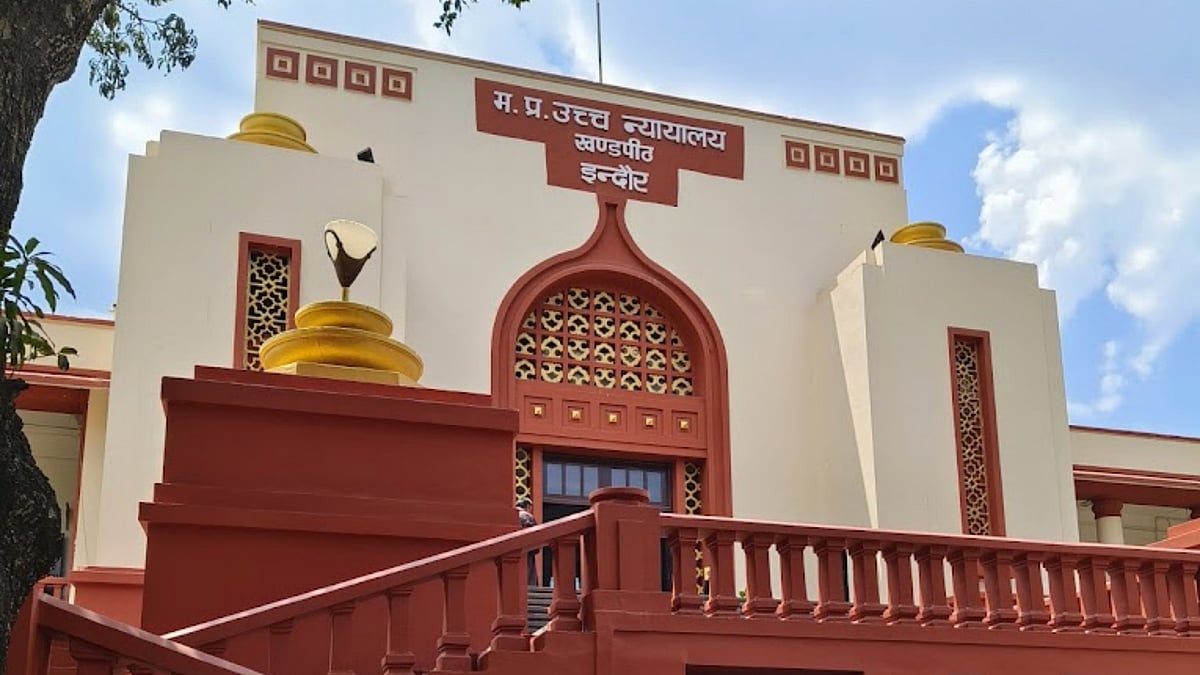
The Indore Bench of the Madhya Pradesh High Court has rejected the State government's appeal in a land dispute case due to a delay of over six years in filing the appeal.
The case pertains to a civil suit over a 0.089-hectare land parcel in Kod village, Dhar district. On January 18, 2017, a Badnawar trial court ruled in favour of the petitioners, declaring them entitled to mutate their names over the land in place of Shri Krishna Mandir, which is managed by the Collector.
Despite being aware of the order, State authorities remained inactive until the petitioners initiated execution proceedings years later. The State eventually filed a first appeal along with a delay condonation application on March 17, 2023, a gap of six years and two months.
The Dhar District Judge condoned the delay on August 2, 2024, reasoning primarily that government land was involved. However, the petitioners challenged this before the High Court, arguing that the State offered no day-to-day explanation for the massive gap.
The High Court rejected the State's defence, noting the complete lack of justification for the inaction between January 2017 and November 2022. Citing Supreme Court jurisprudence, the High Court held that administrative lethargy cannot serve as a valid ground to reopen settled rights.
The court emphasised that judiciary forums cannot act as surrogates for State laxity or allow government bodies to litigate at their leisure. Concluding that the lower court erred in mechanically condoning the delay, the High Court set aside the August 2024 order and dismissed both the condonation application and the State's appeal.
This judgment sends a strong message against bureaucratic negligence and emphasizes the importance of adhering to statutory limitation periods. The High Court's decision is a significant step towards ensuring that government bodies are held accountable for their actions and that the judiciary does not condone unnecessary delays.
The petitioners were represented by advocate Arvindra Shreekrishna Gokhale, who argued that the State's delay was inexcusable and that the judiciary should not act as a surrogate for State laxity. The State, on the other hand, argued that delays occurred while securing sanctions and that valuable public land was at stake.
However, the High Court was not convinced by the State's arguments and rejected their appeal. This decision is likely to have significant implications for government bodies and their approach to litigation, emphasizing the need for prompt action and adherence to statutory limitation periods.
In conclusion, the Indore High Court's decision in this case is a significant step towards promoting accountability and efficiency in government bodies and ensuring that the judiciary does not condone unnecessary delays. The judgment emphasizes the importance of adhering to statutory limitation periods and sends a strong message against bureaucratic negligence.
Frequently asked questions
What was the reason for the State's delay in filing the appeal?
The State argued that delays occurred while securing sanctions and that valuable public land was at stake.
What was the High Court's decision in this case?
The High Court set aside the lower court's order and dismissed both the condonation application and the State's appeal due to the delay.