UP Govt To Procure Local Handloom Products
UP promotes local handloom products, supports weavers. Government procurement to boost employment.
'%3E%3Crect%20width%3D'96'%20height%3D'96'%20fill%3D'%231A5276'%2F%3E%3Ccircle%20cx%3D'30'%20cy%3D'24'%20r%3D'44'%20fill%3D'%23fff'%20opacity%3D'.12'%2F%3E%3Ccircle%20cx%3D'60'%20cy%3D'74'%20r%3D'40'%20fill%3D'%23000'%20opacity%3D'.10'%2F%3E%3C%2Fg%3E%3Cg%20fill%3D'%23fff'%3E%3Cpath%20d%3D'M31%2041%20L48%2031%20L65%2041%20Z'%2F%3E%3Crect%20x%3D'33'%20y%3D'43'%20width%3D'4'%20height%3D'17'%2F%3E%3Crect%20x%3D'41'%20y%3D'43'%20width%3D'4'%20height%3D'17'%2F%3E%3Crect%20x%3D'51'%20y%3D'43'%20width%3D'4'%20height%3D'17'%2F%3E%3Crect%20x%3D'59'%20y%3D'43'%20width%3D'4'%20height%3D'17'%2F%3E%3Crect%20x%3D'30'%20y%3D'62'%20width%3D'36'%20height%3D'4'%20rx%3D'1'%2F%3E%3C%2Fg%3E%3C%2Fsvg%3E)
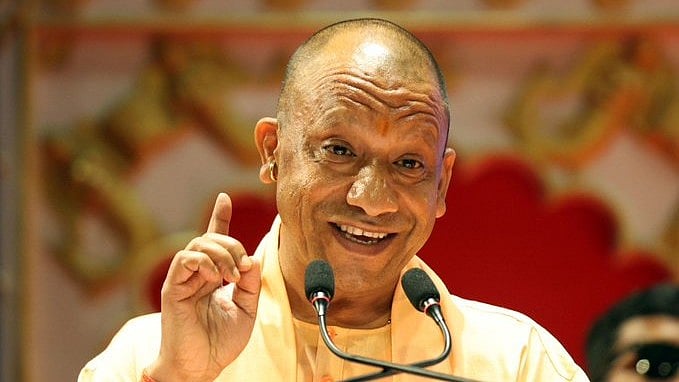
The Uttar Pradesh government, led by Chief Minister Yogi Adityanath, is taking steps to promote the procurement of locally manufactured handloom products in government institutions. This initiative aims to boost the handloom and textile industry, providing maximum employment opportunities to the state's weavers.
On Tuesday, a review meeting was held in Lucknow under the chairmanship of Khadi and Village Industries, Silk, Handloom and Textiles Minister Rakesh Sachan. The meeting discussed the procurement and supply of bedsheets and gauze bandages used in the Health Department and other government departments and public sector undertakings.
Minister Rakesh Sachan stated that providing the state's weavers with a government procurement market is among the priorities of the Yogi government. He emphasized that with an increase in the procurement of quality textiles manufactured by local weavers in government institutions, lakhs of weaver families in the state will get employment and economic strength.
The meeting noted that approximately 2,13,107 weavers are working in the state, producing various textiles, including bedsheets and gauze bandages. Prioritizing these products in government procurement will provide a wider market for weavers' products and help connect the new generation with the traditional weaving profession.
Under the proposed arrangement, the supply of bedsheets, pillow covers, and gauze bandage cloth to government hospitals, medical colleges, and universities through Uttar Pradesh State Handloom Corporation Limited was discussed. Quality production will be undertaken through weavers' cooperative societies and weavers of the state.
Minister Rakesh Sachan placed special emphasis on product quality, stating that the material supplied to government institutions must be of good quality and conform to the prescribed standards. The meeting also discussed designating nodal officers to make the supply system effective.
The development of a system under which the concerned medical institutions issue demands and purchase orders on time, according to their requirements, was also considered. This initiative is expected to provide a permanent market for textiles produced in the state.
The decision to promote local handloom products is in line with the Chief Minister's directions at the National Handloom Day program on August 07, 2026. The program aimed to support the state's weavers and promote the handloom and textile industry.
The initiative is expected to have a positive impact on the state's economy, providing employment opportunities to lakhs of weaver families. It will also help preserve the traditional weaving profession and promote the use of locally manufactured handloom products.
In conclusion, the UP government's decision to procure local handloom products is a significant step towards supporting the state's weavers and promoting the handloom and textile industry. The initiative is expected to have a positive impact on the state's economy and provide employment opportunities to lakhs of people.
The government's efforts to promote local handloom products will also help connect the new generation with the traditional weaving profession, preserving the state's cultural heritage. The initiative is a testament to the government's commitment to supporting the state's weavers and promoting the handloom and textile industry.
Overall, the UP government's decision to procure local handloom products is a welcome move that is expected to have a positive impact on the state's economy and provide employment opportunities to lakhs of people.
Frequently asked questions
What is the UP government's initiative to support weavers?
The UP government is promoting the procurement of locally manufactured handloom products in government institutions to support weavers and provide employment opportunities.
How many weavers are working in the state?
Approximately 2,13,107 weavers are working in the state.