El Salvador Uncovers 2,800-Year-Old Burial with Turtle Vessel
Archaeologists find ancient burial, turtle-shaped vessel and cassava remnants. Discovery sheds light on pre-Maya civilization.
'%3E%3Crect%20width%3D'96'%20height%3D'96'%20fill%3D'%23B3261E'%2F%3E%3Ccircle%20cx%3D'30'%20cy%3D'24'%20r%3D'44'%20fill%3D'%23fff'%20opacity%3D'.12'%2F%3E%3Ccircle%20cx%3D'60'%20cy%3D'74'%20r%3D'40'%20fill%3D'%23000'%20opacity%3D'.10'%2F%3E%3C%2Fg%3E%3Cg%20fill%3D'%23fff'%3E%3Crect%20x%3D'29'%20y%3D'49'%20width%3D'8'%20height%3D'19'%20rx%3D'1'%2F%3E%3Crect%20x%3D'39'%20y%3D'40'%20width%3D'9'%20height%3D'28'%20rx%3D'1'%2F%3E%3Crect%20x%3D'50'%20y%3D'45'%20width%3D'8'%20height%3D'23'%20rx%3D'1'%2F%3E%3Crect%20x%3D'60'%20y%3D'53'%20width%3D'7'%20height%3D'15'%20rx%3D'1'%2F%3E%3Crect%20x%3D'41'%20y%3D'34'%20width%3D'5'%20height%3D'6'%2F%3E%3C%2Fg%3E%3C%2Fsvg%3E)
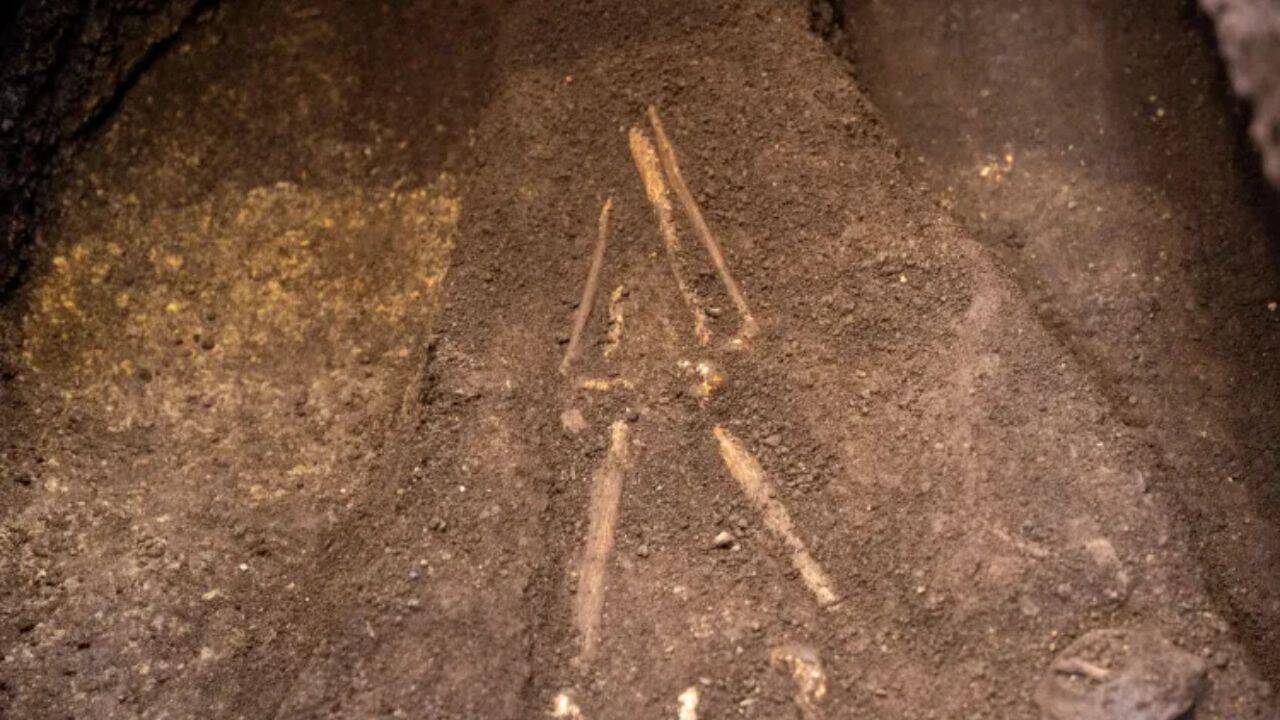
Archaeologists in El Salvador have made a significant discovery, unearthing a 2,800-year-old burial site containing a skeleton clutching a sea turtle-shaped vessel. The burial, which may belong to a pre-Maya civilization, was found under a thick layer of volcanic ash from an eruption that occurred between 850-830 BC.
The discovery provides valuable insights into the lives and practices of ancient Mesoamerican civilizations. The presence of a turtle-shaped vessel in the burial suggests a strong spiritual connection with the natural world. Additionally, the remains of cassava, a staple crop in Mesoamerica, were found in the pit, symbolizing continuation and spiritual resonance.
The pre-Maya civilization is believed to have practiced human sacrifice, and this discovery may shed more light on their rituals and practices. Further analysis of the skeleton and the artifacts found in the burial site will reveal more about the individual's life, diet, and the significance of the turtle-shaped vessel.
The volcanic ash that covered the burial site is a result of a massive eruption that occurred over 2,800 years ago. The ash has helped preserve the site, providing a unique glimpse into the lives of ancient Mesoamericans. The discovery is a significant one, and archaeologists are eager to learn more about this ancient civilization.
The use of chemical analysis will play a crucial role in uncovering more information about the individual's life and diet. By studying the remains and artifacts, researchers can gain a better understanding of the pre-Maya civilization's way of life, their spiritual practices, and their connection with the natural world.
This discovery is a testament to the rich cultural heritage of Mesoamerica and the importance of preserving our cultural history. As researchers continue to study the site and the artifacts, they may uncover even more secrets about this ancient civilization and their practices.
The significance of this discovery lies in its ability to provide a window into the past, allowing us to learn more about the lives and practices of ancient Mesoamericans. The discovery of the turtle-shaped vessel and the cassava remnants is a significant one, and it will undoubtedly contribute to our understanding of this ancient civilization.
In conclusion, the discovery of the 2,800-year-old burial site in El Salvador is a significant one, providing valuable insights into the lives and practices of ancient Mesoamericans. As researchers continue to study the site and the artifacts, they may uncover even more secrets about this ancient civilization and their practices, shedding more light on the pre-Maya civilization and their connection with the natural world.
Frequently asked questions
What was found in the 2,800-year-old burial site in El Salvador?
A skeleton clutching a sea turtle-shaped vessel and cassava remnants were found in the burial site.
What does the discovery of the turtle-shaped vessel signify?
The turtle-shaped vessel suggests a strong spiritual connection with the natural world and may have been used in rituals or practices.