Naveen Jindal Plans 18 GW Nuclear Projects
Naveen Jindal Group explores sites in 9 states for nuclear projects. Investments worth lakhs of crores planned.
'%3E%3Crect%20width%3D'96'%20height%3D'96'%20fill%3D'%230B6E4F'%2F%3E%3Ccircle%20cx%3D'30'%20cy%3D'24'%20r%3D'44'%20fill%3D'%23fff'%20opacity%3D'.12'%2F%3E%3Ccircle%20cx%3D'60'%20cy%3D'74'%20r%3D'40'%20fill%3D'%23000'%20opacity%3D'.10'%2F%3E%3C%2Fg%3E%3Cg%20fill%3D'none'%20stroke%3D'%23fff'%20stroke-width%3D'3.2'%20stroke-linecap%3D'round'%20stroke-linejoin%3D'round'%3E%3Cpolyline%20points%3D'31%2C59%2041%2C49%2049%2C54%2063%2C37'%2F%3E%3Cpolyline%20points%3D'55%2C37%2063%2C37%2063%2C45'%2F%3E%3C%2Fg%3E%3C%2Fsvg%3E)
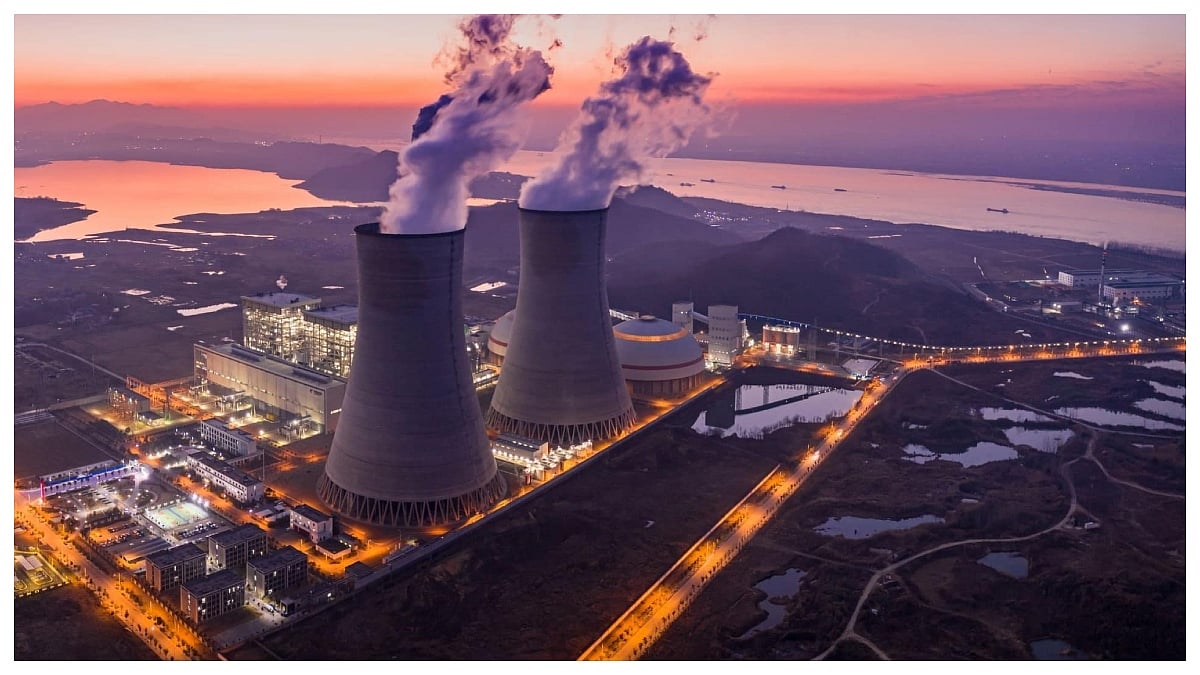
The Naveen Jindal Group is planning to set up high-capacity nuclear projects in multiple locations across at least nine states in India. The group is currently exploring sites in states such as Gujarat, Odisha, Andhra Pradesh, Tamil Nadu, Jharkhand, and Chhattisgarh.
As part of its energy diversification strategy, the group aims to set up 18 GW nuclear plants, which will require investments worth lakhs of crores. The group is also in discussions with various players to explore possibilities of entering into partnerships for nuclear power technologies.
The planned nuclear projects will be set up through Jindal Nuclear Power Private Limited, a 100 per cent subsidiary of Jindal Renewables. The group is evaluating potential sites based on parameters such as land availability, water resources, geological and seismic suitability, transmission connectivity, regulatory readiness, and long-term project viability.
The official from the group stated that the plan is to set up nuclear plants with large module reactors (LMRs) of 700 MW and above. According to industry estimates, investments worth Rs 15,000-Rs 20,000 crore are required to set up every 1 GW nuclear plant, and it takes around three years from concept to commissioning.
The group's foray into the nuclear space is part of its efforts to contribute to the government's ambitious 100 GW nuclear capacity target by 2047. The Naveen Jindal Group is engaged in various sectors, including steel, mining, power, renewables, and real estate.
The group's decision to explore nuclear projects is a significant development in the Indian energy sector. With the government's focus on increasing the share of nuclear power in the country's energy mix, private sector participation is expected to play a crucial role in achieving this goal.
The Naveen Jindal Group's plans to set up 18 GW nuclear plants will not only contribute to the government's target but also help reduce the country's dependence on fossil fuels. The group's investment in the nuclear sector is expected to create new opportunities for employment and economic growth in the regions where the projects are set up.
In the coming years, the Indian energy sector is expected to witness significant growth, driven by the government's policies and initiatives. The Naveen Jindal Group's foray into the nuclear space is a testament to the growing interest in the sector and the potential for private sector participation.
The success of the group's nuclear projects will depend on various factors, including the availability of suitable sites, the sourcing of nuclear technologies, and the regulatory framework. However, with the group's experience in the energy sector and its commitment to contributing to the government's targets, the prospects for the projects look promising.
In conclusion, the Naveen Jindal Group's plans to set up 18 GW nuclear projects are a significant development in the Indian energy sector. The group's investment in the nuclear sector is expected to contribute to the government's targets, reduce the country's dependence on fossil fuels, and create new opportunities for employment and economic growth.
The project's significance extends beyond the energy sector, as it has the potential to contribute to the country's economic growth and development. As India continues to grow and develop, the demand for energy is expected to increase, and the Naveen Jindal Group's nuclear projects are expected to play a crucial role in meeting this demand.
Overall, the Naveen Jindal Group's foray into the nuclear space is a positive development for the Indian energy sector, and the group's commitment to contributing to the government's targets is a testament to its commitment to the country's growth and development.