Agricultural Data Collection Faces Serious Gaps
India's food security at risk due to outdated village maps and untrained personnel
'%3E%3Crect%20width%3D'96'%20height%3D'96'%20fill%3D'%23B3261E'%2F%3E%3Ccircle%20cx%3D'30'%20cy%3D'24'%20r%3D'44'%20fill%3D'%23fff'%20opacity%3D'.12'%2F%3E%3Ccircle%20cx%3D'60'%20cy%3D'74'%20r%3D'40'%20fill%3D'%23000'%20opacity%3D'.10'%2F%3E%3C%2Fg%3E%3Cg%20fill%3D'%23fff'%3E%3Crect%20x%3D'29'%20y%3D'49'%20width%3D'8'%20height%3D'19'%20rx%3D'1'%2F%3E%3Crect%20x%3D'39'%20y%3D'40'%20width%3D'9'%20height%3D'28'%20rx%3D'1'%2F%3E%3Crect%20x%3D'50'%20y%3D'45'%20width%3D'8'%20height%3D'23'%20rx%3D'1'%2F%3E%3Crect%20x%3D'60'%20y%3D'53'%20width%3D'7'%20height%3D'15'%20rx%3D'1'%2F%3E%3Crect%20x%3D'41'%20y%3D'34'%20width%3D'5'%20height%3D'6'%2F%3E%3C%2Fg%3E%3C%2Fsvg%3E)
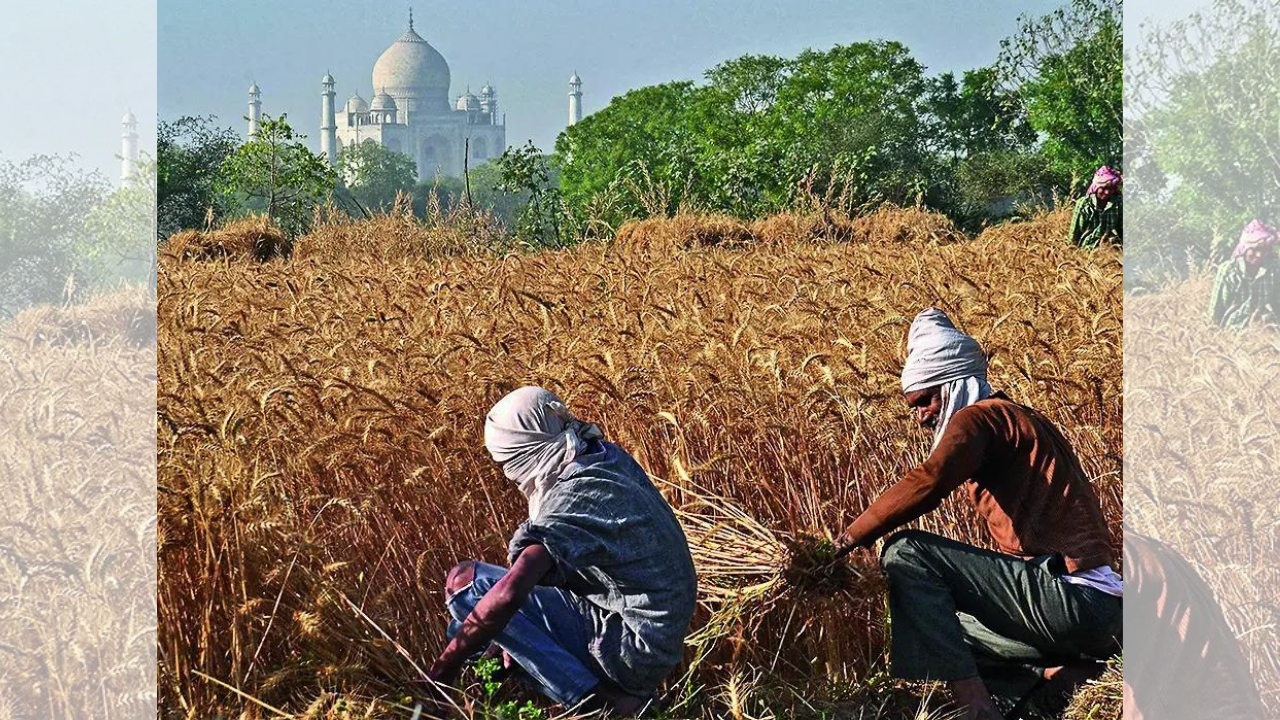
A recent report by the statistics ministry has highlighted significant gaps in agricultural data collection in India. Official crop enumeration inspections were completed on time in less than half of the country's villages, which could affect national food security interventions.
The ministry has also found that many village maps used for land tracing are over twenty years old and outdated. This could lead to inaccurate data collection and affect advance estimates of crop production.
In several key states, crop-cutting experiments are being conducted by untrained personnel, which could further compromise the accuracy of agricultural data. These experiments are crucial for estimating crop yields and production.
The gaps in agricultural statistics could have serious implications for policymakers, who rely on accurate data to make informed decisions. Without reliable data, policymakers may struggle to implement effective food security interventions, which could put the country's food security at risk.
India's agricultural sector is a critical component of the country's economy, and accurate data collection is essential for ensuring food security. The statistics ministry's report has highlighted the need for urgent attention to address these gaps and improve agricultural data collection.
The use of outdated village maps and untrained personnel for crop-cutting experiments is a concern that needs to be addressed. The ministry should take steps to update village maps and provide training to personnel conducting crop-cutting experiments.
The report's findings have significant implications for India's food security policy. Policymakers must take urgent action to address these gaps and ensure that agricultural data collection is accurate and reliable.
In conclusion, the gaps in agricultural data collection highlighted by the statistics ministry are a serious concern that needs to be addressed. Accurate data collection is essential for ensuring food security, and policymakers must take urgent action to improve agricultural data collection.
The issue of outdated village maps and untrained personnel is not just a technical problem, but also has significant implications for the country's food security. It is essential that the government takes steps to address these gaps and ensure that agricultural data collection is accurate and reliable.
The report's findings are a wake-up call for policymakers to take urgent action to improve agricultural data collection. The country's food security depends on it, and any delay in addressing these gaps could have serious consequences.
What it means for India is that the country's food security is at risk due to gaps in agricultural data collection. The government must take urgent action to address these gaps and ensure that agricultural data collection is accurate and reliable.
This will require significant investment in updating village maps, providing training to personnel, and improving data collection infrastructure. However, the benefits of accurate agricultural data collection far outweigh the costs, and it is essential that the government takes urgent action to address these gaps.