Neelakurinji Flower Blooms In Munnar After 12 Years
Munnar hills turn purple, rare flower blooms after 12 years, attracting tourists and botanists.
'%3E%3Crect%20width%3D'96'%20height%3D'96'%20fill%3D'%23B3261E'%2F%3E%3Ccircle%20cx%3D'30'%20cy%3D'24'%20r%3D'44'%20fill%3D'%23fff'%20opacity%3D'.12'%2F%3E%3Ccircle%20cx%3D'60'%20cy%3D'74'%20r%3D'40'%20fill%3D'%23000'%20opacity%3D'.10'%2F%3E%3C%2Fg%3E%3Cg%20fill%3D'%23fff'%3E%3Crect%20x%3D'29'%20y%3D'49'%20width%3D'8'%20height%3D'19'%20rx%3D'1'%2F%3E%3Crect%20x%3D'39'%20y%3D'40'%20width%3D'9'%20height%3D'28'%20rx%3D'1'%2F%3E%3Crect%20x%3D'50'%20y%3D'45'%20width%3D'8'%20height%3D'23'%20rx%3D'1'%2F%3E%3Crect%20x%3D'60'%20y%3D'53'%20width%3D'7'%20height%3D'15'%20rx%3D'1'%2F%3E%3Crect%20x%3D'41'%20y%3D'34'%20width%3D'5'%20height%3D'6'%2F%3E%3C%2Fg%3E%3C%2Fsvg%3E)
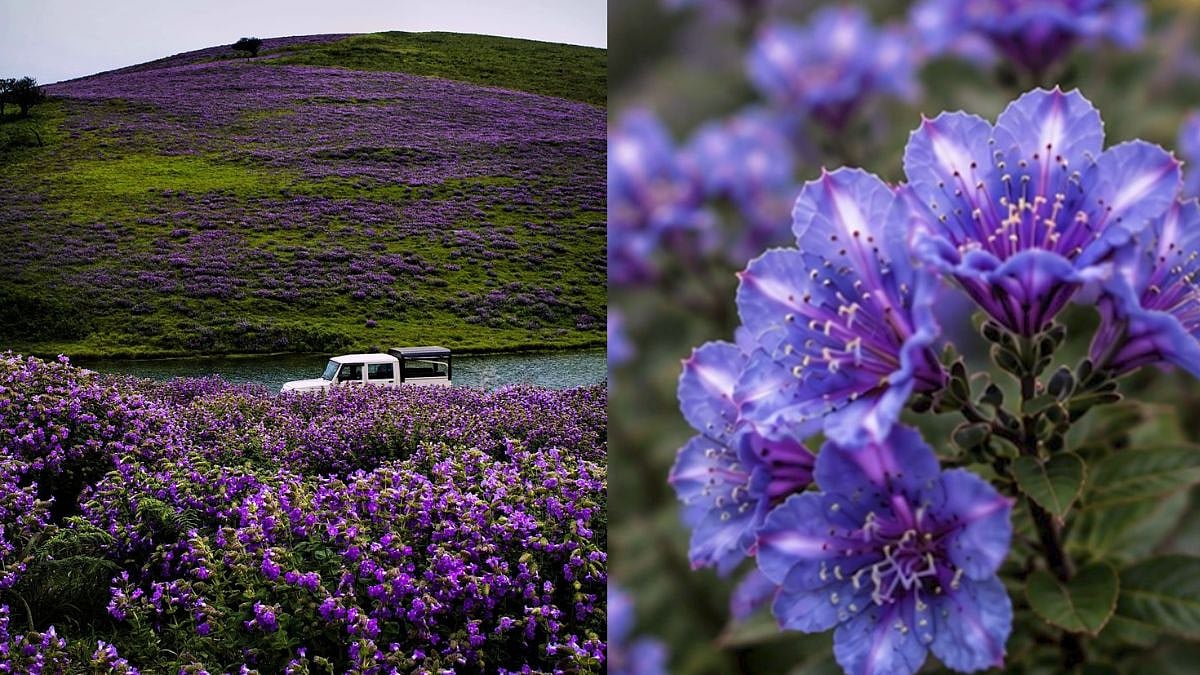
The Neelakurinji flower has begun blooming in Munnar, Kerala, after a 12-year wait. The rare flowering event has transformed the Korandakadu hills near Mattupetty into a stunning carpet of blue and purple.
The Neelakurinji flowers, known scientifically as Strobilanthes kunthiana, are famous for their unusual flowering cycle, which occurs once every 12 years. The plant blooms, produces seeds, and then completes its life cycle, making every blooming season a unique natural phenomenon.
Munnar, located in Kerala's Idukki district, is one of the best-known places to witness the spectacular bloom. The sight of entire hills covered in purple has made Neelakurinji closely associated with the region's identity and tourism.
The Neelakurinji flower is a rare shrub native to the Shola forest and grasslands of the Western Ghats in South India. It is famous for its purplish-blue blossoms and 12-year flowering cycle. The flower plays an important role in the local ecosystem, providing food for insects and other pollinators when it blooms in large numbers.
The bloom has drawn attention from travelers, botanists, and photographers eager to witness the fleeting natural wonder, which lasts only a few weeks. The flower grows at high altitude, between 1,300 and 2,500 meters above sea level, in Kerala, Tamil Nadu, and Karnataka.
The Neelakurinji flower is closely associated with the region's identity and tourism. The bloom has become a significant event, attracting visitors from all over the world. The flower's unique characteristics and rare blooming cycle make it a special natural phenomenon.
The Western Ghats, where the Neelakurinji flower blooms, is a biodiversity hotspot, home to a wide range of flora and fauna. The region's unique ecosystem is supported by the shola-grassland ecosystem, which is found in the higher elevations of the Western Ghats.
In conclusion, the Neelakurinji flower's bloom in Munnar after 12 years is a significant event, attracting attention from tourists, botanists, and photographers. The flower's unique characteristics, rare blooming cycle, and importance in the local ecosystem make it a special natural phenomenon.
The bloom is a reminder of the importance of preserving the natural beauty and biodiversity of the Western Ghats. The region's unique ecosystem and the Neelakurinji flower's rare blooming cycle make it a must-visit destination for nature lovers and tourists.
Overall, the Neelakurinji flower's bloom in Munnar is a significant event that highlights the importance of preserving the natural beauty and biodiversity of the Western Ghats. The flower's unique characteristics and rare blooming cycle make it a special natural phenomenon that attracts visitors from all over the world.
The Neelakurinji flower's bloom is a significant event that has a major impact on the local ecosystem and tourism. The flower's unique characteristics and rare blooming cycle make it a must-visit destination for nature lovers and tourists. The bloom is a reminder of the importance of preserving the natural beauty and biodiversity of the Western Ghats.
In the end, the Neelakurinji flower's bloom in Munnar after 12 years is a significant event that attracts attention from tourists, botanists, and photographers. The flower's unique characteristics, rare blooming cycle, and importance in the local ecosystem make it a special natural phenomenon that highlights the importance of preserving the natural beauty and biodiversity of the Western Ghats.
The bloom is a major event that has a significant impact on the local ecosystem and tourism. The Neelakurinji flower's unique characteristics and rare blooming cycle make it a must-visit destination for nature lovers and tourists. The flower's importance in the local ecosystem and its rare blooming cycle make it a special natural phenomenon that attracts visitors from all over the world.
The Neelakurinji flower's bloom in Munnar is a significant event that highlights the importance of preserving the natural beauty and biodiversity of the Western Ghats. The flower's unique characteristics, rare blooming cycle, and importance in the local ecosystem make it a special natural phenomenon that attracts visitors from all over the world.
The bloom is a reminder of the importance of preserving the natural beauty and biodiversity of the Western Ghats. The Neelakurinji flower's unique characteristics and rare blooming cycle make it a must-visit destination for nature lovers and tourists. The flower's importance in the local ecosystem and its rare blooming cycle make it a special natural phenomenon that attracts visitors from all over the world.
What it means for Mumbai or India is that the Neelakurinji flower's bloom is a significant event that highlights the importance of preserving the natural beauty and biodiversity of the Western Ghats. The flower's unique characteristics, rare blooming cycle, and importance in the local ecosystem make it a special natural phenomenon that attracts visitors from all over the world.
Frequently asked questions
What is Neelakurinji flower
Neelakurinji is a rare shrub native to the Shola forest and grasslands of the Western Ghats in South India, famous for its purplish-blue blossoms and 12-year flowering cycle.
Where does Neelakurinji flower bloom
Neelakurinji flower blooms in Munnar, Kerala, and other parts of the Western Ghats in South India, including Tamil Nadu and Karnataka.