Kharif Crop Acreage Falls 16%
Kharif crop acreage down, sugarcane up. Farmers favor cash crops.
'%3E%3Crect%20width%3D'96'%20height%3D'96'%20fill%3D'%23B3261E'%2F%3E%3Ccircle%20cx%3D'30'%20cy%3D'24'%20r%3D'44'%20fill%3D'%23fff'%20opacity%3D'.12'%2F%3E%3Ccircle%20cx%3D'60'%20cy%3D'74'%20r%3D'40'%20fill%3D'%23000'%20opacity%3D'.10'%2F%3E%3C%2Fg%3E%3Cg%20fill%3D'%23fff'%3E%3Crect%20x%3D'29'%20y%3D'49'%20width%3D'8'%20height%3D'19'%20rx%3D'1'%2F%3E%3Crect%20x%3D'39'%20y%3D'40'%20width%3D'9'%20height%3D'28'%20rx%3D'1'%2F%3E%3Crect%20x%3D'50'%20y%3D'45'%20width%3D'8'%20height%3D'23'%20rx%3D'1'%2F%3E%3Crect%20x%3D'60'%20y%3D'53'%20width%3D'7'%20height%3D'15'%20rx%3D'1'%2F%3E%3Crect%20x%3D'41'%20y%3D'34'%20width%3D'5'%20height%3D'6'%2F%3E%3C%2Fg%3E%3C%2Fsvg%3E)
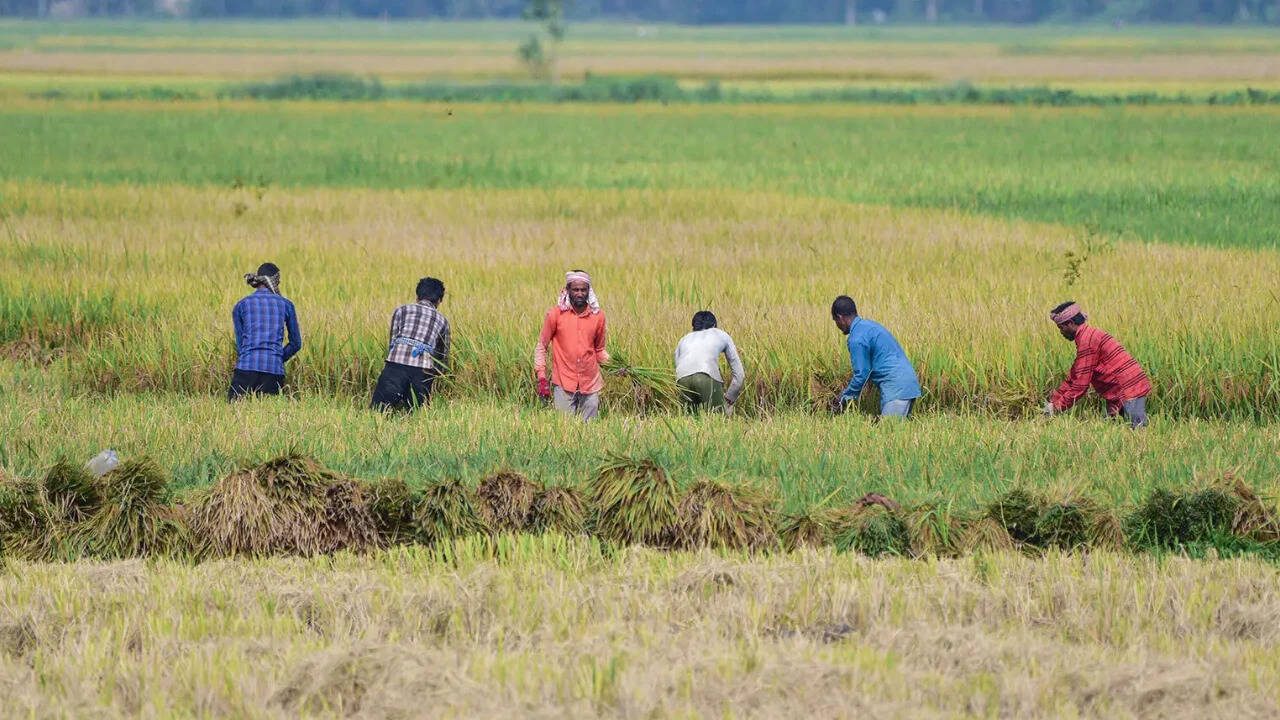
The latest data on kharif crop acreage reveals a decline of 16% as of last Friday. This decrease is largely attributed to a reduction in the sown area of pulses and cereals.
However, despite water resource pressures, sugarcane acreage has shown an increase. This uptrend in sugarcane cultivation can be linked to the government's initiatives to promote ethanol production.
Farmers are increasingly opting for cash crops due to better market prices. This shift towards cash crops not only supports the government's ethanol initiatives but also helps reduce the country's import bills.
The decline in pulses and cereals acreage is a significant trend this season. Pulses, an essential part of the Indian diet, have seen a substantial decrease in sown area. Similarly, cereals, which are a staple crop in many parts of the country, have also witnessed a decline.
The government's emphasis on ethanol production has created a favorable market for sugarcane farmers. As a result, many farmers are now inclined towards cultivating sugarcane, which provides them with a better price for their produce.
The increase in sugarcane acreage is expected to have a positive impact on the country's ethanol production. This, in turn, will help reduce the country's dependence on imported fuels and contribute to a more sustainable energy mix.
In the context of the Indian agricultural sector, the shift towards cash crops is not a new trend. However, the current scenario, with its focus on ethanol production, has accelerated this trend.
The Indian government has been actively promoting ethanol production as a means to reduce the country's oil import bill and promote sustainable energy. The increase in sugarcane acreage is a direct result of these initiatives.
In conclusion, the 16% decline in kharif crop acreage, coupled with the increase in sugarcane cultivation, reflects the changing dynamics of the Indian agricultural sector. As the government continues to promote ethanol production, it is likely that this trend will persist, with more farmers opting for cash crops like sugarcane.