Supreme Court Cracks Down on AI-Generated Fake Precedents
The Supreme Court declares zero tolerance for fake legal precedents, directs Bar Council to act. Judges cite non-existent judgments, undermining the rule of law.

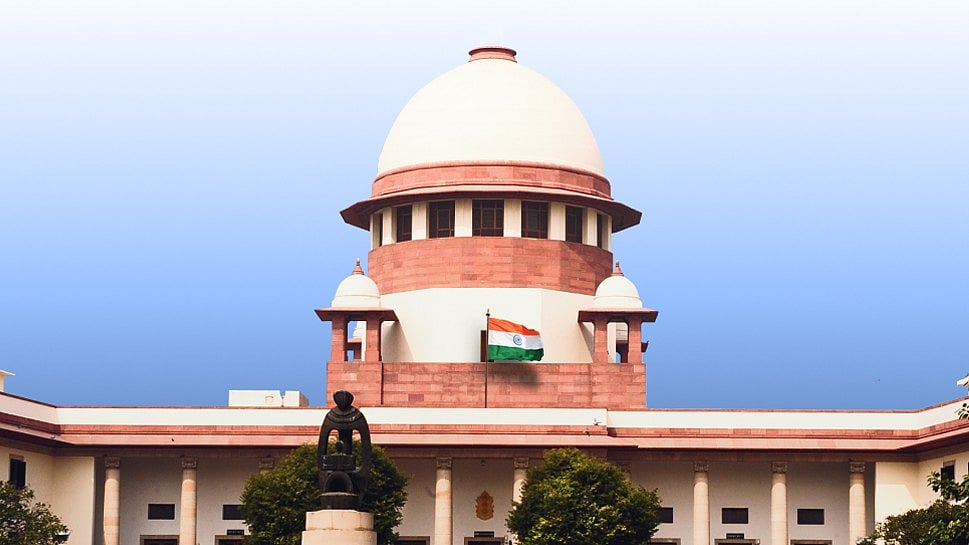
The Supreme Court of India has taken a strong stance against the use of fabricated or AI-generated legal precedents in judicial proceedings. In a judgment dated July 2, 2026, the Court ruled that reliance on such precedents is unacceptable and undermines the rule of law.
The case in question, 'Pooja Ramesh Singh v Jammu & Kashmir Bank Ltd & Anr', involved the National Company Law Tribunal (NCLT) and the National Company Law Appellate Tribunal (NCLAT) citing non-existent judgments and misattributing passages. The Supreme Court struck down the orders of the NCLT and NCLAT, emphasizing that a ruling based on fictitious material is void from the beginning.
A Bench of Justices PS Narasimha and Alok Aradhe likened the use of AI-generated content to a toxic leak in the justice system, describing it as invisible, insidious, and catastrophic by the time it is noticed. The Court observed that such material contaminates and takes away the very lifeblood of judicial determination.
The Supreme Court also warned that advocates who cite unverified AI-generated material commit misconduct, and that judicial reliance on such content constitutes a serious lapse. The Court directed the Bar Council of India to constitute a committee to deliberate on the issue of members of the Bar submitting fake and hallucinated material before courts as though they were genuine legal precedents.
The Bar Council has been directed to treat this issue with utmost seriousness, deliberate earnestly, and prescribe guiding principles to prevent such occurrences, along with disciplinary action for violations. This judgment is seen as a watershed moment, reinforcing the importance of verifying and re-verifying judicial precedents before relying on them in court proceedings.
The use of technology in legal research is not a new phenomenon, but this judgment highlights the need for caution and accountability. While technology can assist legal research, it cannot replace the duty of lawyers to verify the accuracy of judicial precedents. The message is clear: fabricated citations have no place in the courtroom, and accountability will be enforced at every level.
This judgment has significant implications for the legal fraternity, emphasizing the need for transparency and accountability in the use of legal precedents. It also highlights the importance of ongoing education and training for lawyers to ensure they are equipped to navigate the complexities of legal research in the digital age.
In conclusion, the Supreme Court's judgment is a significant step towards maintaining the integrity of the justice system. By declaring zero tolerance for AI-generated fake legal precedents, the Court has sent a strong signal to the legal fraternity, emphasizing the need for accountability and transparency in the use of legal precedents.
The judgment is also a reminder that the rule of law is fundamental to the functioning of a democratic society, and that any attempts to undermine it will be taken seriously. As the legal fraternity moves forward, it is essential that lawyers and judges prioritize the accuracy and integrity of legal precedents, ensuring that the justice system remains fair, transparent, and accountable.
The Supreme Court's decision will have far-reaching implications for the Indian justice system, and it is likely to be closely watched by legal experts and scholars. The judgment is a significant step towards maintaining the integrity of the justice system, and it reinforces the importance of accountability and transparency in the use of legal precedents.
In the context of the Indian justice system, this judgment is a significant development, highlighting the need for ongoing efforts to maintain the integrity and transparency of the legal process. The judgment is a reminder that the justice system is not just a mechanism for resolving disputes, but also a cornerstone of democratic governance, and that any attempts to undermine it will be taken seriously.
The implications of this judgment will be closely watched, and it is likely to have a significant impact on the Indian legal landscape. The judgment is a significant step towards maintaining the integrity of the justice system, and it reinforces the importance of accountability and transparency in the use of legal precedents.