Bill Gates Urges Human-Only Jobs Amid AI Threat
Bill Gates calls for jobs reserved for humans as AI replaces workers.
'%3E%3Crect%20width%3D'96'%20height%3D'96'%20fill%3D'%23B3261E'%2F%3E%3Ccircle%20cx%3D'30'%20cy%3D'24'%20r%3D'44'%20fill%3D'%23fff'%20opacity%3D'.12'%2F%3E%3Ccircle%20cx%3D'60'%20cy%3D'74'%20r%3D'40'%20fill%3D'%23000'%20opacity%3D'.10'%2F%3E%3C%2Fg%3E%3Cg%20fill%3D'%23fff'%3E%3Crect%20x%3D'29'%20y%3D'49'%20width%3D'8'%20height%3D'19'%20rx%3D'1'%2F%3E%3Crect%20x%3D'39'%20y%3D'40'%20width%3D'9'%20height%3D'28'%20rx%3D'1'%2F%3E%3Crect%20x%3D'50'%20y%3D'45'%20width%3D'8'%20height%3D'23'%20rx%3D'1'%2F%3E%3Crect%20x%3D'60'%20y%3D'53'%20width%3D'7'%20height%3D'15'%20rx%3D'1'%2F%3E%3Crect%20x%3D'41'%20y%3D'34'%20width%3D'5'%20height%3D'6'%2F%3E%3C%2Fg%3E%3C%2Fsvg%3E)
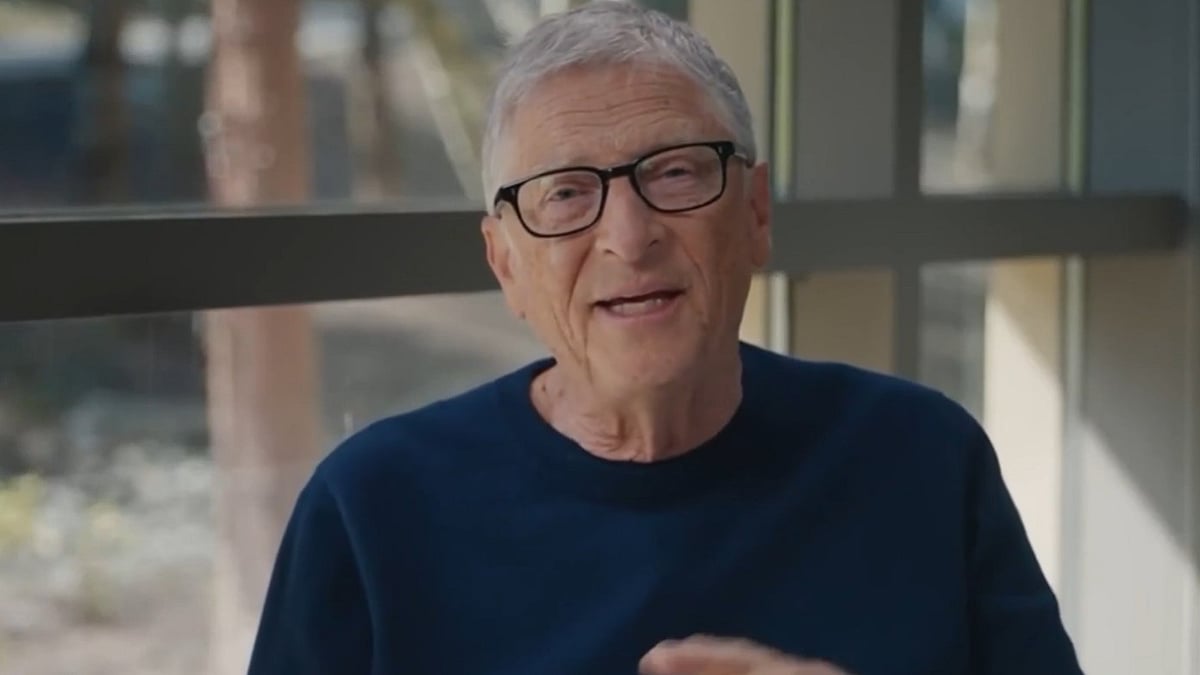
Bill Gates, co-founder of Microsoft, has advocated for certain jobs to be exclusively reserved for humans as artificial intelligence (AI) and robots increasingly replace people at work. In a 6,000-word essay titled The Turbulent AI Era Is Here, Gates warned that governments are not prepared for the scale of AI's impact.
Gates compared the idea of protecting certain jobs from automation with nature reserves, where development is deliberately restricted to prevent unacceptable loss. He believes that as AI and robots improve, certain tasks will be set aside for only people to do, which he calls the 'human reserved' area.
The Microsoft co-founder stated that many jobs will disappear forever due to AI and robots. However, he also believes that there are areas where human involvement has a value that technology cannot replace. Gates pointed to the health professionals who cared for his father, who died of Alzheimer's disease six years ago, as an example of irreplaceably human care.
Gates also warned that serious AI risks are already approaching, including unprecedented cyber and biological threats, disruption of the labor market, widening inequality, and eventually becoming difficult to control. He emphasized the need for governments to create a domestic and international framework for dealing with AI, which he considers the highest priority.
The creation of rules for AI will affect a wide range of areas, including national security, employment, education, taxation, energy, elections, air and water, public health, the financial system, law enforcement, transportation, public lands, and information technology systems. Gates compared the challenge with the US government's reorganization after the September 11 attacks, which focused largely on national security.
Gates' argument raises an important question: just because a machine can perform a task, does that mean society should allow it to do so? He believes that there are areas where human involvement has a value that technology cannot replace, and that governments must prioritize creating a framework for AI that addresses these concerns.
The warning underlines how the AI debate is no longer limited to technology companies, but requires a broader discussion on the impact of AI on society and the economy. As AI continues to advance, it is essential for governments, businesses, and individuals to work together to ensure that the benefits of AI are realized while minimizing its risks.
In conclusion, Bill Gates' call for 'human reserved' jobs highlights the need for a nuanced discussion on the role of AI in the workforce. As AI becomes increasingly capable of replacing human workers, it is crucial to consider the value of human involvement in certain tasks and to create a framework that prioritizes both technological advancement and human well-being.
Frequently asked questions
What is Bill Gates' proposal for AI and jobs?
Bill Gates proposes that certain jobs be reserved exclusively for humans as AI and robots replace people at work.
What areas will be affected by AI according to Gates?
Gates believes that AI will affect a wide range of areas, including national security, employment, education, taxation, energy, elections, air and water, public health, the financial system, law enforcement, transportation, public lands, and information technology systems.