Jalna Collector Asks Patil to End Hunger Strike
Manoj Jarange Patil refuses, demands state-level decisions. Strike continues.
'%3E%3Crect%20width%3D'96'%20height%3D'96'%20fill%3D'%231A5276'%2F%3E%3Ccircle%20cx%3D'30'%20cy%3D'24'%20r%3D'44'%20fill%3D'%23fff'%20opacity%3D'.12'%2F%3E%3Ccircle%20cx%3D'60'%20cy%3D'74'%20r%3D'40'%20fill%3D'%23000'%20opacity%3D'.10'%2F%3E%3C%2Fg%3E%3Cg%20fill%3D'%23fff'%3E%3Cpath%20d%3D'M31%2041%20L48%2031%20L65%2041%20Z'%2F%3E%3Crect%20x%3D'33'%20y%3D'43'%20width%3D'4'%20height%3D'17'%2F%3E%3Crect%20x%3D'41'%20y%3D'43'%20width%3D'4'%20height%3D'17'%2F%3E%3Crect%20x%3D'51'%20y%3D'43'%20width%3D'4'%20height%3D'17'%2F%3E%3Crect%20x%3D'59'%20y%3D'43'%20width%3D'4'%20height%3D'17'%2F%3E%3Crect%20x%3D'30'%20y%3D'62'%20width%3D'36'%20height%3D'4'%20rx%3D'1'%2F%3E%3C%2Fg%3E%3C%2Fsvg%3E)
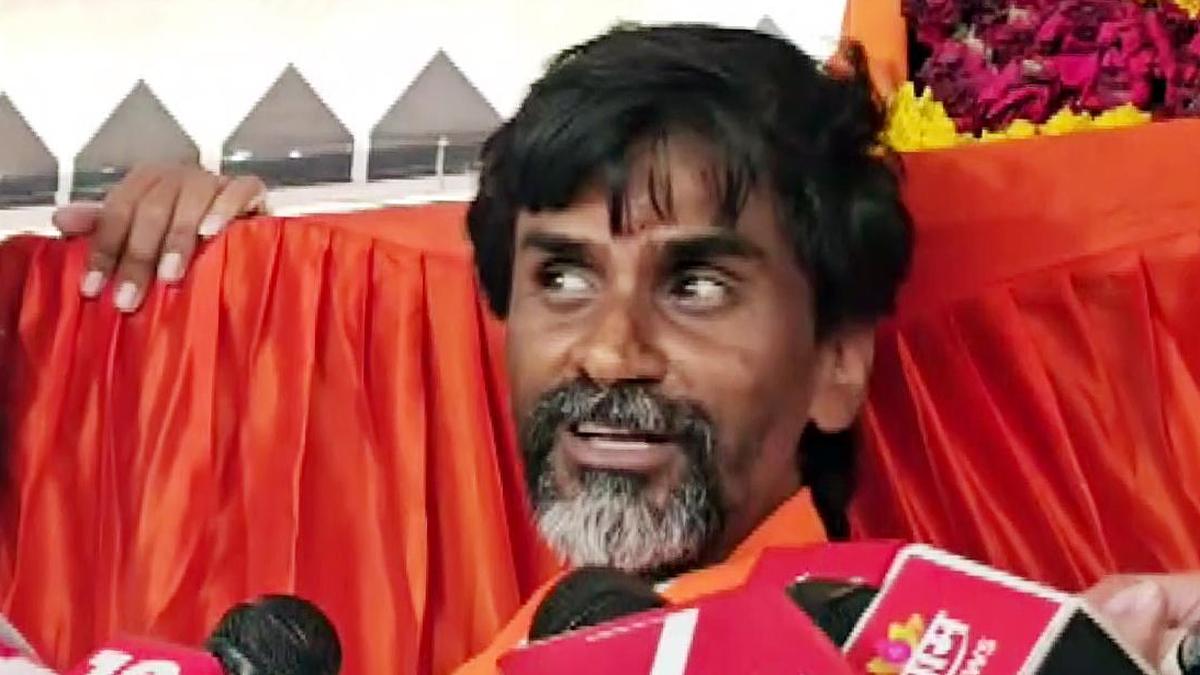
Manoj Jarange Patil, a Maratha quota activist, has been on a hunger strike, and the Jalna Collector has urged him to withdraw it. However, Patil has refused to end his strike, stating that the demands raised by the protesters involve state-level decisions that cannot be resolved at the local level.
The Maratha quota issue has been a contentious topic in Maharashtra, with protesters demanding reservations for the Maratha community in education and employment. Patil's hunger strike is a part of the ongoing agitation, which has gained significant attention and support from various sections of society.
The Jalna Collector's request to Patil to end his hunger strike is likely an attempt to prevent any further escalation of the situation and to find a peaceful resolution to the issue. However, Patil's refusal to withdraw his strike suggests that the protesters are determined to push for their demands and are willing to take drastic measures to achieve their goals.
The Maratha quota issue is a complex one, involving questions of social justice, equality, and opportunity. The protesters argue that the Maratha community has been historically disadvantaged and that reservations are necessary to level the playing field. However, others argue that reservations are not the solution and that other measures, such as economic empowerment and education, are needed to address the community's concerns.
The state government has been under pressure to resolve the issue, with various political parties and organizations weighing in on the debate. The BJP, which is in power in Maharashtra, has promised to find a solution to the issue, but so far, no concrete steps have been taken.
The ongoing agitation has also raised questions about the role of protests and hunger strikes in achieving social change. While some argue that such measures are necessary to bring attention to important issues, others argue that they can be counterproductive and lead to further polarization.
In the context of Maharashtra's history and politics, the Maratha quota issue is significant. The state has a long tradition of social and political activism, and the current agitation is part of this larger narrative. The issue also has implications for the state's economy and society, as it affects the lives and livelihoods of millions of people.
The situation remains tense, with Patil's hunger strike continuing and the protesters showing no signs of backing down. The state government will need to find a way to address the issue and find a resolution that satisfies all parties involved.
The Maratha quota issue is a complex and sensitive topic that requires careful consideration and nuanced understanding. As the situation continues to unfold, it is essential to prioritize dialogue and constructive engagement to find a solution that promotes social justice and equality for all.
In conclusion, the Jalna Collector's request to Patil to end his hunger strike is a significant development in the ongoing Maratha quota agitation. While the issue is complex and contentious, it is essential to find a resolution that addresses the concerns of all parties involved and promotes social justice and equality for the Maratha community and beyond.
Frequently asked questions
What is the Maratha quota issue about?
The Maratha quota issue is about demanding reservations for the Maratha community in education and employment.
Why has Manoj Jarange Patil gone on a hunger strike?
Manoj Jarange Patil has gone on a hunger strike to push for the demands of the Maratha quota protesters, which involve state-level decisions.