CJI Forms Committee To Review Supreme Court Case Sequencing
CJI Surya Kant forms committee to address concerns over case sequencing. Lawyers face uncertainty due to last-minute changes.
'%3E%3Crect%20width%3D'96'%20height%3D'96'%20fill%3D'%231A5276'%2F%3E%3Ccircle%20cx%3D'30'%20cy%3D'24'%20r%3D'44'%20fill%3D'%23fff'%20opacity%3D'.12'%2F%3E%3Ccircle%20cx%3D'60'%20cy%3D'74'%20r%3D'40'%20fill%3D'%23000'%20opacity%3D'.10'%2F%3E%3C%2Fg%3E%3Cg%20fill%3D'%23fff'%3E%3Cpath%20d%3D'M31%2041%20L48%2031%20L65%2041%20Z'%2F%3E%3Crect%20x%3D'33'%20y%3D'43'%20width%3D'4'%20height%3D'17'%2F%3E%3Crect%20x%3D'41'%20y%3D'43'%20width%3D'4'%20height%3D'17'%2F%3E%3Crect%20x%3D'51'%20y%3D'43'%20width%3D'4'%20height%3D'17'%2F%3E%3Crect%20x%3D'59'%20y%3D'43'%20width%3D'4'%20height%3D'17'%2F%3E%3Crect%20x%3D'30'%20y%3D'62'%20width%3D'36'%20height%3D'4'%20rx%3D'1'%2F%3E%3C%2Fg%3E%3C%2Fsvg%3E)
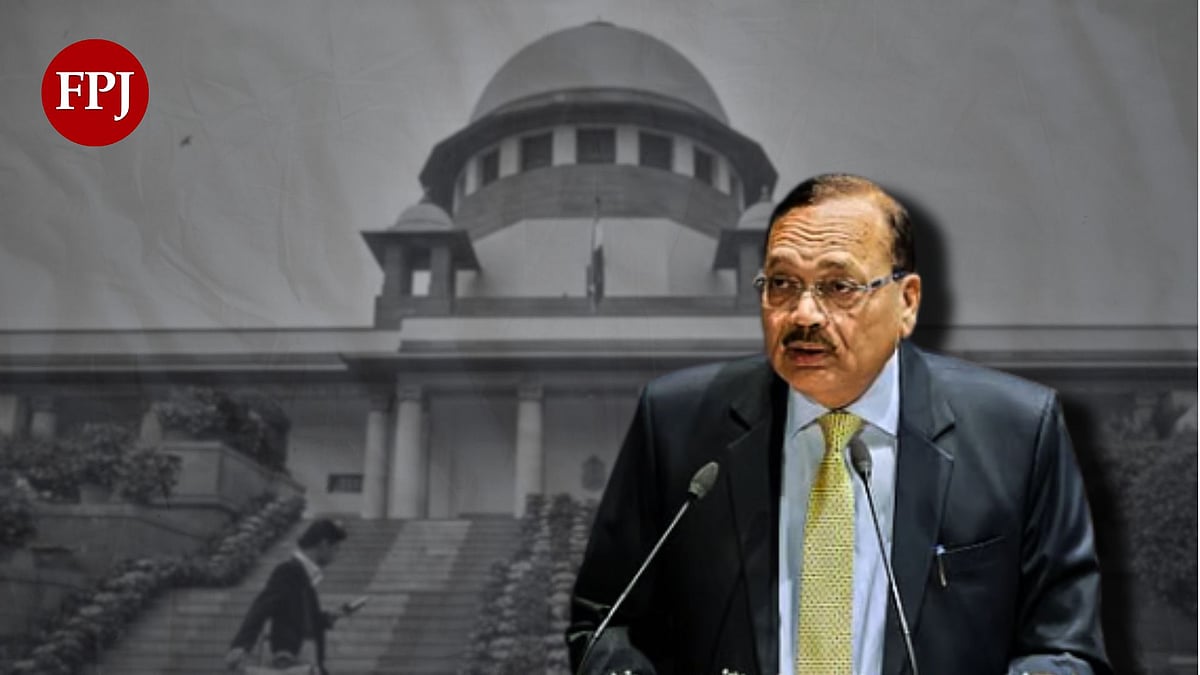
Chief Justice of India (CJI) Surya Kant has formed a committee to review the sequencing of cases listed for hearing in the Supreme Court. This move comes after repeated complaints from members of the Bar about last-minute changes to the daily cause list.
The issue was raised before the Bench by Senior Advocate Gaurav Bhatia, who highlighted the practical difficulties lawyers face when the order of hearings is altered shortly before court proceedings begin. Bhatia stated that there is a broad consensus among advocates that the existing system creates uncertainty and disrupts effective representation.
The hearing sequence is sometimes released only around 10:30 a.m., leaving lawyers scrambling between courtrooms after discovering that their matters have been reordered. This unpredictability makes it difficult for advocates to plan their appearances and adequately represent their clients.
CJI Surya Kant responded to the concerns by stating that the issue had already been deliberated during a Full Court meeting of Supreme Court judges. He informed the Bench that a committee has been constituted to examine the matter and that its recommendations would be considered once submitted.
The existing system has drawn criticism because different Supreme Court benches often determine their own hearing sequence, which may not necessarily follow the numerical order of cases published in the cause list. This practice has drawn criticism from lawyers, who say it creates uncertainty and complicates scheduling, particularly for advocates appearing before multiple benches.
The Supreme Court Bar Association (SCBA) has previously raised similar concerns, urging the court either to discontinue the current sequencing practice or publish the final hearing sequence along with the supplementary cause list to provide greater clarity to litigants and lawyers.
The move to constitute a committee is seen as part of the Supreme Court's broader administrative efforts under CJI Surya Kant to improve transparency, predictability, and efficiency in the listing and hearing of cases. The committee's recommendations are now awaited.
This development is significant as it highlights the Supreme Court's efforts to address concerns raised by members of the Bar and improve the overall efficiency of the court's proceedings. The formation of the committee demonstrates the court's commitment to transparency and predictability, which is essential for ensuring that justice is served.
In the context of the Indian judiciary, this move is a step towards improving the administration of justice and addressing the concerns of stakeholders. It is expected that the committee's recommendations will lead to positive changes in the way cases are sequenced and heard in the Supreme Court.
Overall, the formation of the committee to review the sequencing of cases in the Supreme Court is a welcome move that is expected to bring about positive changes in the administration of justice. It demonstrates the court's commitment to transparency, predictability, and efficiency, which is essential for ensuring that justice is served.
The significance of this development cannot be overstated, as it has the potential to impact the way cases are heard and decided in the Supreme Court. It is a step towards improving the overall efficiency of the court's proceedings and addressing the concerns of stakeholders. As the committee's recommendations are awaited, it is expected that the Supreme Court will continue to take steps towards improving transparency, predictability, and efficiency in the listing and hearing of cases.
In conclusion, the formation of the committee to review the sequencing of cases in the Supreme Court is a significant development that highlights the court's efforts to address concerns raised by members of the Bar and improve the overall efficiency of the court's proceedings. It is expected that the committee's recommendations will lead to positive changes in the way cases are sequenced and heard in the Supreme Court, and that the court will continue to take steps towards improving transparency, predictability, and efficiency in the listing and hearing of cases.
Frequently asked questions
What is the issue with the current case sequencing system in the Supreme Court?
The current system creates uncertainty and disrupts effective representation due to last-minute changes to the daily cause list.
What is the purpose of the committee formed by CJI Surya Kant?
The committee is formed to examine the concerns over the sequencing of cases listed for hearing in the Supreme Court and provide recommendations to improve transparency, predictability, and efficiency.