India Spends 56% Of Fertiliser Subsidy Budget In 4.5 Months
Fertiliser subsidy expenditure surges, urea accounts for bulk of spending, global prices impact budget
'%3E%3Crect%20width%3D'96'%20height%3D'96'%20fill%3D'%230B6E4F'%2F%3E%3Ccircle%20cx%3D'30'%20cy%3D'24'%20r%3D'44'%20fill%3D'%23fff'%20opacity%3D'.12'%2F%3E%3Ccircle%20cx%3D'60'%20cy%3D'74'%20r%3D'40'%20fill%3D'%23000'%20opacity%3D'.10'%2F%3E%3C%2Fg%3E%3Cg%20fill%3D'none'%20stroke%3D'%23fff'%20stroke-width%3D'3.2'%20stroke-linecap%3D'round'%20stroke-linejoin%3D'round'%3E%3Cpolyline%20points%3D'31%2C59%2041%2C49%2049%2C54%2063%2C37'%2F%3E%3Cpolyline%20points%3D'55%2C37%2063%2C37%2063%2C45'%2F%3E%3C%2Fg%3E%3C%2Fsvg%3E)
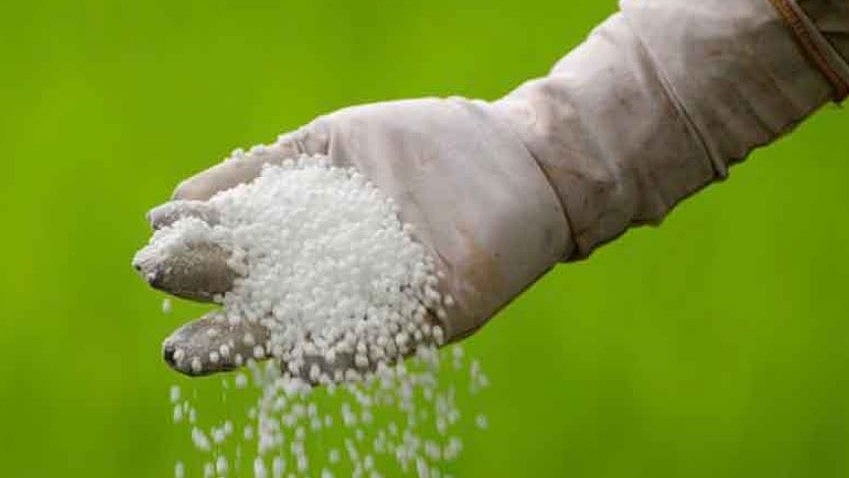
India's fertiliser subsidy expenditure has reached 56% of its annual allocation in just four-and-a-half months, with the government spending around ₹99,000 crore so far. The high international prices of finished fertilisers and LNG, a key feedstock for domestic urea manufacturing, have contributed to the rise in spending.
The government had initially faced the possibility of a substantial increase in subsidy requirements due to tensions involving the US, Iran, and Israel, which pushed global fertiliser and energy prices higher. However, the outlook has improved in recent months as international urea prices have declined significantly from their April peak.
Of the total expenditure, approximately ₹77,871 crore has been directed towards urea, covering both imports and domestic production. Another ₹21,255 crore has been spent on DAP, Muriate of Potash (MoP) and NPK fertilisers, including their imports and domestic manufacturing.
The landed price of imported urea has fallen by around 60% to $390 per tonne, compared with nearly $1,000 per tonne in April. Despite this decline, India remains heavily dependent on imports, with around 70% of domestic fertiliser requirements and raw materials sourced through imports.
This leaves government subsidy expenditure sensitive to international commodity prices, shipping costs, and geopolitical developments. India consumed more than 700 lakh tonnes of various fertiliser products in FY26, highlighting the scale of the country's agricultural input requirements.
The surge in fertiliser subsidy expenditure has raised concerns that the fertiliser subsidy bill could exceed the ₹1.77 lakh crore budgeted for FY27. The government will need to closely monitor international prices and adjust its subsidy allocation accordingly to avoid exceeding the budget.
Increased global availability and diversification of India's import sources have helped reduce costs. The government's efforts to reduce its dependence on imports and promote domestic production could also help mitigate the impact of global price fluctuations.
In the coming months, the government will need to balance its subsidy allocation with the need to support farmers and ensure food security. The fertiliser subsidy expenditure is a critical component of India's agricultural policy, and any changes to the subsidy regime could have significant implications for the country's farmers and agricultural sector.
The high fertiliser subsidy expenditure also highlights the need for the government to explore alternative options to reduce its dependence on imports and promote sustainable agriculture practices. This could include investing in domestic fertiliser production, promoting the use of organic fertilisers, and implementing policies to reduce fertiliser consumption.
Overall, the surge in fertiliser subsidy expenditure is a significant concern for the government, and it will need to take proactive steps to manage its subsidy allocation and promote sustainable agriculture practices to ensure food security and support the country's farmers.
The fertiliser subsidy expenditure is a complex issue that requires careful management and planning. The government will need to work closely with farmers, fertiliser manufacturers, and other stakeholders to ensure that the subsidy regime is effective and sustainable in the long term.
In conclusion, the fertiliser subsidy expenditure has reached 56% of its annual allocation in just four-and-a-half months, highlighting the need for the government to closely monitor international prices and adjust its subsidy allocation accordingly. The government will need to balance its subsidy allocation with the need to support farmers and ensure food security, while also exploring alternative options to reduce its dependence on imports and promote sustainable agriculture practices.
The impact of the fertiliser subsidy expenditure on the country's agricultural sector and economy will be significant, and the government will need to take proactive steps to manage its subsidy allocation and promote sustainable agriculture practices. The fertiliser subsidy expenditure is a critical component of India's agricultural policy, and any changes to the subsidy regime could have significant implications for the country's farmers and agricultural sector.
Frequently asked questions
What is the current fertiliser subsidy expenditure in India?
The government has spent around ₹99,000 crore so far, which is 56% of its annual allocation.
What is the main reason for the surge in fertiliser subsidy expenditure?
The high international prices of finished fertilisers and LNG, a key feedstock for domestic urea manufacturing, have contributed to the rise in spending.