Raksha Bandhan 2026: India's Rakhi Trade To Reach ₹25,000 Crore
Swadeshi rakhis gain popularity, locally produced products in demand
'%3E%3Crect%20width%3D'96'%20height%3D'96'%20fill%3D'%230B6E4F'%2F%3E%3Ccircle%20cx%3D'30'%20cy%3D'24'%20r%3D'44'%20fill%3D'%23fff'%20opacity%3D'.12'%2F%3E%3Ccircle%20cx%3D'60'%20cy%3D'74'%20r%3D'40'%20fill%3D'%23000'%20opacity%3D'.10'%2F%3E%3C%2Fg%3E%3Cg%20fill%3D'none'%20stroke%3D'%23fff'%20stroke-width%3D'3.2'%20stroke-linecap%3D'round'%20stroke-linejoin%3D'round'%3E%3Cpolyline%20points%3D'31%2C59%2041%2C49%2049%2C54%2063%2C37'%2F%3E%3Cpolyline%20points%3D'55%2C37%2063%2C37%2063%2C45'%2F%3E%3C%2Fg%3E%3C%2Fsvg%3E)
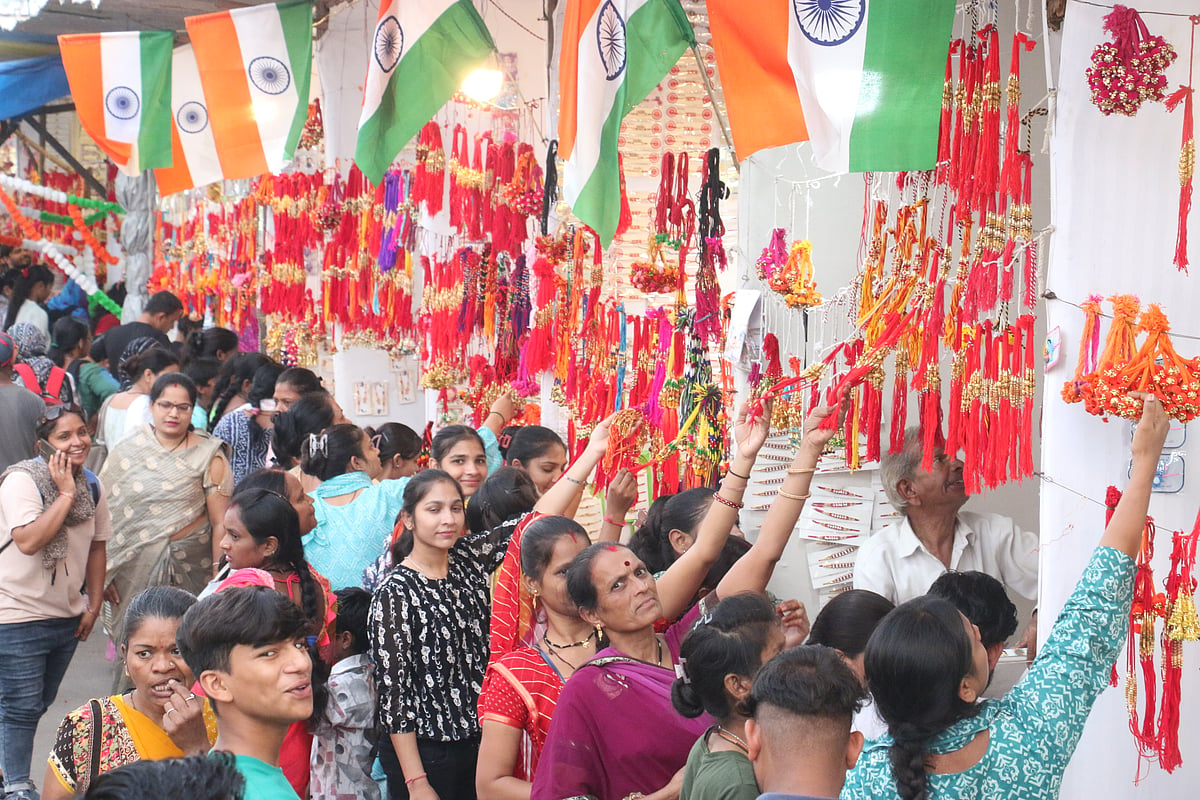
The Indian rakhi market is experiencing a significant shift towards swadeshi and locally produced products ahead of Raksha Bandhan, with the country's rakhi business expected to reach nearly ₹25,000 crore this year.
The broader festive trade, including sweets, gifts, apparel, electronics, and dry fruits, could cross ₹30,000 crore, according to estimates by the Confederation of All India Traders (CAIT).
Markets across Delhi, including Chandni Chowk, Sadar Bazaar, Karol Bagh, Lajpat Nagar, and Rajouri Garden, have seen increased activity ahead of the festival on August 28.
Alongside traditional designs, rakhis featuring themes such as Viksit Bharat, Atmanirbhar Bharat, Nari Vandan, Lakhpati Didi, BrahMos, and Rashtra Raksha Sutra are attracting buyers.
The market is also seeing greater participation from women entrepreneurs and artisans, with groups of women producing handmade rakhis for retailers in Delhi and neighboring states.
Each rakhi costs around ₹3-4 to make and is sold to markets for ₹6-7, with retail prices starting at around ₹10 depending on the design.
The growing preference for domestic products has reduced the presence of Chinese-made rakhis in the market, traders said.
CAIT representatives attributed the shift partly to changing consumer sentiment following the 2020 Galwan Valley clash.
The market is simultaneously embracing regional craftsmanship, with products including Khadi rakhis from Nagpur, Sanganeri designs from Jaipur, seed rakhis from Pune, tea-leaf rakhis from Assam, jute rakhis from Kolkata, and bamboo and Madhubani art rakhis from Bihar.
For many women involved in production, the seasonal business is primarily a source of additional household income.
Artisans also make products such as diyas and decorative lights during other festivals.
The trend is giving self-help groups, women-led enterprises, and traditional artisans a larger role in India's festive economy.
This shift towards swadeshi and locally produced products is expected to have a positive impact on the Indian economy, promoting domestic industries and providing employment opportunities for women and artisans.
As the festival of Raksha Bandhan approaches, the demand for swadeshi rakhis is likely to increase, contributing to the growth of the Indian rakhi market and the country's festive economy as a whole.
The success of the swadeshi rakhi market also highlights the importance of promoting domestic products and supporting local artisans, which can have a significant impact on the country's economic development and growth.
In conclusion, the Indian rakhi market is experiencing a significant shift towards swadeshi and locally produced products, with the country's rakhi business expected to reach nearly ₹25,000 crore this year.
This trend is not only promoting domestic industries but also providing employment opportunities for women and artisans, contributing to the growth of the Indian economy and the country's festive economy as a whole.
Frequently asked questions
What is the expected value of India's rakhi trade in 2026?
The expected value of India's rakhi trade in 2026 is nearly ₹25,000 crore.
What type of rakhis are gaining popularity in the Indian market?
Swadeshi and locally produced rakhis are gaining popularity in the Indian market.