Scientists Transplant 42 Sea Sponges to Polluted Marina
Sea sponges thrive in polluted marina, 91.7% survive and clone.
'%3E%3Crect%20width%3D'96'%20height%3D'96'%20fill%3D'%23B3261E'%2F%3E%3Ccircle%20cx%3D'30'%20cy%3D'24'%20r%3D'44'%20fill%3D'%23fff'%20opacity%3D'.12'%2F%3E%3Ccircle%20cx%3D'60'%20cy%3D'74'%20r%3D'40'%20fill%3D'%23000'%20opacity%3D'.10'%2F%3E%3C%2Fg%3E%3Cg%20fill%3D'%23fff'%3E%3Crect%20x%3D'29'%20y%3D'49'%20width%3D'8'%20height%3D'19'%20rx%3D'1'%2F%3E%3Crect%20x%3D'39'%20y%3D'40'%20width%3D'9'%20height%3D'28'%20rx%3D'1'%2F%3E%3Crect%20x%3D'50'%20y%3D'45'%20width%3D'8'%20height%3D'23'%20rx%3D'1'%2F%3E%3Crect%20x%3D'60'%20y%3D'53'%20width%3D'7'%20height%3D'15'%20rx%3D'1'%2F%3E%3Crect%20x%3D'41'%20y%3D'34'%20width%3D'5'%20height%3D'6'%2F%3E%3C%2Fg%3E%3C%2Fsvg%3E)
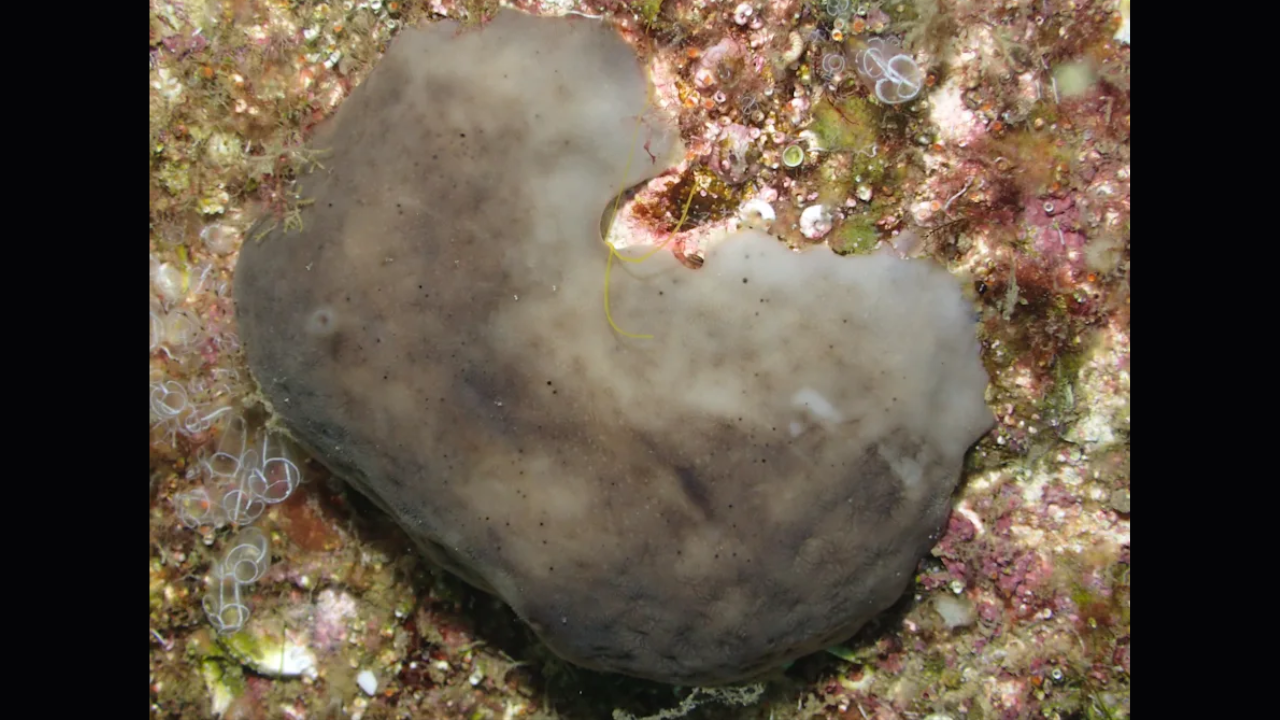
Scientists have conducted an experiment where 42 sea sponges were introduced into a polluted marina in Spain to test their resilience. The chicken kidney sponge, a robust species, was chosen for this study.
The results of the experiment are impressive, with 91.7% of the transplanted sea sponges surviving for 455 days. Not only did they survive, but they also started reproducing mobile clones, showcasing their remarkable ability to adapt and thrive in polluted environments.
The chicken kidney sponge's ability to reproduce mobile clones is a significant finding, as it indicates that these sponges may play a critical role in ecological restoration. This could potentially aid in the detoxification of contaminated coastal areas, making them a valuable tool in the fight against pollution.
The experiment's success has significant implications for the environment, particularly in coastal areas where pollution is a major concern. The use of sea sponges in ecological restoration could provide a natural and effective way to clean up polluted waters.
The study's findings also highlight the importance of preserving and protecting marine ecosystems. By introducing robust species like the chicken kidney sponge into polluted areas, scientists may be able to promote the growth of new marine life and help to restore damaged ecosystems.
The long-term survival and reproduction of the sea sponges in the polluted marina demonstrate their potential as a tool for ecological restoration. Further research is needed to fully understand the capabilities of these sponges and how they can be used to clean up polluted coastal areas.
The success of this experiment has sparked interest in the potential use of sea sponges in environmental cleanup efforts. As scientists continue to study the properties and abilities of these remarkable creatures, they may uncover even more ways in which they can be used to protect and preserve our planet's precious marine ecosystems.
In conclusion, the transplantation of sea sponges to a polluted marina in Spain has yielded remarkable results, with 91.7% of the sponges surviving and starting to clone. This breakthrough has significant implications for ecological restoration and the potential use of sea sponges in cleaning up polluted coastal areas.
The findings of this study are a positive step towards finding natural and effective solutions to the problem of pollution in our oceans. As research continues to uncover the secrets of these incredible creatures, we may soon see sea sponges playing a critical role in the restoration of our planet's marine ecosystems.
Frequently asked questions
What type of sea sponge was used in the experiment?
The chicken kidney sponge, a robust species, was used in the experiment.
How long did the sea sponges survive in the polluted marina?
The sea sponges survived for 455 days in the polluted marina.