Yogi Govt's Cow Protection Policy Boosts Employment, Exports
UP's cow protection policy creates jobs, entrepreneurship and exports.
'%3E%3Crect%20width%3D'96'%20height%3D'96'%20fill%3D'%231A5276'%2F%3E%3Ccircle%20cx%3D'30'%20cy%3D'24'%20r%3D'44'%20fill%3D'%23fff'%20opacity%3D'.12'%2F%3E%3Ccircle%20cx%3D'60'%20cy%3D'74'%20r%3D'40'%20fill%3D'%23000'%20opacity%3D'.10'%2F%3E%3C%2Fg%3E%3Cg%20fill%3D'%23fff'%3E%3Cpath%20d%3D'M31%2041%20L48%2031%20L65%2041%20Z'%2F%3E%3Crect%20x%3D'33'%20y%3D'43'%20width%3D'4'%20height%3D'17'%2F%3E%3Crect%20x%3D'41'%20y%3D'43'%20width%3D'4'%20height%3D'17'%2F%3E%3Crect%20x%3D'51'%20y%3D'43'%20width%3D'4'%20height%3D'17'%2F%3E%3Crect%20x%3D'59'%20y%3D'43'%20width%3D'4'%20height%3D'17'%2F%3E%3Crect%20x%3D'30'%20y%3D'62'%20width%3D'36'%20height%3D'4'%20rx%3D'1'%2F%3E%3C%2Fg%3E%3C%2Fsvg%3E)
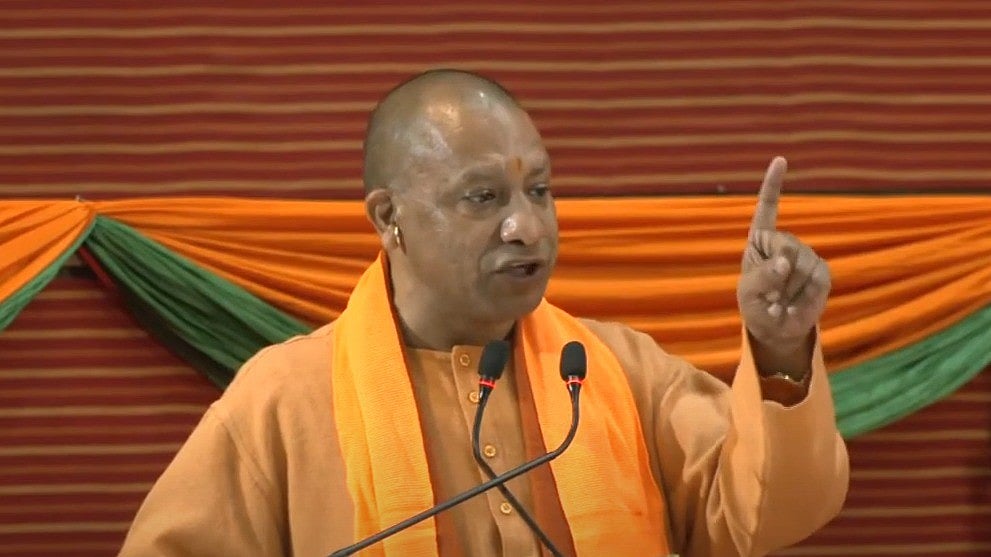
Chief Minister Yogi Adityanath's Go Sanrakshan Neeti has transformed cow service into a new model of employment and entrepreneurship in Uttar Pradesh. This system is now emerging as a strong foundation for self-employment, the rural economy and business worth crores.
The demand for Panchgavya, Ayurvedic medicines, organic products and traditional food items made from indigenous cows has increased continuously across the state. The market for these products is now no longer limited to the state or the country but has expanded to several countries including the United States, Canada, and the United Kingdom.
The expansion of cow-based industries has generated employment for a large number of people and created new sources of income in rural areas. The government's policy on cow protection has transformed this sector in Uttar Pradesh. The impact of linking cattle conservation with organic farming, self-employment, women empowerment, rural industries and indigenous products is now becoming visible on the ground.
The model based on indigenous cow breeds has encouraged the production of milk, ghee, gomutra extract, Panchgavya medicines, organic manure, herbal products and other value-added products. As a result, gaushalas are no longer merely shelters but are also emerging as centres of economic activity.
Changing consumer preferences and the growing demand for natural products have also strengthened this sector. The increasing popularity of A2 milk, Bilona ghee and Panchgavya-based products has attracted entrepreneurs. Several organisations are reaching customers through digital platforms.
Software engineer Asim Rawat, who worked for foreign companies for nearly one and a half decades, entered the field of cow protection inspired by Chief Minister Yogi Adityanath. His Ghaziabad-based organisation, Heta Organic, is today engaged in the conservation of indigenous cows while generating an annual business of around Rs 10 crore.
The organisation is not limited to production alone but also provides shelter and regular care to aged cattle. More than 150 types of products are prepared here from the milk of indigenous cows. These include A2 Bilona ghee, Brahmi Ghrit, Panchgavya Ghrit, indigenous cow milk, cookies, laddoos, Shatdhaut Ghrit, healthy sweets, snacks, herbal tea, beverages, and skin and hair care products.
Asim Rawat's example demonstrates that, with the inspiration and policy support from the government, entrepreneurs can drive growth and create employment opportunities in the cow-based industry. The success of such initiatives is a testament to the potential of the cow protection policy to boost employment, entrepreneurship and indigenous cow-based exports in Uttar Pradesh.
The policy's impact on the state's economy and rural development is significant, and its success can be replicated in other states. The growing demand for natural and organic products presents a huge opportunity for entrepreneurs and farmers to tap into the market and create a sustainable livelihood.
In conclusion, the Yogi government's cow protection policy has been successful in promoting employment, entrepreneurship and exports in Uttar Pradesh. The policy's focus on indigenous cow breeds and organic products has created a new avenue for economic growth and development in the state.
Frequently asked questions
What is the Go Sanrakshan Neeti?
The Go Sanrakshan Neeti is the cow protection policy of the Uttar Pradesh government.
What are the benefits of the policy?
The policy has created employment opportunities, promoted entrepreneurship and boosted exports of indigenous cow-based products.