Maharashtra Introduces Aggregator Policy
New rules for drivers, fare regulations tightened. Marathi language and badge now mandatory.
'%3E%3Crect%20width%3D'96'%20height%3D'96'%20fill%3D'%23B3261E'%2F%3E%3Ccircle%20cx%3D'30'%20cy%3D'24'%20r%3D'44'%20fill%3D'%23fff'%20opacity%3D'.12'%2F%3E%3Ccircle%20cx%3D'60'%20cy%3D'74'%20r%3D'40'%20fill%3D'%23000'%20opacity%3D'.10'%2F%3E%3C%2Fg%3E%3Cg%20fill%3D'%23fff'%3E%3Crect%20x%3D'29'%20y%3D'49'%20width%3D'8'%20height%3D'19'%20rx%3D'1'%2F%3E%3Crect%20x%3D'39'%20y%3D'40'%20width%3D'9'%20height%3D'28'%20rx%3D'1'%2F%3E%3Crect%20x%3D'50'%20y%3D'45'%20width%3D'8'%20height%3D'23'%20rx%3D'1'%2F%3E%3Crect%20x%3D'60'%20y%3D'53'%20width%3D'7'%20height%3D'15'%20rx%3D'1'%2F%3E%3Crect%20x%3D'41'%20y%3D'34'%20width%3D'5'%20height%3D'6'%2F%3E%3C%2Fg%3E%3C%2Fsvg%3E)
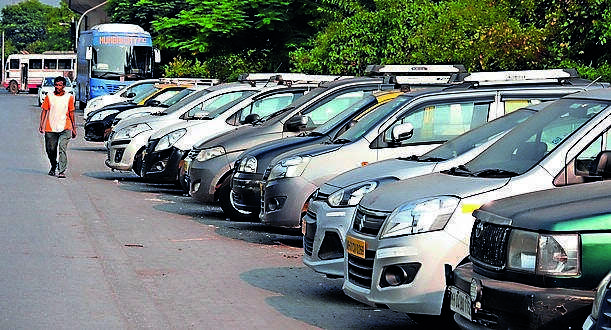
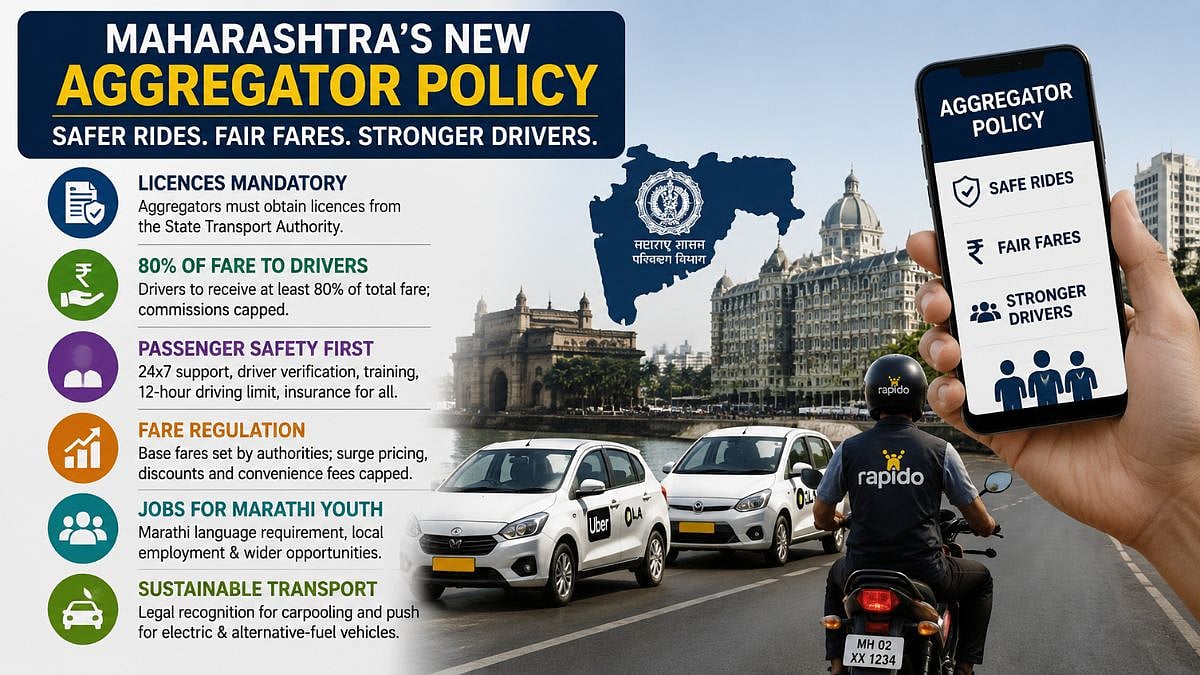
The Maharashtra government has rolled out a new aggregator policy, aiming to regulate the state's growing ride-hailing industry. The policy, which came into effect recently, introduces several key changes.
One of the primary requirements is that all drivers must now be able to communicate in Marathi, the official language of Maharashtra. This move is intended to improve the overall experience for passengers, many of whom prefer to interact in their local language.
In addition to the language requirement, drivers will also be mandatory to wear a badge while on duty. This badge will serve as a form of identification, helping to enhance safety and security for passengers.
The policy also tightens fare regulations, with the aim of preventing price surging and ensuring that passengers are charged fairly. The government has set clear guidelines for fare calculation, which aggregators must adhere to.
The introduction of this policy is a significant step towards regulating the aggregator industry in Maharashtra. With the rise of ride-hailing services, there has been a growing need for clearer guidelines and rules to protect both drivers and passengers.
The Maharashtra government has stated that the policy is designed to promote fair competition among aggregators, while also ensuring that passengers receive a high-quality service. The policy is expected to have a significant impact on the industry, with major aggregators such as Ola and Uber likely to be affected.
In recent years, the aggregator industry has experienced rapid growth in Maharashtra, with many residents relying on these services for their daily commute. However, this growth has also raised concerns about safety, pricing, and regulation.
The new policy addresses many of these concerns, providing a clearer framework for the industry to operate within. By introducing stricter regulations and guidelines, the government aims to create a more level playing field for aggregators, while also protecting the interests of passengers and drivers.
The policy is a significant development for Maharashtra, and is likely to be closely watched by other states. As the aggregator industry continues to evolve, it is likely that other governments will introduce similar regulations to ensure that the industry operates in a fair and safe manner.
In conclusion, the introduction of the aggregator policy in Maharashtra marks an important step towards regulating the state's ride-hailing industry. With its focus on safety, fairness, and transparency, the policy is expected to have a positive impact on both passengers and drivers, and will likely serve as a model for other states to follow.