BMC Bans Paver Blocks, Launches Pedestrian Safety Drive
Mumbai footpaths to be rebuilt with M-40 concrete, 320 km to be reclaimed.
'%3E%3Crect%20width%3D'96'%20height%3D'96'%20fill%3D'%23B3261E'%2F%3E%3Ccircle%20cx%3D'30'%20cy%3D'24'%20r%3D'44'%20fill%3D'%23fff'%20opacity%3D'.12'%2F%3E%3Ccircle%20cx%3D'60'%20cy%3D'74'%20r%3D'40'%20fill%3D'%23000'%20opacity%3D'.10'%2F%3E%3C%2Fg%3E%3Cg%20fill%3D'%23fff'%3E%3Crect%20x%3D'29'%20y%3D'49'%20width%3D'8'%20height%3D'19'%20rx%3D'1'%2F%3E%3Crect%20x%3D'39'%20y%3D'40'%20width%3D'9'%20height%3D'28'%20rx%3D'1'%2F%3E%3Crect%20x%3D'50'%20y%3D'45'%20width%3D'8'%20height%3D'23'%20rx%3D'1'%2F%3E%3Crect%20x%3D'60'%20y%3D'53'%20width%3D'7'%20height%3D'15'%20rx%3D'1'%2F%3E%3Crect%20x%3D'41'%20y%3D'34'%20width%3D'5'%20height%3D'6'%2F%3E%3C%2Fg%3E%3C%2Fsvg%3E)
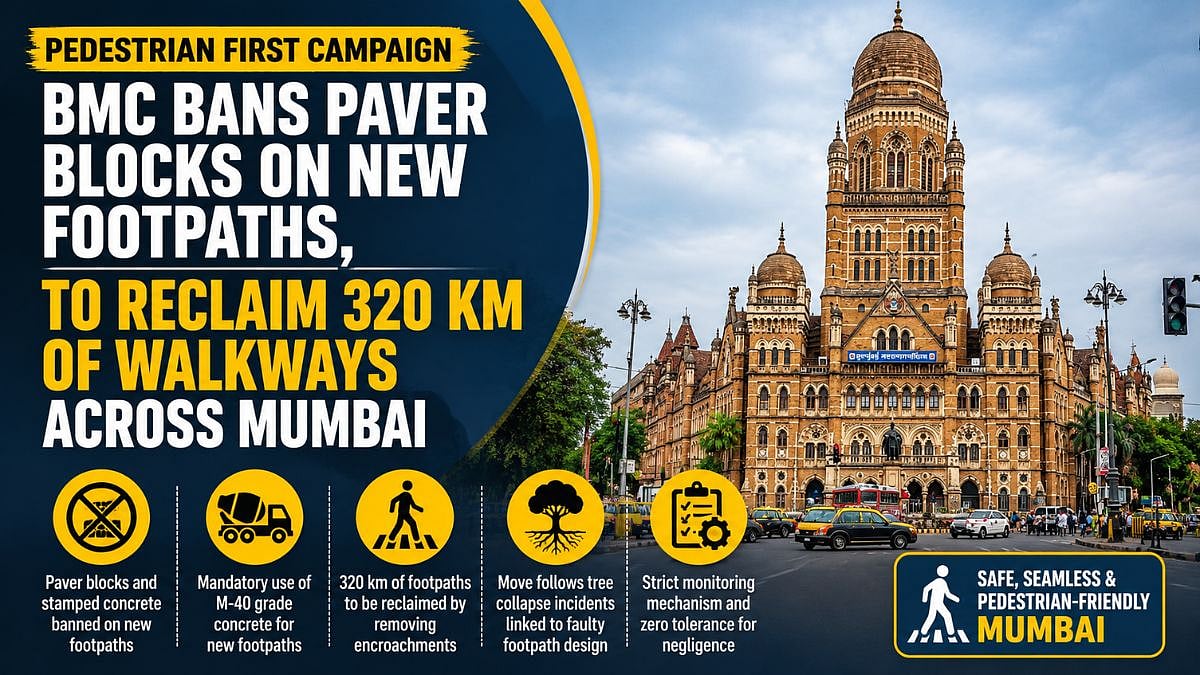
The Brihanmumbai Municipal Corporation (BMC) has launched a citywide initiative called 'Pedestrian First' to improve the safety and accessibility of footpaths in Mumbai. As part of this drive, the BMC has banned the use of paver blocks and stamped concrete for new footpath constructions, mandating the use of M-40 grade concrete instead.
This decision comes after a series of fatal tree-collapse incidents during the monsoon exposed flaws in footpath construction. The use of paver blocks and stamped concrete around roadside trees was found to have restricted root growth, weakened root systems, and undermined tree stability.
Municipal Commissioner Ashwini Bhide has directed officials to prune branches obstructing pedestrian movement, remove gaps and uneven levels, and ensure that footpaths are safe and universally accessible. The BMC will reclaim 320 km of footpaths across Mumbai by removing encroachments, including unauthorised hawkers and illegal structures, particularly outside schools, hospitals, and transportation hubs.
The drive will also include upgrades, repairs, and beautification to create continuous and obstruction-free walkways. To monitor the campaign's progress, Assistant Commissioners will conduct daily reviews, Deputy Commissioners will carry out weekly zonal assessments, and Additional Commissioners will hold fortnightly reviews.
The BMC has warned that any deviation from the prescribed standards will invite strict action, and responsibility will be fixed for delays and negligence. The 'Pedestrian First' campaign aims to create pedestrian-friendly walkways and ensure the safety of citizens.
The BMC's decision to ban paver blocks and stamped concrete is a significant step towards improving footpath safety in Mumbai. The use of M-40 grade concrete will provide a more durable and stable surface for pedestrians.
The 'Pedestrian First' campaign is a comprehensive initiative that aims to reclaim and upgrade footpaths across the city. The BMC's efforts to remove encroachments and create obstruction-free walkways will greatly improve the pedestrian experience in Mumbai.
The success of the 'Pedestrian First' campaign will depend on the BMC's ability to monitor and enforce the new standards. The corporation's commitment to fixing responsibility for delays and negligence will help ensure that the campaign is implemented effectively.
In conclusion, the BMC's 'Pedestrian First' campaign is a significant initiative that aims to improve the safety and accessibility of footpaths in Mumbai. The ban on paver blocks and stamped concrete, combined with the efforts to reclaim and upgrade footpaths, will greatly benefit the citizens of Mumbai.
The 'Pedestrian First' campaign is a step in the right direction, and its success will have a positive impact on the city's infrastructure and the lives of its citizens. The BMC's commitment to pedestrian safety and accessibility will help create a more livable and sustainable city.
The campaign's focus on creating pedestrian-friendly walkways will also have a positive impact on the city's environment and traffic congestion. By providing safe and accessible footpaths, the BMC can encourage citizens to walk or use public transportation, reducing the reliance on personal vehicles and decreasing traffic congestion.
Overall, the 'Pedestrian First' campaign is a comprehensive initiative that aims to improve the safety, accessibility, and sustainability of Mumbai's footpaths. The BMC's efforts to reclaim and upgrade footpaths, combined with the ban on paver blocks and stamped concrete, will have a positive impact on the city and its citizens.
The success of the 'Pedestrian First' campaign will be a significant achievement for the BMC, and it will set a precedent for other cities to follow. The campaign's focus on pedestrian safety and accessibility will help create a more livable and sustainable city, and it will have a lasting impact on the lives of Mumbai's citizens.
In the coming months, the BMC will continue to monitor and enforce the new standards, and the city will see significant improvements in footpath safety and accessibility. The 'Pedestrian First' campaign is a significant step towards creating a more livable and sustainable Mumbai, and it will have a positive impact on the city and its citizens for years to come.
The BMC's commitment to pedestrian safety and accessibility is a testament to the corporation's dedication to improving the lives of Mumbai's citizens. The 'Pedestrian First' campaign is a comprehensive initiative that will have a lasting impact on the city, and it will set a precedent for other cities to follow.
In conclusion, the 'Pedestrian First' campaign is a significant initiative that aims to improve the safety and accessibility of footpaths in Mumbai. The ban on paver blocks and stamped concrete, combined with the efforts to reclaim and upgrade footpaths, will greatly benefit the citizens of Mumbai. The campaign's success will have a positive impact on the city's infrastructure, environment, and traffic congestion, and it will set a precedent for other cities to follow.
Frequently asked questions
What is the BMC's Pedestrian First campaign?
The Pedestrian First campaign is a citywide initiative to improve the safety and accessibility of footpaths in Mumbai.
Why has the BMC banned paver blocks and stamped concrete?
The BMC has banned paver blocks and stamped concrete because they were found to restrict root growth, weaken root systems, and undermine tree stability, leading to fatal tree-collapse incidents.