Tamil Nadu Assembly Passes Resolution To Abolish NEET
Tamil Nadu opposes NEET, seeks Class 12-based admissions. Resolution passed unanimously.
'%3E%3Crect%20width%3D'96'%20height%3D'96'%20fill%3D'%231A5276'%2F%3E%3Ccircle%20cx%3D'30'%20cy%3D'24'%20r%3D'44'%20fill%3D'%23fff'%20opacity%3D'.12'%2F%3E%3Ccircle%20cx%3D'60'%20cy%3D'74'%20r%3D'40'%20fill%3D'%23000'%20opacity%3D'.10'%2F%3E%3C%2Fg%3E%3Cg%20fill%3D'%23fff'%3E%3Cpath%20d%3D'M31%2041%20L48%2031%20L65%2041%20Z'%2F%3E%3Crect%20x%3D'33'%20y%3D'43'%20width%3D'4'%20height%3D'17'%2F%3E%3Crect%20x%3D'41'%20y%3D'43'%20width%3D'4'%20height%3D'17'%2F%3E%3Crect%20x%3D'51'%20y%3D'43'%20width%3D'4'%20height%3D'17'%2F%3E%3Crect%20x%3D'59'%20y%3D'43'%20width%3D'4'%20height%3D'17'%2F%3E%3Crect%20x%3D'30'%20y%3D'62'%20width%3D'36'%20height%3D'4'%20rx%3D'1'%2F%3E%3C%2Fg%3E%3C%2Fsvg%3E)
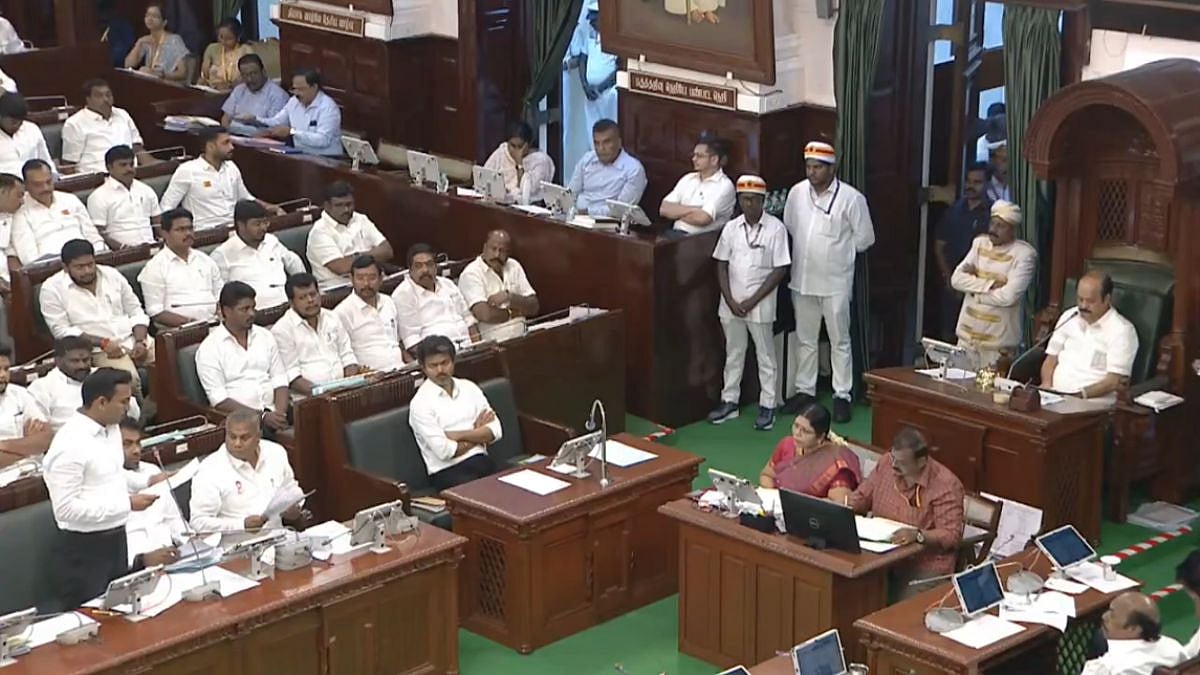
The Tamil Nadu Legislative Assembly has unanimously adopted a resolution opposing the National Eligibility-cum-Entrance Test (NEET) and calling for admissions to medical courses to be based on Class 12 Board examination marks.
The resolution, moved by Health Minister K G Arunraj, cited repeated irregularities in conducting NEET, including question paper leakages and cancellations of exams. It argued that NEET undermines social justice and equality, and is against the rights of states in medical education.
The Tamil Nadu Government has consistently emphasized that NEET is unfair to rural and socio-economically disadvantaged students, including those whose medium of instruction is Tamil. The resolution also pointed out that NEET has led to the proliferation of coaching centers charging exorbitant fees, diverting students' focus from school curriculum to coaching alone.
In 2021, the Tamil Nadu Legislative Assembly had passed a bill to exempt the state from NEET, but the President of India withheld assent. The recent cancellation of NEET (UG) 2026 and the conduct of a re-examination have caused mental agony to students and led to the loss of young lives.
The resolution called for the Government of India to make necessary amendments to central enactments, including the National Medical Commission Act, 2019, to abolish NEET at the national level. It argued that a single day's test should not determine a student's higher education, and that twelve years of school education should be given more weightage.
The passage of the resolution is a significant development in the ongoing debate over NEET. The issue has been a contentious one, with many states and stakeholders opposing the exam on grounds of social justice and equality.
Tamil Nadu has been at the forefront of the opposition to NEET, with the state government consistently arguing that the exam is unfair to its students. The resolution passed by the assembly is a reflection of the state's commitment to abolishing NEET and finding alternative methods of admission to medical courses.
The implications of the resolution are significant, and it remains to be seen how the Government of India will respond to the demands of the Tamil Nadu Legislative Assembly. The issue is likely to have far-reaching consequences for medical education in the country, and the outcome will be closely watched by students, parents, and educators alike.
In conclusion, the Tamil Nadu Legislative Assembly's resolution to abolish NEET is a significant development in the ongoing debate over medical education in the country. The resolution reflects the state's commitment to social justice and equality, and its opposition to an exam that it sees as unfair to its students. The outcome of this resolution will have far-reaching consequences for medical education in India, and it remains to be seen how the Government of India will respond to the demands of the Tamil Nadu Legislative Assembly.
The resolution is also a testament to the power of state legislatures to shape national policy and to advocate for the rights of their citizens. It highlights the importance of federalism and the need for the central government to listen to the concerns of states and stakeholders.
Overall, the resolution to abolish NEET is a significant step forward in the ongoing debate over medical education in India. It reflects the commitment of the Tamil Nadu Government to social justice and equality, and its determination to find alternative methods of admission to medical courses that are fair and equitable to all students.
Frequently asked questions
What is the Tamil Nadu Legislative Assembly's stance on NEET?
The Tamil Nadu Legislative Assembly has unanimously passed a resolution opposing NEET and seeking Class 12-based admissions to medical courses.
Why does the Tamil Nadu Government oppose NEET?
The Tamil Nadu Government opposes NEET because it believes the exam is unfair to rural and socio-economically disadvantaged students, and undermines social justice and equality.