US Court Blocks Trump Visa Policy
A US court has blocked a Trump policy, citing free speech concerns. The policy targeted foreign researchers and fact-checkers.
'%3E%3Crect%20width%3D'96'%20height%3D'96'%20fill%3D'%234A235A'%2F%3E%3Ccircle%20cx%3D'30'%20cy%3D'24'%20r%3D'44'%20fill%3D'%23fff'%20opacity%3D'.12'%2F%3E%3Ccircle%20cx%3D'60'%20cy%3D'74'%20r%3D'40'%20fill%3D'%23000'%20opacity%3D'.10'%2F%3E%3C%2Fg%3E%3Cg%20fill%3D'none'%20stroke%3D'%23fff'%20stroke-width%3D'3'%3E%3Ccircle%20cx%3D'48'%20cy%3D'48'%20r%3D'16'%2F%3E%3Cellipse%20cx%3D'48'%20cy%3D'48'%20rx%3D'6.5'%20ry%3D'16'%2F%3E%3Cline%20x1%3D'32'%20y1%3D'42'%20x2%3D'64'%20y2%3D'42'%2F%3E%3Cline%20x1%3D'32'%20y1%3D'54'%20x2%3D'64'%20y2%3D'54'%2F%3E%3C%2Fg%3E%3C%2Fsvg%3E)
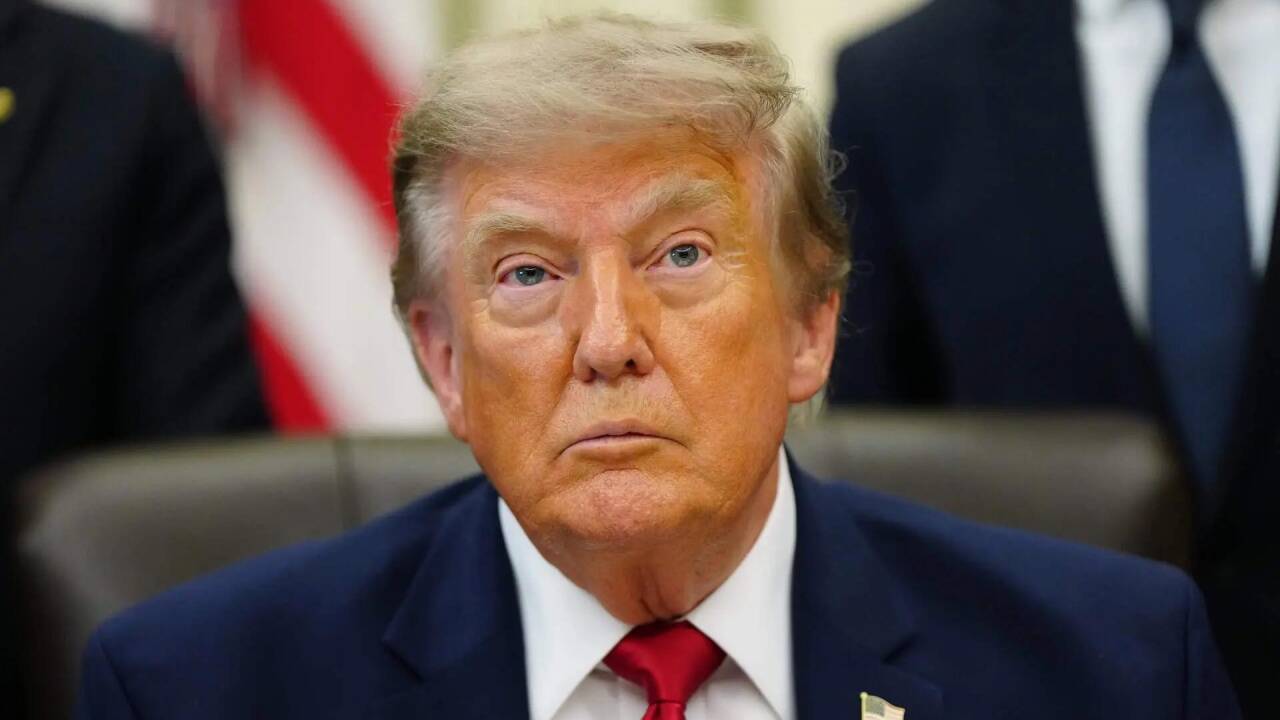
A US court has temporarily blocked a Trump administration immigration policy that targeted foreign researchers and fact-checkers working on misinformation. The policy, which was introduced by the Trump administration, was found to likely violate the First Amendment and the Administrative Procedure Act (APA) by a US judge.
The judge's ruling allows researchers to continue their important work without fear of censorship or repercussions. The litigation will now proceed on the merits of the case, with the court set to hear further arguments from both sides.
The policy in question was aimed at restricting the entry of foreign researchers and fact-checkers into the US, citing concerns over misinformation and national security. However, the court found that the policy was likely to have a chilling effect on free speech, and that it did not provide sufficient evidence to justify the restrictions.
The ruling is a significant victory for advocates of free speech and academic freedom. It highlights the importance of protecting the rights of researchers and fact-checkers to conduct their work without fear of censorship or reprisal.
The case has significant implications for the US immigration policy and the rights of foreign nationals working in the US. The court's decision to block the policy is a reminder that the US government must balance its national security concerns with the need to protect individual rights and freedoms.
The Trump administration's immigration policies have been the subject of controversy and litigation in recent years. The administration has introduced several policies aimed at restricting immigration and tightening border security, but many of these policies have been challenged in court.
The US has a long tradition of protecting free speech and academic freedom, and the court's ruling is a reflection of this commitment. The case will now proceed to the next stage, with the court set to hear further arguments from both sides.
In the meantime, researchers and fact-checkers can continue their important work without fear of censorship or repercussions. The ruling is a significant victory for advocates of free speech and academic freedom, and it highlights the importance of protecting individual rights and freedoms.
The implications of the ruling are far-reaching, and it is likely to have a significant impact on the US immigration policy and the rights of foreign nationals working in the US. The case is a reminder that the US government must balance its national security concerns with the need to protect individual rights and freedoms.
In conclusion, the US court's decision to block the Trump administration's visa policy is a significant victory for advocates of free speech and academic freedom. The ruling highlights the importance of protecting individual rights and freedoms, and it is a reminder that the US government must balance its national security concerns with the need to protect these rights.
The case will continue to be closely watched, and the outcome will have significant implications for the US immigration policy and the rights of foreign nationals working in the US. For now, researchers and fact-checkers can continue their important work without fear of censorship or repercussions, thanks to the court's ruling.
The ruling is also a testament to the importance of an independent judiciary in protecting individual rights and freedoms. The US court system has a long tradition of protecting free speech and academic freedom, and the ruling is a reflection of this commitment.
In the end, the ruling is a significant victory for advocates of free speech and academic freedom, and it highlights the importance of protecting individual rights and freedoms. The case will continue to be closely watched, and the outcome will have significant implications for the US immigration policy and the rights of foreign nationals working in the US.