NGT To Hear E-Waste Disposal Case In Bhopal On August 31
E-waste disposal case to be heard in Bhopal. Only 10% of e-waste is scientifically processed.
'%3E%3Crect%20width%3D'96'%20height%3D'96'%20fill%3D'%23B3261E'%2F%3E%3Ccircle%20cx%3D'30'%20cy%3D'24'%20r%3D'44'%20fill%3D'%23fff'%20opacity%3D'.12'%2F%3E%3Ccircle%20cx%3D'60'%20cy%3D'74'%20r%3D'40'%20fill%3D'%23000'%20opacity%3D'.10'%2F%3E%3C%2Fg%3E%3Cg%20fill%3D'%23fff'%3E%3Crect%20x%3D'29'%20y%3D'49'%20width%3D'8'%20height%3D'19'%20rx%3D'1'%2F%3E%3Crect%20x%3D'39'%20y%3D'40'%20width%3D'9'%20height%3D'28'%20rx%3D'1'%2F%3E%3Crect%20x%3D'50'%20y%3D'45'%20width%3D'8'%20height%3D'23'%20rx%3D'1'%2F%3E%3Crect%20x%3D'60'%20y%3D'53'%20width%3D'7'%20height%3D'15'%20rx%3D'1'%2F%3E%3Crect%20x%3D'41'%20y%3D'34'%20width%3D'5'%20height%3D'6'%2F%3E%3C%2Fg%3E%3C%2Fsvg%3E)
The Central Zone Bench of the National Green Tribunal (NGT) will hear a case related to e-waste disposal in Bhopal on August 31. The petition was initially filed in NGT Delhi, which directed the Central Zone of NGT in Bhopal to hear the matter.
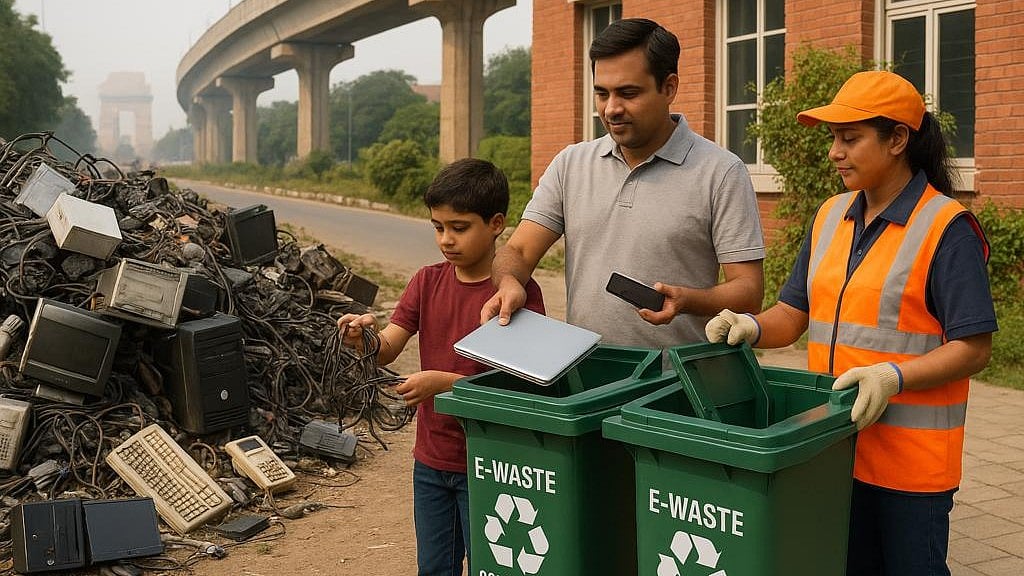
The case was brought to the attention of the NGT by applicant Nitin Saxena, who cited media reports stating that a substantial quantity of electronic waste is generated daily in Bhopal. However, only about 10% of this waste is being scientifically processed and disposed of, while the remaining 90% is handled by unauthorised scrap dealers and informal recycling units.
This unregulated and environmentally unsafe manner of handling e-waste poses a serious threat to public health. The open burning and dismantling of electronic waste releases highly toxic substances such as lead, mercury, cadmium, and chromium, contaminating the air, soil, and groundwater. Exposure to these hazardous substances can cause neurological disorders in children, kidney diseases, respiratory illnesses, and several other serious health problems.
The situation in Bhopal is alarming, with a large quantity of e-waste being generated daily, yet only a limited amount undergoes scientific processing and disposal. The remaining e-waste is disposed of or processed through unauthorised scrap dealers and informal recycling units, leading to the emission of harmful metals and substances.
The NGT's decision to hear the case is a significant step towards addressing the issue of e-waste disposal in Bhopal. The tribunal's intervention is expected to bring attention to the need for scientific processing and disposal of e-waste, and to ensure that the relevant authorities take necessary steps to mitigate the environmental and health risks associated with e-waste.
The case will be heard by Justice Arun Kumar Tyagi and judicial member Dr A Senthil Vel on August 31 in Bhopal. The outcome of the hearing is expected to have significant implications for the management of e-waste in Bhopal and potentially in other parts of the country.
The issue of e-waste disposal is a pressing concern in India, with the country generating a significant amount of electronic waste every year. The lack of proper disposal mechanisms and the prevalence of unauthorised recycling units have led to environmental and health hazards. The NGT's intervention in the Bhopal case is a step towards addressing this issue and ensuring that e-waste is managed in a scientific and environmentally safe manner.
In conclusion, the NGT's decision to hear the e-waste disposal case in Bhopal is a significant development in the efforts to address the environmental and health risks associated with e-waste. The outcome of the hearing is expected to have important implications for the management of e-waste in India and to contribute to a safer and healthier environment for the people of Bhopal and beyond.
The hearing of the case on August 31 is a crucial step towards finding a solution to the problem of e-waste disposal in Bhopal. It is expected that the NGT will direct the relevant authorities to take necessary steps to ensure that e-waste is managed in a scientific and environmentally safe manner, and that the environmental and health risks associated with e-waste are mitigated.
The people of Bhopal and the surrounding areas are eagerly awaiting the outcome of the hearing, hoping that it will bring relief from the environmental and health hazards posed by e-waste. The NGT's intervention is seen as a ray of hope in the efforts to address the issue of e-waste disposal and to create a safer and healthier environment for the people of Bhopal.
The case of e-waste disposal in Bhopal is a wake-up call for the authorities and the people to take immediate action to address the issue. It is essential that the relevant authorities take necessary steps to ensure that e-waste is managed in a scientific and environmentally safe manner, and that the environmental and health risks associated with e-waste are mitigated. The NGT's intervention is a significant step towards achieving this goal, and it is expected that the outcome of the hearing will have important implications for the management of e-waste in India.
In the context of India's growing electronic waste problem, the NGT's decision to hear the case is a significant development. The country's rapid economic growth and increasing use of electronic devices have led to a significant increase in the generation of e-waste. The lack of proper disposal mechanisms and the prevalence of unauthorised recycling units have led to environmental and health hazards. The NGT's intervention in the Bhopal case is a step towards addressing this issue and ensuring that e-waste is managed in a scientific and environmentally safe manner.
The hearing of the case on August 31 is a crucial step towards finding a solution to the problem of e-waste disposal in Bhopal. It is expected that the NGT will direct the relevant authorities to take necessary steps to ensure that e-waste is managed in a scientific and environmentally safe manner, and that the environmental and health risks associated with e-waste are mitigated. The outcome of the hearing is expected to have important implications for the management of e-waste in India and to contribute to a safer and healthier environment for the people of Bhopal and beyond.
The significance of the NGT's decision to hear the case cannot be overstated. The tribunal's intervention is a significant step towards addressing the issue of e-waste disposal in Bhopal and potentially in other parts of the country. The outcome of the hearing is expected to have important implications for the management of e-waste in India and to contribute to a safer and healthier environment for the people of Bhopal and beyond.
In conclusion, the NGT's decision to hear the e-waste disposal case in Bhopal is a significant development in the efforts to address the environmental and health risks associated with e-waste. The outcome of the hearing is expected to have important implications for the management of e-waste in India and to contribute to a safer and healthier environment for the people of Bhopal and beyond.
Frequently asked questions
What is the current state of e-waste disposal in Bhopal?
Only 10% of e-waste is scientifically processed and disposed of, while the remaining 90% is handled by unauthorised scrap dealers and informal recycling units.
What are the health risks associated with e-waste disposal?
Exposure to toxic substances released from e-waste can cause neurological disorders in children, kidney diseases, respiratory illnesses, and several other serious health problems.