Health Camp Helps Hundreds In MP's Badamalhara
Free medical consultations and tests for hundreds, specialist care for pregnant women
'%3E%3Crect%20width%3D'96'%20height%3D'96'%20fill%3D'%23B3261E'%2F%3E%3Ccircle%20cx%3D'30'%20cy%3D'24'%20r%3D'44'%20fill%3D'%23fff'%20opacity%3D'.12'%2F%3E%3Ccircle%20cx%3D'60'%20cy%3D'74'%20r%3D'40'%20fill%3D'%23000'%20opacity%3D'.10'%2F%3E%3C%2Fg%3E%3Cg%20fill%3D'%23fff'%3E%3Crect%20x%3D'29'%20y%3D'49'%20width%3D'8'%20height%3D'19'%20rx%3D'1'%2F%3E%3Crect%20x%3D'39'%20y%3D'40'%20width%3D'9'%20height%3D'28'%20rx%3D'1'%2F%3E%3Crect%20x%3D'50'%20y%3D'45'%20width%3D'8'%20height%3D'23'%20rx%3D'1'%2F%3E%3Crect%20x%3D'60'%20y%3D'53'%20width%3D'7'%20height%3D'15'%20rx%3D'1'%2F%3E%3Crect%20x%3D'41'%20y%3D'34'%20width%3D'5'%20height%3D'6'%2F%3E%3C%2Fg%3E%3C%2Fsvg%3E)
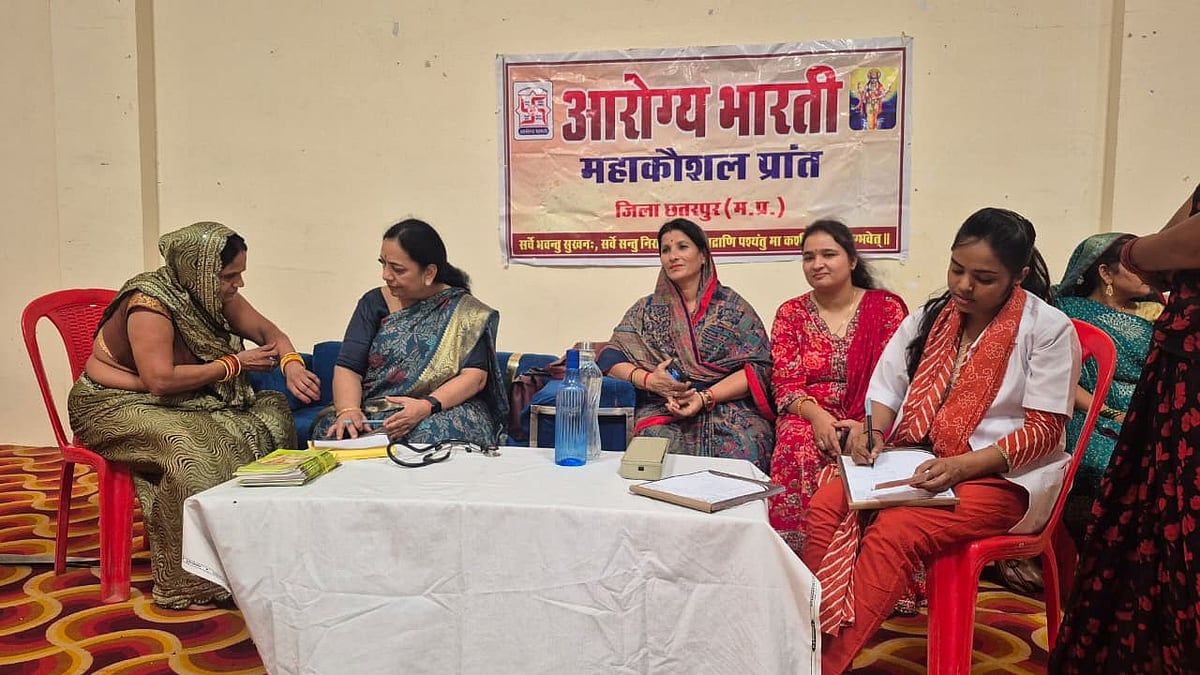
A recent health camp in Badamalhara, Madhya Pradesh, provided free medical consultations, diagnostic tests, and medicines to hundreds of residents. The camp was organised by Arogya Bharati at the local auditorium, with support from Municipal Council President Nisha Raja Bundela.
The health camp offered specialist consultations, as well as free tests for haemoglobin, blood pressure, blood sugar, and pregnancy. Senior gynaecologist Dr Gayatri Namdev examined pregnant women and advised them on the importance of regular antenatal check-ups, a balanced diet, timely vaccination, and safe motherhood.
Dr Namdev also counselled several first-time expectant mothers with delicate health conditions, providing them with much-needed guidance and support. Block Medical Officer Dr Hemant Maraiya extended his support to the initiative, ensuring that the camp ran smoothly and effectively.
Dr Pranshi Trivedi highlighted the importance of a balanced diet rich in iron, calcium, and protein for women, while doctors Yogesh Kumar Jain and Siyaram Chaubey examined patients and provided treatment. The camp was well-attended, with hundreds of residents taking advantage of the free medical services on offer.
Arogya Bharati Provincial Vice President Dr SR Chaubey and District Secretary Vikas Chaubey stated that the camp aimed to improve access to specialist healthcare in rural areas and promote preventive health awareness. The initiative was widely appreciated by residents, who urged the organisers to conduct similar health camps on a regular basis.
Several Arogya Bharati volunteers and members of Ashok Pathology were also present at the camp, providing their support and expertise. The success of the health camp demonstrates the importance of community-led initiatives in improving access to healthcare, particularly in rural areas.
The camp's focus on preventive health awareness and specialist care for pregnant women is particularly noteworthy, as it highlights the need for targeted interventions to improve health outcomes in these areas. By providing free medical consultations, diagnostic tests, and medicines, the camp helped to address the health needs of hundreds of residents, making a positive impact on the community.
In the context of India's broader healthcare challenges, initiatives like the Badamalhara health camp play a vital role in improving access to healthcare, particularly in rural areas. By promoting preventive health awareness and providing specialist care, such initiatives can help to reduce health disparities and improve health outcomes.
Overall, the health camp in Badamalhara was a resounding success, demonstrating the power of community-led initiatives to improve access to healthcare and promote preventive health awareness. As India continues to grapple with its healthcare challenges, such initiatives will be crucial in making a positive impact on the health and wellbeing of its citizens.
The success of the camp also underscores the importance of collaboration between local authorities, healthcare providers, and community organisations in improving access to healthcare. By working together, these stakeholders can help to ensure that healthcare services are accessible, affordable, and effective, making a tangible difference in the lives of citizens.
In conclusion, the health camp in Badamalhara was a significant initiative that helped to address the health needs of hundreds of residents. Its focus on preventive health awareness, specialist care for pregnant women, and community-led action makes it a model for similar initiatives in other parts of the country. As India strives to improve its healthcare outcomes, such initiatives will be essential in making a positive impact on the health and wellbeing of its citizens.
The impact of the health camp will be felt for a long time, as it has helped to raise awareness about the importance of preventive healthcare and the need for regular health check-ups. The camp has also demonstrated the potential for community-led initiatives to improve access to healthcare, particularly in rural areas.
In the future, it is hoped that similar health camps will be organised in other parts of the country, helping to improve access to healthcare and promote preventive health awareness. By working together, stakeholders can help to ensure that healthcare services are accessible, affordable, and effective, making a tangible difference in the lives of citizens.
The health camp in Badamalhara has set a positive precedent for community-led initiatives in healthcare, and its success will be studied and replicated in other parts of the country. As India continues to grapple with its healthcare challenges, such initiatives will be crucial in making a positive impact on the health and wellbeing of its citizens.
The camp's organisers, Arogya Bharati, deserve credit for their efforts in improving access to healthcare in rural areas. Their commitment to promoting preventive health awareness and providing specialist care has made a tangible difference in the lives of hundreds of residents, and their initiative will be remembered for a long time.
In the end, the health camp in Badamalhara was a resounding success, demonstrating the power of community-led initiatives to improve access to healthcare and promote preventive health awareness. Its impact will be felt for a long time, and it has set a positive precedent for similar initiatives in other parts of the country.
The success of the camp is a testament to the importance of collaboration between local authorities, healthcare providers, and community organisations in improving access to healthcare. By working together, these stakeholders can help to ensure that healthcare services are accessible, affordable, and effective, making a tangible difference in the lives of citizens.
The health camp in Badamalhara has shown that community-led initiatives can make a positive impact on the health and wellbeing of citizens, particularly in rural areas. Its focus on preventive health awareness, specialist care for pregnant women, and community-led action makes it a model for similar initiatives in other parts of the country.
As India continues to grapple with its healthcare challenges, initiatives like the Badamalhara health camp will be crucial in making a positive impact on the health and wellbeing of its citizens. The camp's success demonstrates the potential for community-led initiatives to improve access to healthcare, particularly in rural areas, and its impact will be felt for a long time.
The camp's organisers have demonstrated their commitment to improving access to healthcare in rural areas, and their initiative will be remembered for a long time. The success of the camp is a testament to the importance of collaboration between local authorities, healthcare providers, and community organisations in improving access to healthcare.
In conclusion, the health camp in Badamalhara was a significant initiative that helped to address the health needs of hundreds of residents. Its focus on preventive health awareness, specialist care for pregnant women, and community-led action makes it a model for similar initiatives in other parts of the country. The camp's success demonstrates the potential for community-led initiatives to improve access to healthcare, particularly in rural areas, and its impact will be felt for a long time.
What it means for India is that community-led initiatives can make a positive impact on the health and wellbeing of citizens, particularly in rural areas. The success of the Badamalhara health camp demonstrates the importance of collaboration between local authorities, healthcare providers, and community organisations in improving access to healthcare. As India continues to grapple with its healthcare challenges, initiatives like the Badamalhara health camp will be crucial in making a positive impact on the health and wellbeing of its citizens.