Harvard Rejection Rejected Due to Grammar Error
Paul Devlin rejects Harvard's rejection, cites grammar error. His witty reply goes viral.
'%3E%3Crect%20width%3D'96'%20height%3D'96'%20fill%3D'%23B3261E'%2F%3E%3Ccircle%20cx%3D'30'%20cy%3D'24'%20r%3D'44'%20fill%3D'%23fff'%20opacity%3D'.12'%2F%3E%3Ccircle%20cx%3D'60'%20cy%3D'74'%20r%3D'40'%20fill%3D'%23000'%20opacity%3D'.10'%2F%3E%3C%2Fg%3E%3Cg%20fill%3D'%23fff'%3E%3Crect%20x%3D'29'%20y%3D'49'%20width%3D'8'%20height%3D'19'%20rx%3D'1'%2F%3E%3Crect%20x%3D'39'%20y%3D'40'%20width%3D'9'%20height%3D'28'%20rx%3D'1'%2F%3E%3Crect%20x%3D'50'%20y%3D'45'%20width%3D'8'%20height%3D'23'%20rx%3D'1'%2F%3E%3Crect%20x%3D'60'%20y%3D'53'%20width%3D'7'%20height%3D'15'%20rx%3D'1'%2F%3E%3Crect%20x%3D'41'%20y%3D'34'%20width%3D'5'%20height%3D'6'%2F%3E%3C%2Fg%3E%3C%2Fsvg%3E)
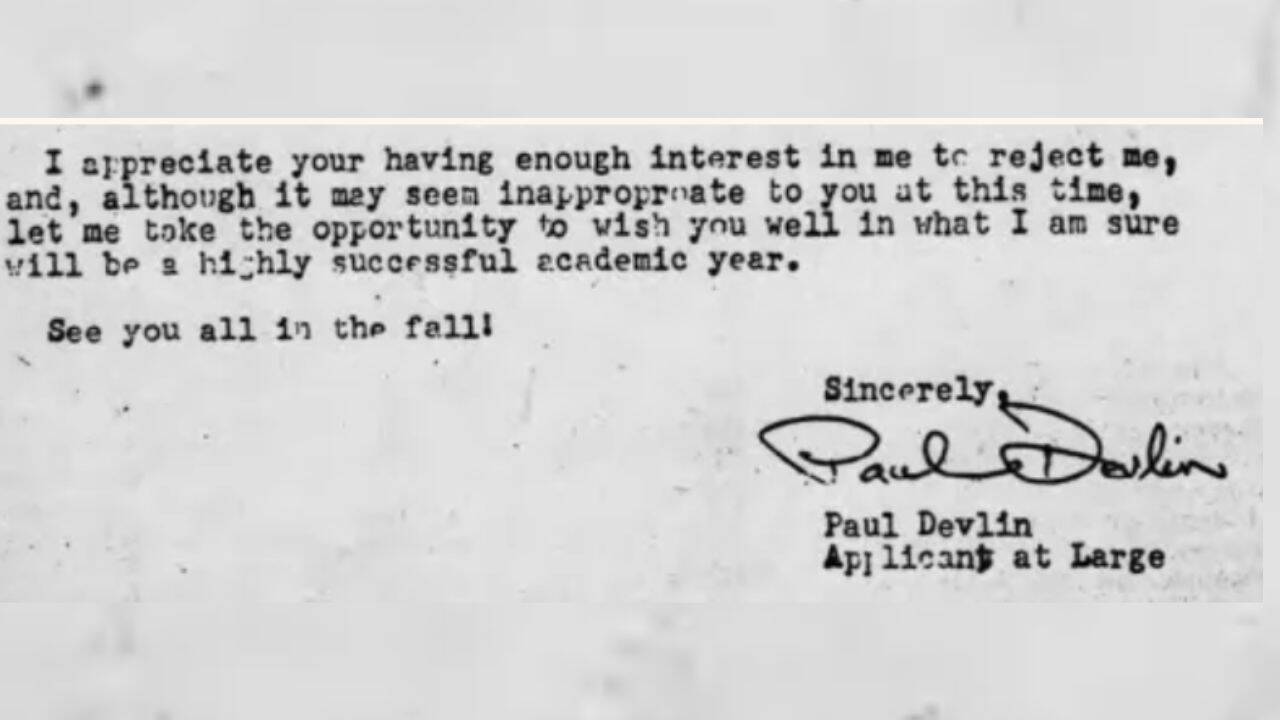
In a bold move, Paul Devlin, a high school student in 1981, responded to Harvard University's rejection letter by rejecting the rejection itself. The inspiration behind this witty reply was a grammatical error found in Harvard's letter.
Devlin's letter was published by The New York Times, showcasing his clever response to the prestigious university. The incident has resurfaced online more than four decades later, and it continues to entertain readers with its unique blend of humor and confidence.
The story of Paul Devlin's rejection of Harvard's rejection has become a legendary tale of how a simple grammar error can lead to a remarkable response. It highlights the importance of attention to detail, even in formal communications from esteemed institutions like Harvard University.
Harvard University is one of the most prestigious universities in the world, known for its academic excellence and rigorous admission process. The university receives thousands of applications each year, and only a small percentage of applicants are accepted.
Despite the rejection, Paul Devlin's response has made him a memorable figure, and his story continues to inspire people with its message of confidence and creativity. The incident also serves as a reminder that even the most prestigious institutions can make mistakes, and it's how we respond to those mistakes that matters.
The resurfacing of Devlin's letter online has sparked a new wave of interest in the story, with many people sharing and discussing it on social media platforms. The incident has become a lighthearted and entertaining anecdote, showcasing the power of humor and wit in responding to adversity.
In the context of academic admissions, the story of Paul Devlin's rejection of Harvard's rejection is a unique and amusing footnote. It highlights the importance of perseverance and creativity in the face of rejection, and it serves as a reminder that there's always more to a story than just a simple acceptance or rejection letter.
The significance of this story lies in its ability to entertain and inspire readers, while also highlighting the importance of attention to detail and creative thinking. It's a testament to the power of humor and wit in responding to challenging situations, and it continues to be a beloved anecdote in the world of academia and beyond.
In conclusion, the story of Paul Devlin's rejection of Harvard's rejection is a remarkable tale of confidence, creativity, and humor. It's a reminder that even in the face of adversity, we can respond with wit and confidence, and it's a testament to the power of attention to detail and perseverance.
Frequently asked questions
What inspired Paul Devlin's response to Harvard's rejection letter?
A grammatical error in Harvard's letter inspired Devlin's witty reply.
Where was Paul Devlin's letter published?
The New York Times published Devlin's letter.