Bali Loses Rice Fields, Locals Buy Water
Bali's rice fields disappear, locals buy water. Tourism expansion strains groundwater resources.
'%3E%3Crect%20width%3D'96'%20height%3D'96'%20fill%3D'%231B5E20'%2F%3E%3Ccircle%20cx%3D'30'%20cy%3D'24'%20r%3D'44'%20fill%3D'%23fff'%20opacity%3D'.12'%2F%3E%3Ccircle%20cx%3D'60'%20cy%3D'74'%20r%3D'40'%20fill%3D'%23000'%20opacity%3D'.10'%2F%3E%3C%2Fg%3E%3Cg%3E%3Ccircle%20cx%3D'48'%20cy%3D'48'%20r%3D'15'%20fill%3D'%23fff'%2F%3E%3Cpath%20d%3D'M43%2034%20Q50%2048%2043%2062'%20fill%3D'none'%20stroke%3D'%238a94a6'%20stroke-width%3D'2.4'%2F%3E%3Cpath%20d%3D'M47%2033%20Q54%2048%2047%2063'%20fill%3D'none'%20stroke%3D'%238a94a6'%20stroke-width%3D'1.8'%20stroke-dasharray%3D'1.5%203'%2F%3E%3C%2Fg%3E%3C%2Fsvg%3E)
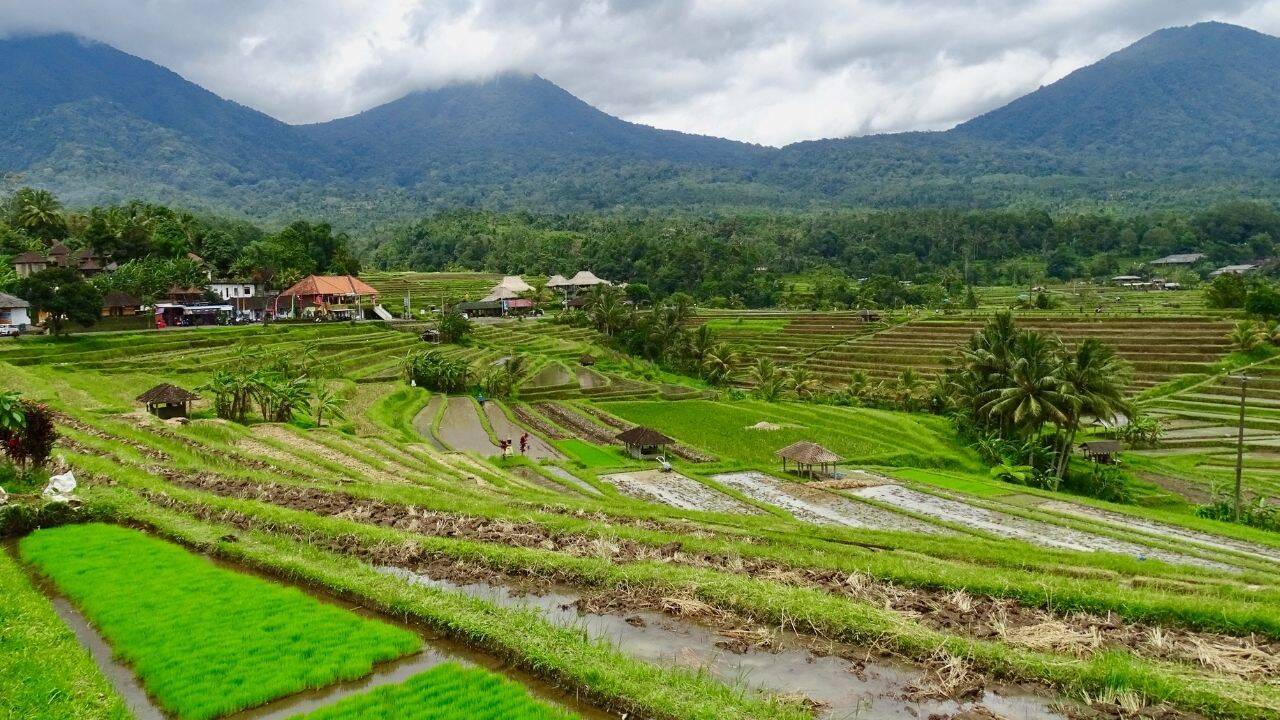
Bali, a popular tourist destination, has lost approximately 6,500 hectares of rice fields, putting a significant strain on the island's water resources. This loss is largely attributed to the expansion of tourism, which has led to increased demand for water from hotels, resorts, and other tourist facilities. As a result, locals are now forced to buy water, highlighting the severe impact of tourism on the island's ecological balance and water security.
The subak irrigation system, a historic and intricate network of canals, dams, and water temples, is under immense pressure due to the disappearance of rice fields. This system, which has been in place for centuries, is not only crucial for irrigation but also plays a vital role in maintaining the island's ecological balance.
The loss of rice fields has significant implications for the subak system, as it threatens the very foundation of Bali's water security. The subak system is deeply rooted in the island's cultural heritage, and its preservation is essential for maintaining the delicate balance between nature and human activities.
Tourism expansion has been rapid in Bali, with thousands of new hotels, resorts, and tourist facilities being built in recent years. While tourism has brought economic benefits to the island, it has also put a significant strain on the island's natural resources, including water. The increased demand for water from tourist facilities has led to a significant depletion of groundwater resources, further exacerbating the water crisis.
The impact of tourism on Bali's water resources is not limited to the loss of rice fields. The construction of new tourist facilities has also led to the destruction of natural habitats and the degradation of water quality. This has severe implications for the island's biodiversity and ecological balance, highlighting the need for sustainable tourism practices that prioritize environmental conservation.
Preserving the subak irrigation system and the remaining rice fields is crucial for maintaining Bali's water security and cultural heritage. Efforts are being made to promote sustainable tourism practices and reduce the strain on the island's water resources. However, more needs to be done to address the scale and complexity of the issue.
The loss of rice fields and the resulting water crisis in Bali serve as a reminder of the importance of balancing economic development with environmental conservation. As the island continues to grow in popularity as a tourist destination, it is essential that steps are taken to protect its natural resources and preserve its cultural heritage.
In conclusion, the disappearance of rice fields in Bali has significant implications for the island's water security, ecological balance, and cultural heritage. It is essential that sustainable tourism practices are promoted, and efforts are made to preserve the subak irrigation system and the remaining rice fields. Only through a balanced approach to development can the island's natural resources be protected, and its cultural heritage be preserved for future generations.