China's Economic Growth Hits 3-Year Low
China's GDP growth slows to 4.3%, weakest in 3 years. Pressure on policymakers to act.
'%3E%3Crect%20width%3D'96'%20height%3D'96'%20fill%3D'%230B6E4F'%2F%3E%3Ccircle%20cx%3D'30'%20cy%3D'24'%20r%3D'44'%20fill%3D'%23fff'%20opacity%3D'.12'%2F%3E%3Ccircle%20cx%3D'60'%20cy%3D'74'%20r%3D'40'%20fill%3D'%23000'%20opacity%3D'.10'%2F%3E%3C%2Fg%3E%3Cg%20fill%3D'none'%20stroke%3D'%23fff'%20stroke-width%3D'3.2'%20stroke-linecap%3D'round'%20stroke-linejoin%3D'round'%3E%3Cpolyline%20points%3D'31%2C59%2041%2C49%2049%2C54%2063%2C37'%2F%3E%3Cpolyline%20points%3D'55%2C37%2063%2C37%2063%2C45'%2F%3E%3C%2Fg%3E%3C%2Fsvg%3E)
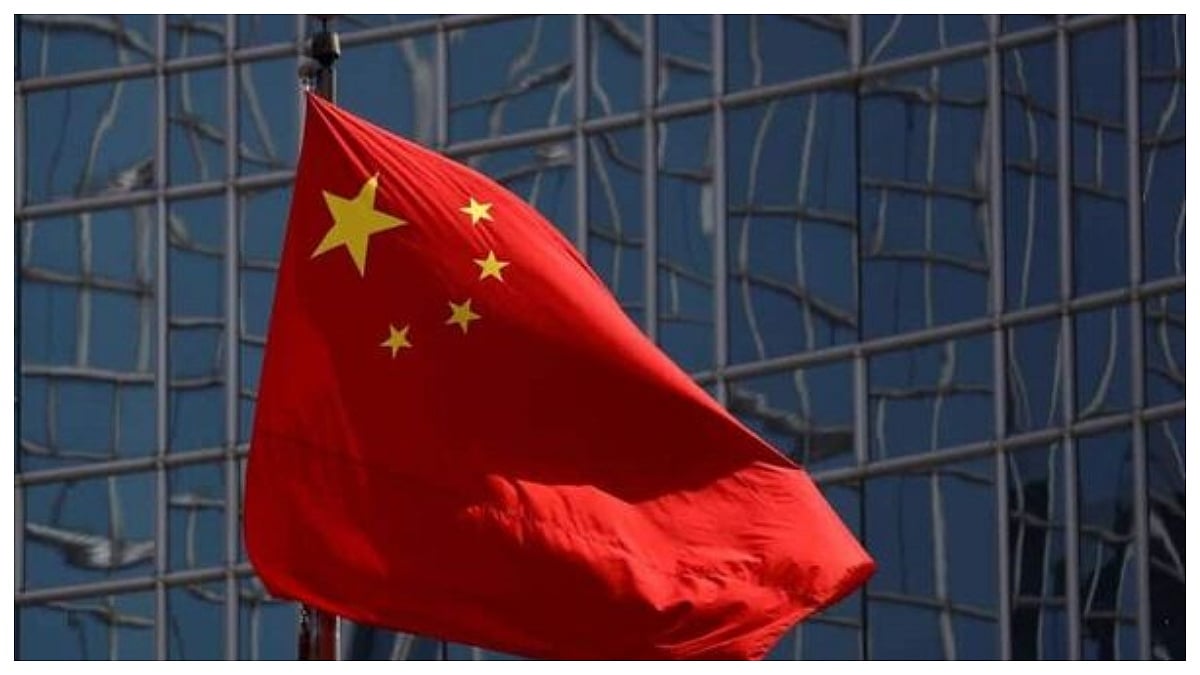
China's economic growth has slowed down to its weakest pace in over three years, recording a 4.3% year-on-year growth in the second quarter. This is according to data released by the National Bureau of Statistics on Wednesday. The growth figure is below economists' expectations of 4.5% and also falls short of the government's annual growth target range of 4.5-5%.
The National Bureau of Statistics stated that the economy is still operating within a reasonable range, but there are growing external uncertainties and domestic supply-demand imbalances. The slowdown is expected to be a key focus area when the Communist Party's top decision-making Politburo meets later this month.
Analysts expect the authorities to consider stronger fiscal support, including increased public spending and infrastructure investment, after reduced government expenditure in recent months weighed on growth momentum. Despite the weaker GDP data, financial markets showed limited reaction, with the offshore yuan remaining slightly stronger and China's 10-year government bond yield staying steady.
Other economic indicators reflected mixed signals, with fixed-asset investment declining 5.7% in the first half of the year. This decline raises concerns over weakening investment activity and business confidence. However, some sectors showed resilience, with retail sales unexpectedly increasing 1% after declining 0.6% in May, and industrial production exceeding expectations with a 5.3% rise.
The surveyed urban unemployment rate also improved slightly to 5% from 5.1% in May. China's exports and manufacturing sector have remained relatively strong, supported by global demand for artificial intelligence-related infrastructure and electronics. However, rising trade tensions and dependence on overseas markets pose risks to future growth.
The slowdown in China's economic growth is a significant development, given the country's importance in the global economy. As the world's second-largest economy, China's growth has a significant impact on global trade and economic trends. The Chinese government's response to the slowdown will be closely watched, as it will have implications for the global economy.
In recent months, China has faced several challenges, including a slowdown in global trade and rising tensions with major trading partners. The country's economic growth has also been affected by domestic factors, such as a decline in property sales and a slowdown in the manufacturing sector.
The Chinese government has set a growth target of 4.5-5% for the year, and the latest data suggests that achieving this target may be challenging. The government may need to take additional measures to support the economy, such as increasing public spending or cutting interest rates.
Overall, the slowdown in China's economic growth is a significant development that will have implications for the global economy. The Chinese government's response to the slowdown will be closely watched, and any measures taken to support the economy will have a significant impact on global trade and economic trends.
The slowdown in China's economic growth also has implications for India, as the two countries are major trading partners. A slowdown in China's economy could have a negative impact on India's exports, and could also affect the country's economic growth. Therefore, the Indian government and businesses will be closely watching the developments in China and taking necessary measures to mitigate any potential negative impacts.
In conclusion, the slowdown in China's economic growth is a significant development that will have implications for the global economy. The Chinese government's response to the slowdown will be closely watched, and any measures taken to support the economy will have a significant impact on global trade and economic trends. The development also has implications for India, and the Indian government and businesses will need to take necessary measures to mitigate any potential negative impacts.